How much does emergency dental care cost without insurance?
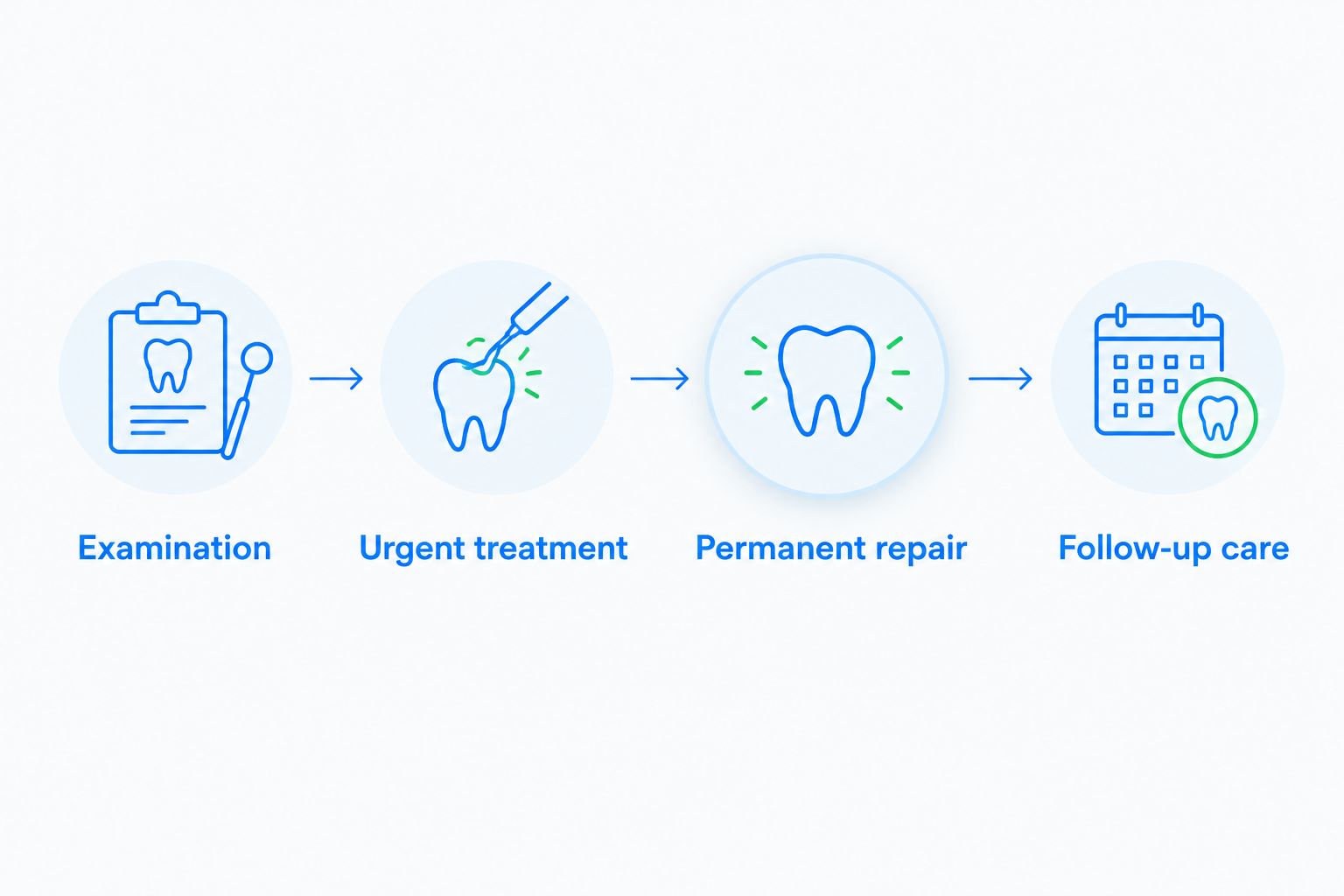
Emergency dental care without insurance has no single standard cost: your total depends on the examination, X-rays, and treatment your tooth needs. An exam-only estimate can leave out the procedure, a permanent repair, and follow-up care, so ask for a written estimate that separates urgent care from completing treatment.
- How much does emergency dental care cost without insurance? The treatment needed determines your total, not pain severity alone.
- Dentistry of Tavares provides general and restorative dental care for local patients; request an individualized assessment.
- Ask whether your estimate includes X-rays, urgent treatment, the permanent repair, and follow-up care.
- Trouble breathing or swallowing requires emergency medical attention, not a routine dental appointment.
How much does emergency dental care cost without insurance?
The useful number is your written, treatment-specific estimate—not an advertised exam fee. A painful tooth can need anything from a repair to treatment inside the tooth or removal. Symptoms alone cannot tell you which procedure belongs on your bill.
For a 2026 appointment, ask the office to identify what the initial assessment includes before you authorize treatment. Then ask for the total needed to address the diagnosed problem, including any later restoration.
If you are looking locally, Dentistry of Tavares offers general and restorative dental care in Tavares. Explain your symptoms and that you will be paying without dental insurance when you request an appointment.
| Estimate component | What it covers | What to clarify |
|---|---|---|
| Examination | Assessing symptoms and identifying the problem | Is this a focused emergency examination? |
| Dental imaging | X-rays needed to assess the tooth and surrounding structures | Which images are included in the estimate? |
| Urgent treatment | The procedure recommended for the immediate problem | Does it complete treatment or provide temporary relief? |
| Permanent repair | Restoring the tooth after urgent treatment when needed | Is a filling or crown included or separate? |
| Follow-up care | Reassessment or additional care when indicated | Which visits or services carry separate charges? |
A low initial quote and a complete treatment estimate describe different things. Compare the same services before deciding that one treatment plan costs less than another.
Why this matters when you are paying yourself
Pain makes financial decisions harder. You deserve an explanation that separates what needs attention now, what can safely wait, and what each part of treatment accomplishes.
Without dental insurance, ask what you are responsible for paying and when payment is due. Do not assume that an examination fee includes treatment, or that a temporary repair resolves the underlying problem.
Tell the dental team your budget before treatment begins. That gives you a chance to discuss clinically appropriate alternatives and understand their limits without making a rushed decision in the chair.
What can be included in an emergency dental estimate?
An emergency estimate should connect each recommended service to a problem the dentist identifies. Ask for everyday language: what is wrong, what the procedure does, and what still needs attention afterward.
Examination and imaging
A focused examination helps the dentist assess the painful or damaged area. X-rays can show information that is not visible during a visual examination, including changes around tooth roots and decay between teeth.
The benefit is a treatment recommendation based on findings rather than symptoms alone. The limitation is that diagnosis does not itself repair the tooth; ask which treatment charges come next.
Urgent treatment
Urgent treatment addresses the problem requiring prompt attention. Depending on the diagnosis, that can mean repairing damage, treating an infected tooth, or removing a tooth that cannot be restored.
Ask whether the proposed procedure is definitive treatment or an initial step. Relief from pain is welcome, but it does not always mean the tooth has received its final repair.
Permanent repair
Some teeth need a permanent filling or crown after the immediate problem is treated. A temporary material protects the area for an interim period; it is not automatically a substitute for the planned restoration.
Ask who will complete the permanent repair and whether it appears in the same estimate. If another appointment is needed, understand its purpose before leaving.
Follow-up care
Follow-up depends on the procedure and your recovery. Ask whether the plan calls for reassessment, removal of stitches, adjustment of a restoration, or another treatment visit.
Keep the written instructions with your estimate. You should know which symptoms warrant a call and how to reach the office if recovery does not follow the expected course.
How do emergency treatment options compare?
The right procedure depends on whether the tooth is restorable, how much damage exists, and whether the inner tooth tissue is affected. Choose between clinically appropriate options, not just procedure names.
This comparison explains common treatment paths. It does not establish which treatment your tooth needs.
| Treatment path | Best for | Main benefit | Limitation or trade-off |
|---|---|---|---|
| Filling or bonded repair | Damage that can be restored without more extensive treatment | Repairs the damaged area while retaining the tooth | Does not treat an infection inside the tooth |
| Crown | A restorable tooth that needs more coverage and support | Covers and protects remaining tooth structure | Requires preparation; root canal treatment can also be necessary |
| Root canal treatment and restoration | A restorable tooth with inflamed or infected inner tissue | Treats the inside of the tooth while retaining it | A final restoration is still needed; a crown is often recommended |
| Extraction | A tooth that cannot be predictably restored | Removes the affected tooth | Leaves a space, and replacement requires a separate discussion |
A smaller repair is not a bargain if it cannot address the diagnosed problem. Equally, a more involved procedure needs a clear explanation of why a simpler repair is not appropriate.
If extraction is recommended, ask whether saving the tooth is clinically reasonable. If keeping the tooth is recommended, ask what restoration and ongoing care it will need.
Why emergency dental costs vary
Your 2026 estimate should reflect the actual diagnosis and planned treatment. These factors explain why another person's bill is not a reliable guide to yours:
- The underlying problem: A chipped edge, deep decay, and an infected tooth require different care even when all cause discomfort.
- The tooth involved: Tooth anatomy and access affect how treatment is performed, particularly for root canal treatment and removal.
- The remaining tooth structure: The amount and condition of healthy tooth determine whether a filling, crown, or another approach is appropriate.
- The procedure's complexity: A straightforward removal and a surgical extraction involve different treatment steps.
- The full treatment sequence: An initial procedure, permanent restoration, and follow-up are not necessarily included in one quoted fee.
- Additional clinical needs: A referral or an agreed anxiety-management approach can change the plan. Confirm any separate charges before consenting.
The intensity of pain does not reliably measure the extent of treatment. Describe your symptoms accurately, but let the examination guide the diagnosis.
How can I get a clear estimate before agreeing to care?
Use this sequence when arranging an uninsured emergency visit in 2026. It keeps the conversation focused on what you need and what you are authorizing.
- Describe your symptoms. Explain where it hurts, when it started, and whether you have swelling, fever, a broken tooth, or an injury. Mention trouble opening your mouth or swallowing.
- Explain your payment situation. Say that you do not have dental insurance. Ask what the initial assessment includes and when payment is expected.
- Request the diagnosis in plain language. Ask what the dentist found and which treatment addresses it. You should understand the reason for the recommendation.
- Separate immediate and complete care. Ask what needs attention now and what remains afterward. Request an estimate for both stages when treatment is staged.
- Confirm the written plan. Check the tooth, procedure, included services, and any separate referral or restoration. Ask how changes to the plan will be discussed.
You can also explain that you are nervous. Ask the team to describe each step before it happens and agree on a signal if you need a pause.
What if I cannot afford the recommended treatment?
Ask about clinically safe choices before postponing care. The dentist can explain whether a temporary measure is appropriate, what it does not resolve, and how urgently definitive treatment is needed.
Ask the office which payment arrangements, outside financing, or assistance resources are available for your situation. These are questions to ask, not benefits to assume. Confirm eligibility and terms directly with the provider.
If you consider financing in 2026, read the repayment terms, fees, interest conditions, and consequences of missing a payment. An approved payment plan changes how you pay; it does not change the treatment itself.
Community health centers and dental school clinics are other places to ask about dental services and eligibility. Confirm that they handle your particular problem and can see you within the timeframe your symptoms require.
Do not rely on newly purchased dental insurance to cover an immediate procedure without checking its terms. Waiting periods, exclusions, deductibles, and coverage limits depend on the plan.
Can I wait until the tooth stops hurting?
A tooth becoming less painful does not prove that the problem has healed. Contact a dentist for advice rather than using pain alone to decide whether care is still necessary.
For swelling, fever, or worsening symptoms, describe those changes promptly. If you have trouble breathing or swallowing, or rapidly spreading facial or neck swelling, seek emergency medical attention. Call 911 for a life-threatening emergency.
A knocked-out permanent tooth also needs immediate dental attention. Avoid handling its root, keep it moist, and seek urgent professional guidance rather than waiting for a routine visit.
For local appointment questions, see the guide to same-day dental emergency appointments in Tavares. Same-day help depends on clinical needs and appointment availability; do not delay emergency medical care while waiting for an office response.
Will an emergency room fix the tooth?
A hospital emergency department addresses serious medical complications and injuries. It generally does not provide the definitive dental repair needed for an ordinary toothache, such as a filling, crown, or routine root canal treatment.
That distinction is not a reason to avoid the hospital when you have emergency warning signs. It means a dental visit can still be necessary after medical stabilization.
Antibiotics also do not replace treatment of the dental source when a procedure is needed. Take medication only as directed, and ask what dental follow-up remains necessary.
FAQ
How much does emergency dental care cost without insurance in 2026?
There is no single standard total because the examination, imaging, and required treatment differ by patient. Request a written estimate that separates the initial visit from urgent treatment, the permanent restoration, and follow-up care.
Can I see a dentist for an emergency without dental insurance?
You can request emergency dental care without insurance. Confirm the office’s payment requirements and explain your symptoms when arranging the visit.
Does an emergency dental exam include treatment?
An emergency examination does not automatically include treatment. Ask whether imaging, procedures, temporary repairs, and later restorations are included or billed separately.
Is pulling a tooth always the best choice if I am paying myself?
Extraction is not automatically the best choice just because you are paying yourself. Ask whether the tooth can be restored and compare the complete treatment plans, including the implications of leaving or replacing a missing tooth.
Can I just take antibiotics for a painful tooth?
Antibiotics do not repair decay or replace a needed dental procedure. A dentist must assess the cause and determine whether medication, treatment, or both are appropriate.
Can I ask for treatment to be split across appointments?
You can ask whether staged treatment is clinically appropriate. Confirm what each stage accomplishes, how soon the next stage is needed, and what remains unfinished.
When should I go to the hospital instead of waiting for a dentist?
Seek emergency medical attention for trouble breathing or swallowing, rapidly spreading facial or neck swelling, or serious facial injury. Call 911 for a life-threatening emergency.
One last thing
Ask what will still be unfinished after today's treatment. That question often reveals more about your complete plan than asking only what the emergency visit includes.
For your 2026 visit, bring a current medication list and describe any medical conditions or allergies. If cost or anxiety is making you hesitate, mention both when arranging care so you can discuss your questions before treatment.
Related guides
- How painful is a root canal, really?
- How long does a dental crown procedure take?
- How long does recovery from a tooth extraction take?
Request an appointment with Dentistry of Tavares to have your symptoms assessed and discuss a treatment plan you understand.