How long does it take to recover from a tooth extraction?
You can often return to routine activities within 48–72 hours after a tooth extraction, but feeling ready for work does not mean the socket has finished healing. Gum recovery continues over the following weeks, and the bone underneath takes longer. Surgical extractions, including difficult wisdom tooth removal, need a more gradual return to normal; your dentist’s instructions take priority over any general timeline.
- How long does it take to recover from a tooth extraction? Routine activities often resume within 48–72 hours.
- Surgical tooth extraction recovery can involve swelling, soreness, and limited chewing for up to two weeks.
- Worsening pain after initial improvement needs a dental check, not more waiting.
- Dentistry of Tavares provides general dental care and oral surgery for local patients.
Why this matters
Plan around what you need to do, not just when the tooth comes out. Sitting at a desk, lifting heavy equipment, and chewing a firm meal place different demands on your recovery. A comfortable morning does not automatically mean you are ready for every activity.
This 2026 guide separates early recovery from deeper healing so you can make sensible plans. Cleveland Clinic’s patient guidance on tooth extraction describes a common return to routine activities within 48–72 hours, while the NHS wisdom tooth removal guidance describes symptoms that can last up to two weeks after surgery. These are general expectations, not a personal clearance date.
For medication questions, the guide to pain relief options after a tooth extraction is a useful starting point. Follow the medication plan your dentist gives you, especially if you take other medicines or have a medical condition.
How long does it take to recover from a tooth extraction?
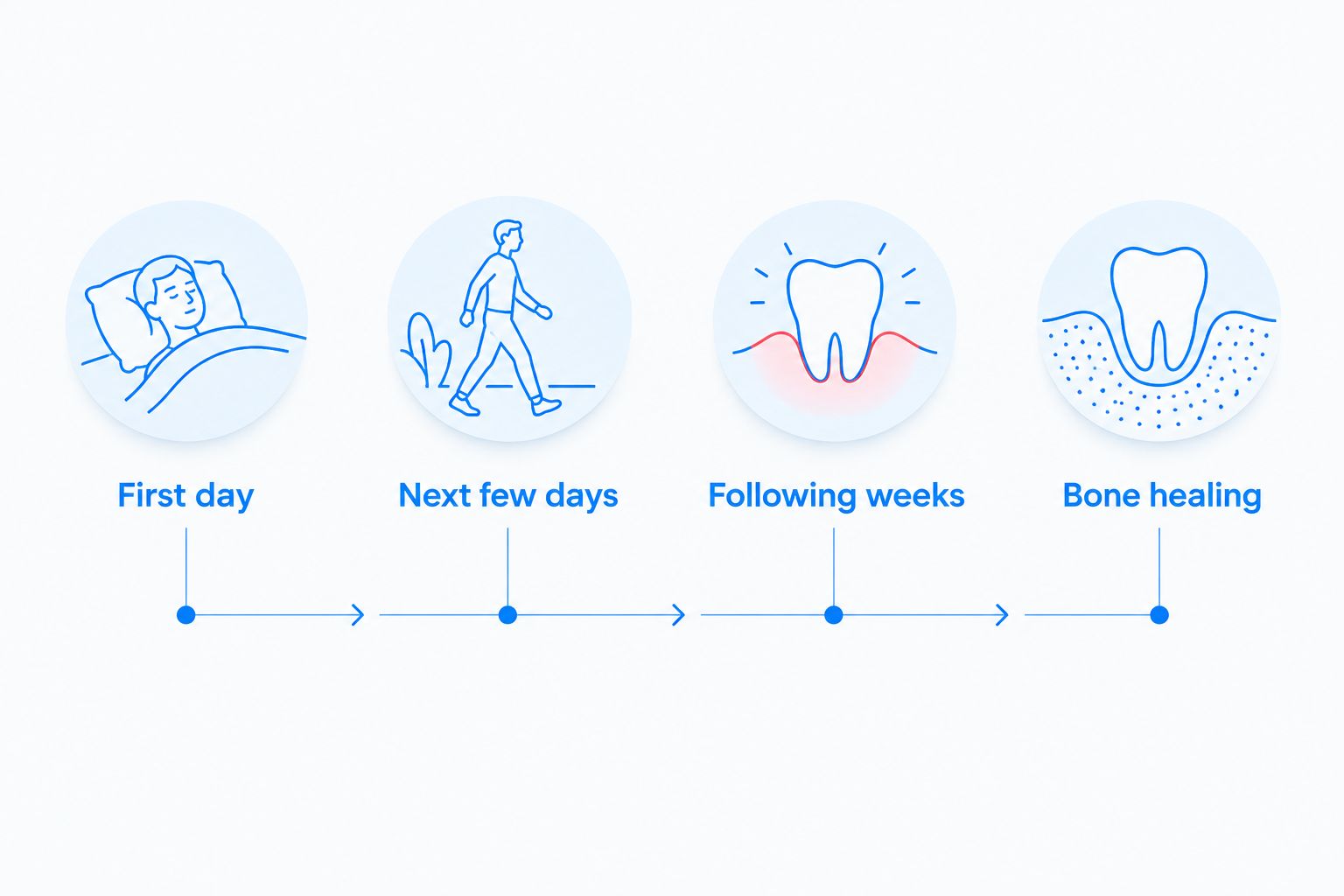
A tooth extraction has several recovery milestones: bleeding settles, soreness improves, normal activities become comfortable, and the socket gradually heals. Those milestones do not happen together. Returning to work is an activity decision; complete healing is a tissue-repair process.
The timeline below reflects general patient guidance, not a promise about an individual procedure. Your dentist can explain which stage matters for your job, exercise routine, and treatment plan.
| Recovery stage | General expectation | What it means for you |
|---|---|---|
| First day | A clot forms in the socket; some oozing and soreness are expected | Rest and protect the extraction site |
| Next few days | Many patients return to routine activities within 48–72 hours | Resume light tasks as comfort and instructions allow |
| Following weeks | Surgical soreness and swelling can last up to two weeks | Continue adjusting food and activity to your recovery |
| Bone healing | Healing beneath the gum continues for several weeks or longer | A comfortable mouth is not proof of complete bone healing |
In 2026, these stages remain more useful than a single universal recovery deadline. If the procedure involved an incision, bone removal, or several teeth, ask for a timeline specific to that procedure.
Simple extraction: routine activities within 48–72 hours
A simple extraction removes a tooth that your dentist can access without a more involved surgical approach. Many patients feel ready for light daily activities within 48–72 hours, consistent with Cleveland Clinic’s general extraction guidance. That does not mean the area is ready for vigorous exercise or hard chewing.
Best for planning: use this early window to arrange rest and lighter duties, then adjust with your dentist’s advice. The benefit is a potentially shorter interruption to your routine. The limitation is that the socket still needs protection even when discomfort improves.
If your work involves lifting, bending, or sustained physical effort, explain that before treatment. A return-to-work recommendation should reflect your actual duties, not just the word “work.”
Surgical extraction: symptoms can last up to two weeks
Surgical extraction can involve an incision, dividing a tooth, or removing bone to reach it. The NHS advises that recovery after wisdom tooth removal can take up to two weeks, with pain, swelling, bruising, or jaw stiffness during that period. Not every surgical extraction follows the same course.
Best for planning: allow more flexibility when the dentist expects a difficult removal or treatment of several teeth. Surgery makes it possible to remove a tooth that is not easily accessible. Its trade-off is that the surrounding tissues can need more recovery time.
Do not compare your progress with someone who had a different procedure. The location of the tooth, what was needed to remove it, and your health all matter more than another person’s calendar.
What should you do during early recovery?
Your written discharge instructions are the main plan. General advice helps you prepare, but it does not replace instructions tailored to your extraction, stitches, medicines, or medical history.
- Protect the clot. Use gauze as directed and avoid disturbing the socket with your tongue or fingers. Do not repeatedly check the area by pulling your cheek aside.
- Rest first. Avoid strenuous activity during the initial recovery period your dentist specifies. Ask when your particular exercise or job duties can resume.
- Choose gentle meals. Start with soft foods that do not require hard chewing. Let hot food cool, and avoid chewing directly over the extraction site.
- Clean carefully. Keep the rest of your mouth clean without scrubbing the socket. Follow instructions about when gentle rinsing can begin; avoid vigorous rinsing or spitting during the first 24 hours.
- Take medicines as directed. Use the recommended dose and schedule. Do not add medicines, stop prescribed medicines, or combine products without checking that it is safe.
Avoid smoking and vaping during recovery, and follow your dentist’s instructions about straws and alcohol. These precautions help protect the healing site rather than simply making you more comfortable.
If you are nervous, ask the dental team to explain the home-care steps before you leave. Request written instructions and a clear contact plan. You should not have to remember everything while you are tired or uncomfortable.
Why tooth extraction recovery varies
The most useful recovery estimate comes from the dentist who knows what happened during your procedure. These factors explain why two people can have different experiences:
- Procedure complexity: an easily accessible tooth and a tooth requiring surgical removal involve different amounts of tissue disruption.
- Number of teeth removed: several extraction sites can make eating and cleaning more difficult than a single site.
- Tooth position: an impacted tooth can require a more involved procedure than a fully erupted tooth.
- Smoking or vaping: tobacco use and suction can interfere with recovery and increase the risk of complications.
- Health conditions and medicines: diabetes, immune-system conditions, and medicines affecting bleeding need individual planning.
- Home care: disturbing the clot, returning to strenuous activity too early, or struggling with cleaning can complicate recovery.
Tell your dentist about your medicines before treatment. This includes prescription medicines, over-the-counter products, and supplements. Do not stop a blood thinner on your own; the dentist and prescribing clinician need to coordinate any changes.
For your 2026 appointment, bring an updated medication list and explain any previous problems with bleeding or healing. That information is more useful than trying to predict recovery from the tooth’s size alone.
When can you go back to work after a tooth extraction?
Within 48–72 hours is a common window for routine activities, but returning to work depends on your procedure, symptoms, and duties. A quiet desk role is different from physical work, and sedation adds separate restrictions.
Before treatment, explain whether you drive, operate machinery, speak continuously, or lift heavy objects. Ask for instructions covering those tasks specifically. If you receive sedation, follow the team’s driving and supervision instructions even if your mouth feels comfortable.
Plan a lighter first day back when possible. If activity brings on bleeding or increased throbbing, stop and contact the dental team for advice rather than pushing through.
When can you eat normally after a tooth extraction?
There is no single day when everyone should resume normal food. Start with soft meals and move toward firmer foods when chewing is comfortable and your dentist allows it. Avoid testing recovery with a crunchy or chewy meal.
Soft foods offer easier chewing, but they still need to be suitable for the healing site. A smooth meal is generally easier to manage than food with hard pieces that can collect around the socket. Follow any specific instructions about temperature, chewing side, and cleaning after meals.
Do not pick trapped food out with a toothpick or another object. Ask your dentist how to clean the area safely, particularly if you have stitches or were given special cleaning equipment.
How do you know whether recovery is on track?
Look for an improving pattern, not a perfectly pain-free day. Some tenderness, swelling, and jaw stiffness can occur after extraction, especially after surgery. Your dentist should explain what is expected for your procedure and when improvement should become noticeable.
A socket can look unfamiliar while it heals. Appearance alone does not tell you whether there is a problem, and repeatedly touching it can cause irritation. Describe your symptoms to the dental team rather than trying to diagnose the site from a mirror or online photo.
Keep any recommended follow-up appointment. If stitches need review or removal, feeling better does not make that visit unnecessary. Ask whether the stitches dissolve and whether you need a scheduled check.
When should you call the dentist?
Contact your dentist promptly if pain becomes severe, worsens after initially improving, or is not controlled by the recommended plan. Dry socket can cause significant pain when the protective clot is lost or does not form properly. It needs dental assessment rather than home treatment inside the socket.
Also call about:
- Bleeding that does not settle with the pressure instructions you were given.
- Fever, pus, or swelling that is increasing rather than improving.
- Persistent numbness beyond the period your dental team told you to expect.
- Symptoms that prevent you from drinking or taking prescribed medicine.
- A medication reaction or uncertainty about whether a medicine is safe for you.
Trouble breathing or swallowing, or rapidly spreading swelling, needs emergency medical attention. Do not wait for a routine dental appointment in those situations. For less urgent concerns, give the dental team a clear description of when symptoms started and how they have changed.
What should you ask before leaving the appointment?
A short conversation before you go home prevents avoidable confusion. Ask which activities to avoid, how to manage bleeding, what to eat, and how to clean your mouth. Make sure you know whom to contact outside normal office hours.
Dentistry of Tavares serves Tavares patients who need general dental care and oral surgery. For tooth extraction care, ask Dentistry of Tavares for instructions specific to your procedure, medical history, and daily routine. The useful recommendation is an individual recovery plan, not a guaranteed finish date.
If cost or insurance is a concern, ask for an explanation of the proposed treatment and how your coverage applies before proceeding. Confirm any payment arrangements directly; a general educational article cannot establish your benefits or out-of-pocket responsibility.
For treatment planned in 2026, also ask whether you need follow-up care and when to discuss replacing the missing tooth. Recovery and tooth replacement are separate decisions, even when they belong to the same overall plan.
FAQ
How long does it take to recover from a tooth extraction?
Many patients return to routine activities within 48–72 hours, but gum and bone healing take longer. Surgical extraction symptoms can last up to two weeks, so follow your dentist’s individual instructions.
Is surgical tooth extraction recovery longer than a simple extraction?
Surgical extraction generally requires more recovery planning because it can involve an incision or bone removal. The procedure details, your health, and the number of teeth removed determine your instructions.
Can I go to work the day after a tooth extraction?
Do not assume you are ready for work the next day. Ask your dentist about your duties, symptoms, and any sedation-related restrictions before deciding.
When can I brush my teeth after an extraction?
Keep the rest of your mouth clean, but avoid brushing directly over the extraction socket. Follow your dentist’s instructions about brushing near the site and when gentle rinsing can begin.
Is worsening pain after a tooth extraction normal?
Worsening pain, especially after initial improvement, needs a call to your dentist. Dry socket and other problems require assessment rather than repeated home treatment.
Can I smoke or vape after a tooth extraction?
Avoid smoking and vaping during recovery because they can interfere with healing. Ask your dentist how long to avoid them for your procedure and whether you need help managing nicotine use.
Does feeling better mean the extraction socket is fully healed?
Feeling better does not mean the socket is fully healed. The bone beneath the gum continues healing after you can comfortably resume many daily activities.
What should I ask Dentistry of Tavares before an extraction?
Ask Dentistry of Tavares about your expected recovery, home-care instructions, medication plan, and follow-up needs. Explain your work duties and any concerns about anxiety, insurance, or payment.
One last thing
Make your recovery plan before treatment, not while you are sore at home. Have suitable food ready, arrange help if sedation requires it, and save the dental team’s contact details. For your 2026 recovery, the most useful deadline is the one your dentist gives for each activity—not a single date for everything.
Related guides
- Foods to eat after wisdom teeth removal
- Same-day dental emergency appointments in Tavares
- Dental bridge vs. implant for one missing tooth
Request an appointment with Dentistry of Tavares to discuss your tooth extraction and a recovery plan that fits your needs.
Request an appointment
Discuss your extraction, recovery questions, and follow-up needs with the dental team.