
How painful is a root canal really?
A root canal usually feels like pressure and vibration rather than sharp pain once the tooth is fully numb. The numbing injection can briefly sting, and the tooth or jaw can feel sore afterward, but sharp pain during treatment is a reason to pause and ask for more numbing—not something you need to tolerate.
- How painful is a root canal really? With effective numbing, expect pressure rather than sharp pain.
- Tell your dentist immediately if you feel a sharp sensation; additional local anesthetic can be needed.
- Tenderness afterward should improve; worsening pain or swelling needs a call to your dentist.
- Dentistry of Tavares provides local general and restorative dental care; ask about an evaluation for tooth pain.
Why this matters
The toothache that brings you to the dentist and the sensations during a root canal are different experiences. Treatment removes inflamed or infected tissue inside the tooth, while local anesthetic controls pain during the procedure. Separating those experiences makes the appointment easier to understand.
Dentistry of Tavares is best for local patients seeking general and restorative dental care in Tavares. If you are arranging an evaluation in 2026, explain both your symptoms and your worries so the conversation addresses comfort as well as treatment.
How painful is a root canal really?
With effective local anesthesia, a root canal generally should not cause sharp pain. You can still notice movement, pressure, vibration, and sounds because numbing does not remove every sensation. The American Association of Endodontists' patient guidance describes modern root canal treatment as generally no more uncomfortable than having a filling.
The distinction is whether a sensation feels noticeable or painful. You do not have to make that judgment perfectly before speaking up: if something hurts, tell the dentist.
| Part of the experience | What you can feel | What to do |
|---|---|---|
| Numbing injection | A brief pinch, sting, or pressure | Mention injection anxiety before the shot |
| Working on a numb tooth | Pressure, vibration, and movement | Signal if the sensation becomes painful |
| Holding your mouth open | Tired jaw muscles | Ask whether a short break is possible |
| Numbing wearing off | Tenderness around the treated tooth | Follow your individual aftercare instructions |
| Recovery | Soreness when biting or chewing | Contact the dentist if pain worsens or your bite feels uneven |
A comparison with a filling describes the expected experience, not a promise about your individual appointment. Severe inflammation, your tooth's anatomy, and previous experiences can affect how much numbing and reassurance you need.
For the wider treatment decision, read about root canal safety and saving your tooth. Pain control and whether a tooth can be restored are separate questions, and both deserve a clear answer.
What happens before the dentist starts?
Comfort starts before the instruments touch your tooth. Your dentist needs to understand your symptoms, review your health history, and check that the tooth is adequately numb. Tell the team about medications, allergies, pregnancy, previous trouble getting numb, and reactions during earlier dental visits.
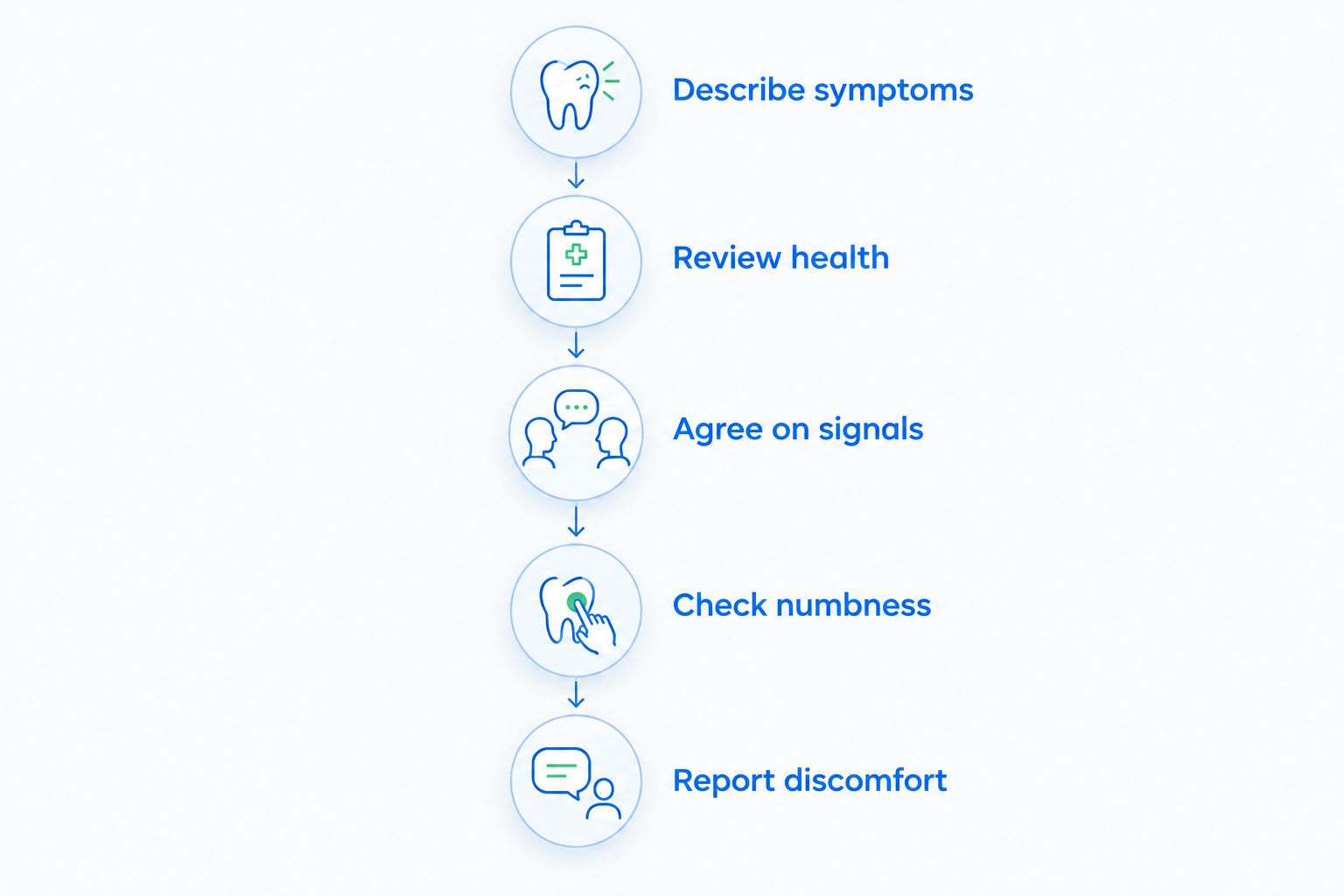
A useful sequence to discuss at your 2026 appointment is:
- Describe symptoms. Explain whether pain happens on its own, with temperature changes, or when you bite. Mention swelling and any recent change.
- Review health. Share your medical conditions and current medicines, including nonprescription products and supplements.
- Agree on signals. Choose a clear stop signal, such as raising your hand, before treatment begins.
- Check numbness. Let the dentist assess the tooth rather than relying only on whether your lip feels numb.
- Report discomfort. Speak up during treatment so the dentist can pause, reassess, and adjust pain control.
A numb lip does not always mean the tooth is fully numb. That is especially relevant when a tooth is very inflamed, so tell the dentist what you feel rather than assuming you should stay quiet.
Why root canal discomfort varies
Your experience depends on more than the procedure's name. These factors help explain why another person's story does not predict your appointment:
- Inflammation before treatment. A very inflamed tooth can be harder to numb adequately and can need additional anesthetic techniques.
- Tenderness around the root. Tissues surrounding the tooth can remain sensitive even after the tissue inside has been removed.
- Tooth anatomy. Differences in roots and canals affect the work involved. Your dentist uses examination findings and imaging to plan treatment.
- Jaw comfort. Keeping your mouth open can tire the muscles, particularly if you already have jaw discomfort.
- Anxiety and past experiences. Worry can make sensations harder to manage. Knowing the next step and having a stop signal gives you more control.
- The bite afterward. A temporary or final restoration that feels too high can make biting uncomfortable and needs a dental check.
Ask for an explanation tailored to your tooth, not a promise that every root canal feels the same. Your dentist can explain which findings affect your care and what adjustments are available.
What if you still feel pain after the numbing shot?
Tell the dentist immediately. Additional anesthetic, more time for it to work, or a different numbing approach can be needed before treatment continues. Feeling pain does not mean you have failed to relax.
Describe the sensation as plainly as possible: sharp, hot, electric, aching, or pressure. Also explain when it happens. That information helps the dentist distinguish discomfort from the tooth, surrounding tissues, or jaw muscles.
Sedation and local anesthetic have different roles. Local anesthetic numbs the treatment area; sedation helps manage anxiety and awareness but does not replace the need for pain control. If you are interested in sedation, ask what is appropriate and available rather than assuming it is part of the appointment.
How sore is a tooth after a root canal?
Some tenderness is expected after a root canal, particularly when the tooth was painful beforehand. Removing the tissue inside the tooth does not instantly settle inflammation in the tissues surrounding its roots. Your jaw can also feel tired from staying open.
The direction of recovery matters: soreness should improve rather than steadily worsen. Follow the instructions you receive, and contact the dentist if the pain is difficult to control, increases, or returns after improving.
Your 2026 aftercare plan should explain what discomfort is expected for your tooth, which medicines are suitable, and when to call. Ask for clarification before leaving if any part is unclear.
What can I do to stay comfortable afterward?
Protect the tooth and follow the dentist's medication instructions. Wait until numbness has worn off before chewing so you do not accidentally bite your cheek or tongue, and be careful with hot foods and drinks while sensation is reduced.
Choose foods that do not require forceful chewing, and avoid biting hard foods with the treated tooth until your dentist says it is ready. A temporary filling does not provide the same protection as a completed restoration.
If your dentist recommends a nonprescription pain reliever, follow the directions and check that it is safe with your medical history and other medicines. Do not combine products with the same active ingredient, and do not place aspirin directly against a tooth or gum.
Does a root canal mean I will need a crown?
A crown is often recommended for a back tooth after root canal treatment because the remaining tooth structure needs protection from chewing forces. Front teeth and teeth with different amounts of remaining structure need an individual assessment.
Discuss the final restoration before treatment so you understand the full plan. Root canal treatment addresses the inside of the tooth; the restoration seals and protects what remains. Neither step should be treated as an afterthought.
When should you call about pain or swelling?
Contact your dentist promptly for increasing pain, new or worsening swelling, fever, a lost temporary filling, or a bite that feels too high. Do not wait for a routine follow-up if symptoms are getting worse. Tell the office when treatment occurred and what has changed.
Trouble breathing or swallowing, or rapidly spreading swelling of the face or neck, requires emergency medical care. These symptoms need a different response from mild tenderness around a recently treated tooth.
If tooth pain starts before your evaluation, describe the symptoms when requesting care. Same-day help is available when possible, but the timing and appropriate treatment depend on an assessment.
What should you ask before agreeing to treatment?
You deserve a clear explanation without having to know dental terminology. At Dentistry of Tavares, you can start by asking for an evaluation and a discussion of your concerns; the findings determine the recommended next step.
Bring these questions to your 2026 visit:
- What findings show that this tooth needs root canal treatment?
- Can the tooth be restored afterward?
- How will you check that I am numb?
- What should I do if I feel pain during treatment?
- Will I need a separate restoration or a referral?
- Which symptoms mean I should call afterward?
- Can you provide a written estimate and explain how insurance benefits will be checked?
If affordability concerns you, say so before treatment starts. Ask which parts of care are included in the estimate and whether the final restoration is separate. Your insurer can confirm plan benefits; an estimate of coverage is not a guarantee of payment.
FAQ
How painful is a root canal really in 2026?
A root canal generally should not cause sharp pain once the tooth is adequately numb. Pressure and vibration are expected sensations, while sharp pain needs an immediate pause and reassessment.
Is a root canal more painful than a filling?
With effective local anesthesia, root canal treatment is generally comparable in comfort to a filling. The tooth’s inflammation and your individual response to numbing affect the experience.
Will I feel the nerve being removed during a root canal?
You should not feel sharp pain from work inside a properly numbed tooth. Tell the dentist immediately if you do, so the anesthetic can be reassessed.
Can I ask the dentist to stop during a root canal?
Yes, you can ask the dentist to pause during a root canal. Agree on a hand signal before treatment so you can communicate while your mouth is open.
Is it normal for my tooth to hurt when I bite afterward?
Some biting tenderness can happen after a root canal because the tissues around the root remain sensitive. Worsening pain or a bite that feels high needs a dental check.
Do antibiotics replace a root canal if the pain goes away?
Antibiotics do not replace treatment of infected tissue inside a tooth. A change in pain does not establish that the underlying problem has resolved; your dentist needs to assess it.
Can I drive home after a root canal?
Whether you can drive depends on the medicines used and your individual instructions. Sedation can require an escort and driving restrictions, so arrange transportation with the dental team beforehand.
Should I brush the tooth after a root canal?
Continue gentle oral hygiene unless your dentist gives different instructions. Brush for 2 minutes, 2 times a day, and clean between your teeth 1 time a day, taking care around the treated area.
One last thing
A tooth can stop hurting even when the underlying problem still needs treatment. Pain alone does not tell you whether the tooth has healed, so keep the evaluation even if symptoms settle before your appointment.
The most useful preparation is simple: write down what hurts, what triggers it, and what worries you. You do not need to arrive feeling brave or knowing the right dental words.
Related guides
- How long does a dental crown procedure take?
- Does epinephrine in dental numbing shots cause a racing heart?
- Can I get a same-day dental emergency appointment in Tavares?
Request an appointment with Dentistry of Tavares to discuss your tooth pain, your comfort concerns, and the next step in your care.