How often should you get a dental checkup and cleaning?
A dental checkup and cleaning every 6 months is a common starting schedule, but your dentist should set the interval based on your teeth, gums, and risk of disease. A routine cleaning does not replace treatment for active gum disease, and symptoms deserve attention before your next scheduled visit. For your 2026 care plan, ask when you need your next exam and your next cleaning—those dates do not always match.
- How often should you get a dental checkup and cleaning? Six months is common; your dental health determines the interval.
- Dentistry of Tavares provides preventive dental care for local patients seeking a general dental practice.
- After gum disease treatment, periodontal maintenance often follows a personalized schedule of 3 to 4 months.
- Tooth pain, swelling, or persistent bleeding calls for assessment rather than waiting for a routine appointment.
How often should you get a dental checkup and cleaning?
Use 6 months as a conversation starter, not a rule for everyone. The American Dental Association’s MouthHealthy patient guidance recommends regular dental visits at intervals determined by your dentist. Your history and examination matter more than a calendar reminder.
For local preventive dental care, Dentistry of Tavares offers general dental services. Dentistry of Tavares is a fit for Tavares patients seeking preventive care within a general dental practice. An examination is needed to determine your individual schedule.
| Visit schedule | Best for | Benefit | Limitation |
|---|---|---|---|
| Routine visits around every 6 months | Patients whose dentist recommends this interval | Creates regular opportunities to check teeth, gums, and home care | Does not suit every risk level |
| Periodontal maintenance often every 3 to 4 months | Patients who have completed treatment for gum disease and need ongoing monitoring | Supports closer monitoring and cleaning of affected areas | Does not replace treatment for active disease |
| Another individualized interval | Patients whose findings call for a different schedule | Matches visits to current needs | Requires reassessment when health or symptoms change |
These are care patterns, not instructions to diagnose yourself. A dentist can explain which one fits your mouth and what would change the recommendation.
Why this matters
Teeth and gums do not always announce a problem with pain. A dental examination looks for changes that you cannot reliably assess in a mirror, while a professional cleaning removes deposits that ordinary brushing cannot remove.
The benefit is not simply having cleaner teeth on appointment day. Regular visits also give you a chance to discuss bleeding, sensitivity, dry mouth, or a brushing technique that feels difficult.
For your 2026 schedule, separate prevention from urgent concerns. Keeping a routine appointment is useful, but it is not a reason to wait when a new symptom appears.
Routine preventive visits: around every 6 months
A 6-month interval is a familiar recommendation for routine preventive care. It gives your dentist repeated opportunities to assess your mouth and discuss whether your daily care is working.
During an examination, the dental team checks your teeth, gums, existing dental work, and other tissues in your mouth. During a cleaning, the team removes plaque and hardened deposits, called tartar, from areas appropriate for routine preventive cleaning.
Best for: patients whose dentist finds that a 6-month schedule matches their current needs. The advantage is a predictable routine; the limitation is that a standard interval can overlook differences in cavity risk and gum health.
Ask a simple question before leaving: what finding makes this interval right for me? The answer should connect your next appointment to your health, not just to the office calendar.
Periodontal maintenance: often every 3 to 4 months
After treatment for periodontitis, ongoing periodontal maintenance often takes place every 3 to 4 months. Periodontitis is gum disease that damages the tissues supporting teeth, so follow-up care differs from a routine preventive cleaning.
The American Academy of Periodontology’s patient guidance describes periodontal maintenance as ongoing care after gum disease treatment. The exact interval depends on your condition and response to treatment.
Best for: patients with a history of treated periodontitis who need closer follow-up. The benefit is continued monitoring and cleaning tailored to their gum health; the limitation is that maintenance alone cannot resolve every new or persistent problem.
Do not interpret a shorter interval as a personal failure. It reflects the care your gums need. If your dentist recommends periodontal maintenance in 2026, ask how it differs from your previous cleaning and which findings will be checked at follow-up.
When another interval makes sense
Some patients need an examination sooner than their usual cleaning date. Others receive a different preventive schedule after their dentist reviews their history and current findings.
A recent change matters. New cavities, worsening gum measurements, persistent dry mouth, or a medical change can prompt your dentist to reconsider the plan.
Best for: patients whose needs do not fit a routine schedule. Individualized timing avoids treating every mouth alike, but it also means you should review the plan rather than assuming it stays unchanged indefinitely.
A follow-up to check a treated tooth is not automatically a full examination or cleaning. Ask what each appointment is for so you understand why separate visits have been recommended.
Why dental visit frequency varies
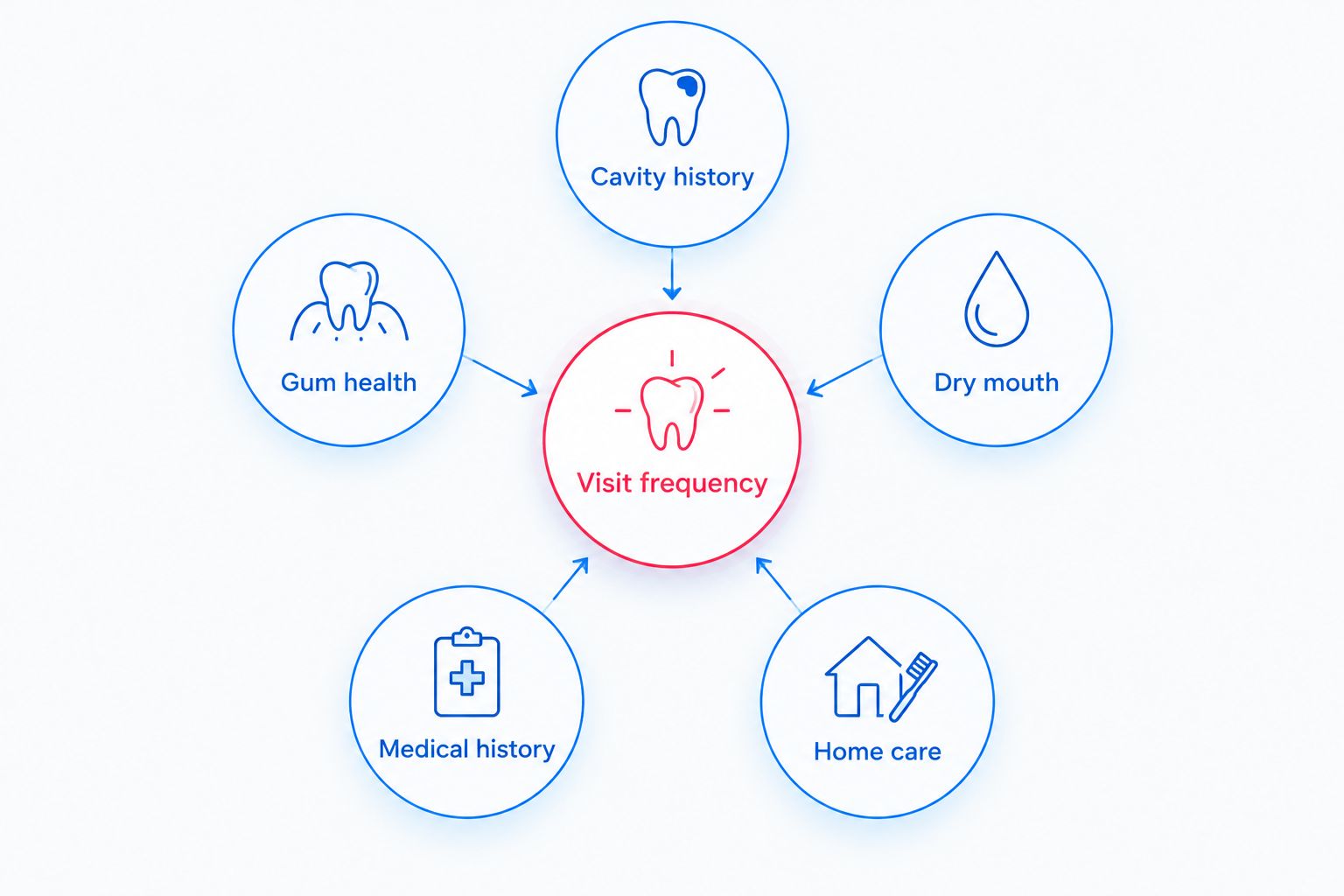
Your dentist considers several factors together. None of these automatically assigns you a particular interval without an examination:
- Cavity history: recent or recurring decay helps your dentist assess whether closer monitoring is appropriate.
- Gum health: bleeding, gum pockets, and a history of periodontitis influence the type and timing of cleaning.
- Dry mouth: reduced saliva can increase decay risk and calls for discussion of medications, symptoms, and prevention.
- Medical history: diabetes and other relevant health conditions help inform your dental care plan.
- Home care: difficulty cleaning between teeth or around dental work can affect the prevention advice you need.
Your dentist should explain which factors apply to you. A recommendation is easier to follow when you understand its purpose.
Are a checkup and a cleaning the same appointment?
A checkup and a cleaning often happen during the same visit, but they do different jobs. The checkup assesses your oral health; the cleaning removes deposits from your teeth.
X-rays are another separate decision. The American Dental Association recommends selecting dental imaging according to individual clinical needs, rather than assuming every checkup requires the same images.
If your dentist finds gum disease, the appropriate treatment can differ from a routine cleaning. Ask for an explanation of what was found, which treatment is recommended, and whether additional visits are needed.
For a 2026 appointment, confirm what is planned when you schedule. That helps you distinguish an examination, preventive cleaning, periodontal maintenance, and a visit for a specific concern.
How to choose your next appointment date
You do not need to work out your dental risk on your own. Use the visit to get a clear plan that you can follow:
- Share your history. Mention recent dental treatment, medicines, medical changes, and any symptoms—even ones that come and go.
- Ask about findings. Find out whether your teeth and gums are stable and whether anything needs treatment or monitoring.
- Confirm the cleaning type. Ask whether you need routine preventive cleaning, periodontal maintenance, or treatment for active gum disease.
- Set the dates. Confirm when your next examination and cleaning are due, and whether they should happen together.
- Know when to call. Ask which changes should bring you back before the planned appointment.
If you feel nervous, say so when requesting the visit. You can ask the team to explain each step and agree on a signal for a pause. Discuss comfort needs in advance rather than assuming a particular comfort option is available.
What if you have missed several dental visits?
Book an assessment rather than trying to catch up with extra brushing. Brushing helps control plaque, but it cannot remove hardened tartar already attached to your teeth.
Tell the dental team roughly when you last had care and what made returning difficult. Anxiety, scheduling problems, and concerns about payment are useful information for planning the visit.
An overdue appointment does not automatically mean you need extensive treatment. The examination establishes what is happening now. Ask the dentist to separate immediate needs, preventive care, and treatment that can be discussed further.
Dentistry of Tavares provides preventive dental care as part of its general practice. That offers a starting point for assessment, but the type of cleaning and any treatment recommendations depend on your examination—not the length of time you have been away.
Should you wait for your cleaning if something hurts?
Do not wait for a routine cleaning to discuss tooth pain, swelling, a broken tooth, or persistent bleeding. Contact a dental professional and describe the symptoms so the team can advise you about the appropriate next step.
Seek urgent medical care for difficulty breathing or swallowing, or swelling that threatens your airway. Those symptoms are not routine cleaning concerns.
For other dental symptoms, ask whether an earlier assessment is needed. Same-day dental care depends on clinical needs and appointment availability; request it when needed without assuming it is guaranteed.
Does insurance decide how often you need a cleaning?
Insurance benefits do not determine your clinical needs. A plan’s covered frequency and your dentist’s recommended schedule can differ.
Before scheduling your 2026 visits, ask your insurer about examination and cleaning benefits, timing restrictions, and whether periodontal maintenance has different coverage rules. Confirm any expected patient responsibility before treatment.
If payment is a concern, tell the practice and ask about available arrangements. Do not assume that a particular insurance plan, financing program, or discount applies without confirmation.
Can good brushing replace a professional cleaning?
Brushing for 2 minutes twice a day with fluoride toothpaste and cleaning between your teeth daily supports prevention, but it does not replace professional assessment. The American Dental Association recommends these home-care habits alongside regular dental visits.
Home care and dental visits do different jobs. You control daily plaque removal; the dental team checks for problems and removes hardened deposits that brushing leaves behind.
If you already brush carefully, ask where your cleaning technique needs adjustment. Advice tied to a specific area is more useful than simply being told to brush better.
FAQ
How often should you get a dental checkup and cleaning?
Every 6 months is a common starting schedule, but your dentist should recommend an interval based on your teeth, gums, and health history. Your examination and cleaning do not always need the same timing.
Is a dental cleaning every 3 months too often?
Every 3 months can be appropriate for periodontal maintenance after gum disease treatment. Ask your dentist which findings support that interval and whether it should change as your condition is reassessed.
Do I still need a checkup if my teeth do not hurt?
Yes, the absence of pain does not establish that your teeth and gums are healthy. A dental examination can identify changes that you cannot reliably assess at home.
Can I get a regular cleaning if I have gum disease?
A routine cleaning is not a substitute for treatment of active periodontitis. Your dentist should assess your gums and explain whether you need treatment, periodontal maintenance, or preventive cleaning.
Do I need dental X-rays at every checkup?
No, dental X-rays should be selected according to your clinical needs. Your symptoms, examination, dental history, and previous images help guide the decision.
Should children follow the same dental visit schedule as adults?
Children need an individualized schedule based on their age, development, cavity risk, and examination findings. Do not assume an adult family member’s schedule is automatically right for a child.
What should I do if I am nervous about a cleaning?
Tell the dental team about your anxiety before the appointment. Ask for explanations, discuss comfort needs, and agree on a signal if you need a pause.
Will insurance cover every cleaning my dentist recommends?
Coverage depends on your specific insurance plan and the type of cleaning recommended. Confirm frequency limits and periodontal maintenance benefits with your insurer before assuming a visit is covered.
One last thing
Before leaving your appointment, ask for two dates: your next examination and your next cleaning. They can be the same date, but asking separately helps you understand the purpose of each visit.
Then write down the reason for the interval. That small detail makes your next appointment a health decision rather than just another reminder on your phone.
Related guides
- Preventive dental care for children
- Dental care for diabetic patients
- Dental care during pregnancy
- Understanding your dental insurance
Request an appointment with Dentistry of Tavares to discuss a checkup and cleaning schedule that fits your dental health.