Dental Care for Diabetics: Prevention First | 2026
Diabetic patients’ dental care is preventive and treatment-focused care aimed at protecting teeth and gums while supporting safe diabetes management. This 2026 guide to dental care for diabetics explains home care, dental visits, and treatment planning when blood sugar, dry mouth, or healing need extra attention.
- Dental care for diabetics combines daily plaque removal, gum checks, and treatment planning around meals and diabetes medicines.
- Dentistry of Tavares is best for local patients seeking general and preventive dental care in Tavares.
- Brush twice daily with fluoride toothpaste and clean between teeth daily; mouthwash does not replace either step.
- Tell your dentist about diabetes, recent blood sugar patterns, and medicines before treatment.
You can start with Dentistry of Tavares for general and preventive dental care. Bring questions about comfort, diabetes, and your daily routine so the conversation covers more than your teeth.
Why dental care matters for diabetic patients
Diabetes makes gum health part of your overall health plan. The National Institute of Diabetes and Digestive and Kidney Diseases explains that diabetes increases the risk of gum disease and other mouth problems, including dry mouth and infections. Gum disease can also make blood sugar harder to manage.
That relationship does not mean every person with diabetes develops dental problems. It means prevention and early treatment deserve a place in your 2026 diabetes care plan, even when your teeth feel fine.
Your practical needs are different, too. Dental appointments can affect meal timing, and some diabetes medicines can cause low blood sugar when meals are delayed. Surgery or an uncomfortable tooth can change what you can eat afterward.
A useful plan connects your dental care with your usual meals, medicines, and medical advice. It also gives you a clear way to report bleeding gums, dry mouth, or discomfort rather than waiting for the next scheduled visit.
How to build your dental care routine
1. Share your diabetes history before treatment
Start with a written medication list and a short summary of your diabetes care. Include insulin, other prescription medicines, supplements, allergies, and the clinician who manages your diabetes. Mention previous low-blood-sugar episodes and any difficulty healing after procedures.
Your dentist needs context, not a perfect record. Recent blood sugar patterns and your latest available A1C result help inform treatment planning. A1C reflects your average blood sugar over roughly 3 months, but it does not replace a discussion of recent changes.
Do not change diabetes medicines for a dental visit without instructions from the clinician responsible for them. Fasting, sedation, and reduced food intake require individual planning.
- Bring an updated medicine list, including doses and usual timing.
- Share your latest available A1C result and recent blood sugar concerns.
- Explain whether appointments or missed meals have caused low blood sugar.
- Give your dentist your diabetes clinician’s contact information.
2. Remove plaque gently every day
The American Dental Association recommends brushing twice daily for 2 minutes with fluoride toothpaste and cleaning between teeth once daily. For someone with diabetes, that routine is a practical foundation for reducing plaque buildup and noticing changes early.
Use a soft-bristled toothbrush and gentle pressure along the gumline. Hard scrubbing does not improve cleaning; it can irritate gums and contribute to wear. Choose a handle and cleaning method you can use comfortably if hand stiffness or reduced dexterity makes brushing difficult.
Floss, interdental brushes, and water flossers offer different ways to reach between teeth. The right choice depends on the spaces between your teeth and what you can use consistently. This guide to water flossers for tight teeth can help you prepare questions for your dentist.
- Brush twice daily for 2 minutes each session with fluoride toothpaste.
- Clean between teeth once daily using a suitable method.
- Use light pressure rather than scrubbing harder when gums bleed.
- Ask your dental team to demonstrate cleaning around bridges or crowded teeth.
3. Arrange gum checks around your actual needs
Home care removes plaque, but it cannot remove hardened tartar. A dental examination also checks for problems you cannot reliably identify in a mirror, including deeper spaces around teeth and changes in the bone supporting them.
Do not assume a routine cleaning treats every gum problem. Your dentist should explain whether you need preventive cleaning, treatment below the gumline, or referral to a gum specialist. The recommendation depends on the examination, not diabetes alone.
Dentistry of Tavares offers preventive dental care for local patients. Use your 2026 visit to ask what your gum findings mean and how they affect your next appointment. Professional assessment adds information that a home checklist cannot provide, but it does not replace daily cleaning.
- Ask whether your gums show inflammation or signs of periodontitis.
- Request an explanation of any gum measurements and X-ray findings.
- Agree on a visit interval based on your dental and medical needs.
- Ask what changes should prompt an earlier appointment.
4. Report bleeding, dryness, and soreness early
Bleeding when you brush is a reason to ask for an assessment, not a reason to stop cleaning. Swollen gums, persistent bad breath, loose teeth, or a change in your bite also deserve attention. Gum disease does not always cause pain.
Dry mouth needs its own conversation. Saliva helps protect teeth, and persistent dryness can increase the risk of cavities and make eating uncomfortable. Diabetes and some medicines can contribute; your dentist and medical clinician can help review the cause without you stopping prescriptions yourself.
For everyday comfort, sip water within any medical fluid restrictions. Ask whether a saliva substitute or sugar-free gum is suitable for you. Persistent white patches, burning, or sores also need examination rather than repeated self-treatment.
- Tell your dentist when bleeding started and whether it is getting worse.
- Report persistent dryness, burning, sores, or white patches.
- Describe any tooth movement or change in how your teeth meet.
- Ask about cavity prevention if dry mouth is ongoing.
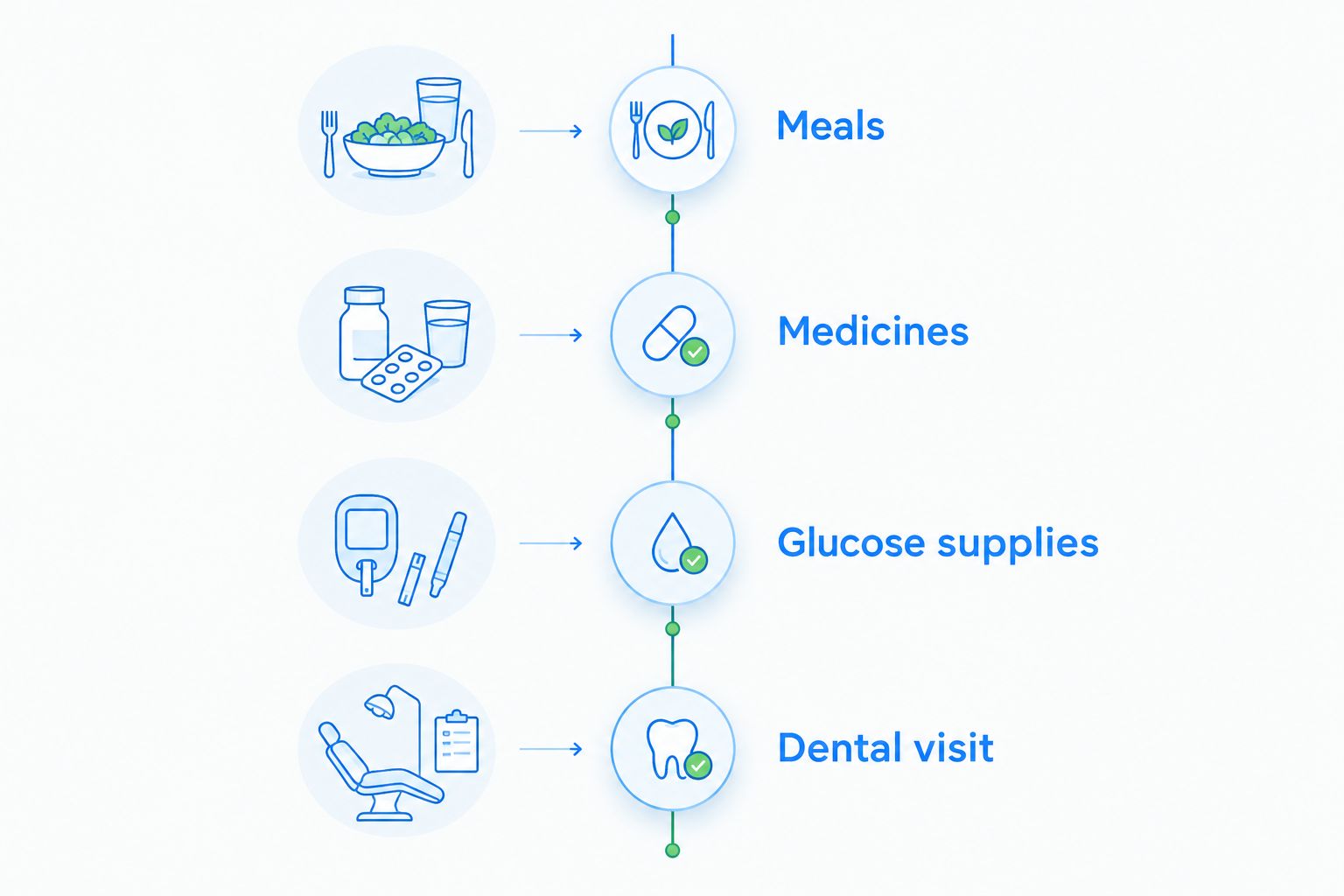
5. Protect your meal and medicine routine
Choose an appointment time that fits your usual eating and medicine schedule. Morning is not automatically best for everyone. A comfortable time is one that reduces disrupted meals and gives you a clear plan for checking blood sugar when needed.
For a routine visit without fasting instructions, keep your usual routine unless your care team tells you otherwise. Bring your glucose-monitoring supplies and the treatment you normally use for low blood sugar. Tell the dental team promptly if you feel shaky, sweaty, confused, or otherwise unwell.
If sedation or surgery requires fasting, ask for a coordinated plan before the appointment. Do not improvise insulin or medication changes because a dental visit is approaching. The dentist and prescribing clinician need to account for the procedure and your diabetes treatment.
- Schedule around your normal meals whenever possible.
- Confirm whether fasting is required rather than assuming it is.
- Bring glucose supplies and your usual low-blood-sugar treatment.
- Tell the team how you recognize and manage low blood sugar.
6. Plan treatment and recovery together
Diabetes does not automatically rule out fillings, crowns, root canal treatment, or tooth removal. Your dentist considers the problem, current diabetes management, infection, and the expected recovery. More involved procedures need particular attention to healing and food intake.
For an extraction or other oral surgery, ask what you can eat and what to do if eating becomes difficult. Your diabetes clinician should guide medicine changes if your intake changes. Follow the dental team’s wound-care instructions rather than adding rinses or treatments on your own.
Antibiotics are not automatically required just because you have diabetes. Your dentist decides whether they are appropriate for the specific situation. Request written instructions so you can review them when you are home and tired.
- Ask how the proposed treatment affects eating and healing.
- Confirm who to contact if you cannot follow your normal meal plan.
- Request written instructions for medicines and wound care.
- Discuss follow-up timing and signs that need urgent review.
7. Make the plan manageable and comfortable
A useful dental plan should explain what needs treatment now, what can be monitored, and what you can do at home. Ask for that distinction if the recommendations feel overwhelming. Clear priorities make the next decision easier without ignoring an active problem.
Tell your dentist if you feel nervous. Ask for explanations before each step, a pause signal, and breaks when appropriate. Do not assume a particular sedation option is available or suitable; that requires a separate discussion of your health and medicines.
Dentistry of Tavares provides general, cosmetic, and restorative dental care. Ask which recommendations address disease and which are optional appearance changes. For your 2026 plan, request a written estimate and confirm coverage with your insurer rather than assuming a treatment is covered.
- Ask which treatment is urgent, preventive, or optional.
- Agree on a signal to pause if you need a break.
- Request plain-language explanations of benefits and limitations.
- Confirm insurance benefits and discuss payment questions before treatment.
Compare dental care options for diabetic patients
Choose care by the problem it treats, not by diabetes alone. These options serve different purposes in a 2026 dental plan. Home care supports every option, but it cannot replace treatment for established disease.
| Option | Best for | Main benefit | Key limitation |
|---|---|---|---|
| Daily brushing and interdental cleaning | Everyone maintaining teeth and gums | Removes plaque between dental visits | Cannot remove tartar or diagnose deeper gum disease |
| Preventive examination and cleaning | Patients maintaining oral health and checking changes | Identifies problems and removes deposits appropriate to routine cleaning | Is not enough for every case of established periodontitis |
| Scaling and root planing | Patients with periodontitis when the dentist recommends it | Cleans affected tooth surfaces below the gumline | Requires diagnosis, home care, and follow-up; advanced disease can need further treatment |
| Individual dry-mouth care | Patients with persistent dryness or increased cavity risk | Addresses comfort and tooth protection | Does not treat every underlying cause; medicines sometimes need medical review |
| Restorative or surgical treatment | Patients with damaged, infected, or missing teeth | Addresses a specific tooth problem | Recovery and eating changes need planning; it does not replace gum care |
A cleaning cannot repair a cracked tooth, and a crown cannot treat gum disease around the tooth. Ask your dentist to name the diagnosis before discussing the procedure. That keeps the treatment conversation focused on what you need.
Common mistakes diabetic patients make
Waiting for pain before booking
Gum disease can develop without obvious pain. Keep the examination schedule your dentist recommends, and report bleeding, swelling, or tooth movement between visits. Feeling comfortable does not confirm that the supporting gums and bone are healthy.
Skipping food without a diabetes plan
Avoiding breakfast before a routine appointment is not a universal safety measure. It can increase low-blood-sugar risk with certain medicines. Confirm fasting instructions and get medication guidance whenever a procedure changes your normal eating schedule.
Replacing plaque removal with mouthwash
Mouthwash does not replace brushing or cleaning between teeth. Some rinses have a specific role, but choosing one should follow your needs, especially if your mouth feels dry. More rinsing is not the answer to untreated gum disease.
Treating dental care as blood sugar treatment
Treating gum disease supports oral health and belongs alongside diabetes care. It does not replace prescribed medicine, nutrition advice, or glucose monitoring. Keep both teams informed rather than expecting one appointment to manage both conditions.
FAQ
What is the best dental care for diabetics?
The best dental care for diabetics combines daily fluoride brushing, cleaning between teeth, professional gum assessment, and treatment matched to the diagnosis. Appointment planning should also account for meals, diabetes medicines, and recovery needs.
How often should I visit the dentist if I have diabetes?
Your dentist should set your visit interval based on gum health, cavity risk, diabetes management, and treatment history. Diabetes alone does not establish one schedule for everyone, and active gum disease can require closer follow-up.
Should I take my diabetes medicine before a dental appointment?
Do not change your diabetes medicines unless your prescribing clinician gives you instructions. Confirm whether the dental procedure requires fasting, sedation, or changes to eating, because those circumstances need individual planning.
Can I have a tooth removed if I have diabetes?
Diabetes does not automatically prevent a tooth extraction. Your dentist must assess the tooth problem, current diabetes management, and recovery needs, including what happens if you cannot eat normally afterward.
Do diabetic patients need antibiotics for dental treatment?
Diabetes alone does not automatically require antibiotics for dental treatment. Your dentist decides based on the infection, procedure, medical history, and other clinical considerations; do not use leftover antibiotics.
Is bleeding when I brush normal with diabetes?
Bleeding gums deserve a dental assessment rather than being accepted as normal because you have diabetes. Continue gentle cleaning and report persistent bleeding, swelling, bad breath, or tooth movement.
What should I do about dry mouth with diabetes?
Tell your dentist and diabetes clinician about persistent dry mouth so they can review possible causes and cavity risk. Water, suitable saliva substitutes, and an individual prevention plan can help, but do not stop a prescription medicine yourself.
When does a dental problem need emergency help?
Trouble breathing or swallowing, rapidly spreading swelling, or severe illness requires immediate emergency medical care. For tooth pain, localized swelling, or suspected infection without those symptoms, contact a dentist promptly rather than waiting for a routine visit.
Related guides
One last thing
The most useful addition to your 2026 dental routine is a question: What is the plan if I cannot eat normally after treatment? Ask it before any procedure that could change your meals. A clear answer connects dental recovery with safe diabetes management.
Request an appointment with Dentistry of Tavares to discuss your teeth, gums, and diabetes-related concerns. Bring your medication list and questions about comfort so you can plan the next step together.
Request your dental appointment
Discuss gum health, home care, and dental treatment planning with your diabetes routine in mind.