Dental Care for Seniors: Prevention First in 2026
Dental care for seniors is daily cleaning and professional care aimed at keeping teeth, gums, and any replacement teeth comfortable and functional. In 2026, the right routine depends on more than age: medications, dry mouth, changes in hand strength, existing dental work, and the ability to get to appointments all affect what works.
- Dental care for seniors starts with fluoride brushing, daily cleaning between teeth, and a dental exam tailored to individual needs.
- Dentistry of Tavares is best for Tavares seniors seeking local preventive, cosmetic, or restorative dental care.
- Ask about dry mouth, sensitive teeth, dental work, and coverage before choosing treatment.
- A crown repairs a suitable damaged tooth; a bridge replaces a missing tooth. Neither replaces a personal exam.
Why dental care matters for seniors
You can keep your natural teeth as you get older. Age alone does not mean tooth loss is inevitable. But an older adult’s routine can become harder to manage when a toothbrush is difficult to grip, the mouth feels dry, or an existing crown or bridge needs attention.
The best first move is a dental exam, not a shopping list of treatments. If you are in Tavares, Dentistry of Tavares offers general, cosmetic, and restorative dental care. Bring the questions that matter to you, including discomfort, trouble chewing, or concern about the cost of a proposed treatment.
A caregiver can help, but the plan should still reflect the patient’s preferences. In 2026, that means explaining each recommendation in everyday language and asking what the patient can comfortably manage at home.
Build a dental care routine you can keep
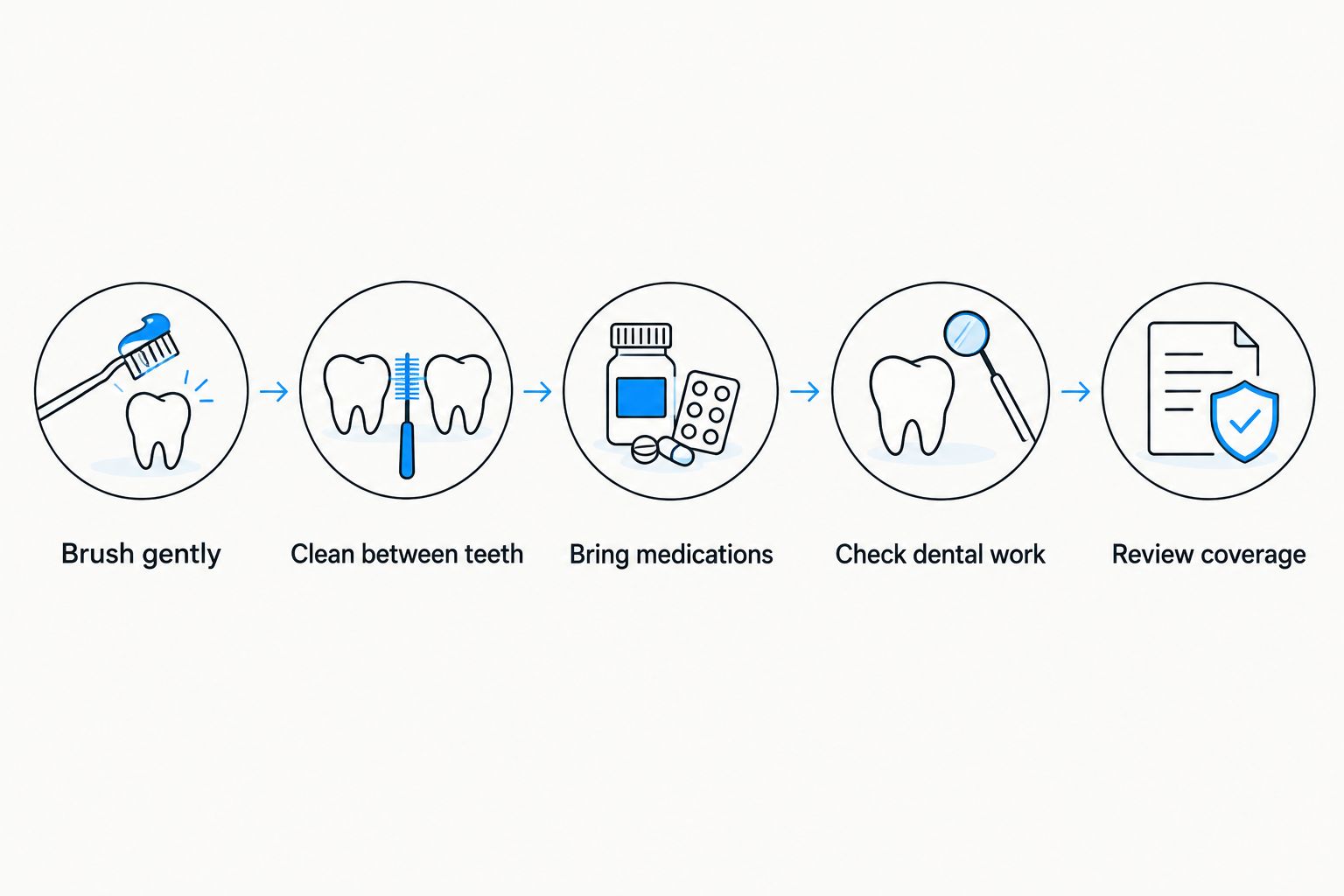
Brush gently with fluoride toothpaste
Brush your teeth 2 times a day for 2 minutes each time with fluoride toothpaste. Use a soft-bristled brush and gentle pressure along the gumline. Scrubbing harder does not make brushing more effective, and a painful spot deserves attention rather than extra force.
If holding a narrow handle is difficult, try a brush with a larger grip or an electric toothbrush that feels comfortable in your hand. The best brush is one you can control well enough to clean every surface. Ask for a demonstration at your next visit if you are unsure where you miss spots.
- Brush the outer, inner, and chewing surfaces of every tooth.
- Angle the bristles toward the edge where teeth meet gums.
- Spit out excess toothpaste rather than rinsing it all away immediately.
- Tell your dentist if brushing causes bleeding or persistent pain.
Clean between teeth in a way you can manage
Clean between your teeth 1 time a day. Floss is one option; a floss holder or interdental brush can be easier if finger movement is limited. The right tool depends on the spaces between your teeth and any bridge or other dental work.
A water flosser can help some people reach areas they struggle to clean by hand, but it does not replace a dentist’s advice on cleaning around a particular restoration. Ask the dental team to show you how to clean the exact areas you find difficult.
- Start with the spaces you can reach comfortably.
- Use a floss holder if wrapping floss around your fingers is difficult.
- Ask which tool fits around your existing dental work.
- Report one area that bleeds repeatedly instead of ignoring it.
Bring your medication list to the exam
Many medications can cause dry mouth. Saliva helps protect teeth and makes eating and speaking more comfortable, so a persistently dry mouth belongs on your dental agenda. Bring a current medication list, including nonprescription products, rather than trying to remember names in the chair.
Do not stop or change a prescribed medicine because your mouth feels dry. Your dentist can discuss oral care, and the clinician who prescribed the medicine can advise on the medication itself. Mention whether dryness happens all day, during sleep, or only after taking a particular medicine.
- List prescription and nonprescription medicines.
- Describe when your mouth feels driest.
- Ask whether your cleaning routine needs to change.
- Ask your prescriber before changing any medicine.
Ask for a close look at gums and sensitive spots
Tender gums, sensitivity, and a tooth that feels different when you bite are useful details, not small complaints to save for later. Tell the dentist where the sensation occurs and what sets it off. A cold drink, brushing, and chewing can point to different questions for the exam.
If your gums appear to be pulling back, brushing harder is not the answer. A soft brush and a review of your technique are reasonable starting points; the dentist can check what is happening and recommend care for your mouth. Dentistry of Tavares can discuss preventive care alongside concerns about existing dental work.
- Point to the exact tooth or gum area that bothers you.
- Say whether discomfort happens with cold, heat, or chewing.
- Mention bleeding that keeps returning.
- Ask someone to check how you brush near the gumline.
Check crowns, bridges, and missing teeth
A crown covers a tooth; a bridge replaces a missing tooth by connecting to support on either side. Those are different jobs. If a crown feels loose, a bridge is difficult to clean, or a gap affects chewing, ask for an exam before deciding what should change.
You can start by noting when the problem began and which foods are difficult to eat. Dentistry of Tavares offers crowns and bridges, but an exam determines whether either is appropriate for your teeth. A treatment that fixes the visible gap is not enough if you cannot clean it comfortably afterward.
- Show the dentist any area where food repeatedly gets caught.
- Explain whether a tooth feels loose or painful when biting.
- Ask how to clean a proposed restoration at home.
- Request an explanation of what happens if you wait.
Plan visits around your health and comfort
Tell the dental office about health conditions, medication changes, mobility needs, and dental anxiety when you request an appointment. If a caregiver helps with transportation or health decisions, discuss what information you want that person to share or receive. A clear plan before the visit can make the conversation less tiring.
Ask what the dentist recommends for your next checkup rather than assuming every patient needs the same interval. In 2026, the useful schedule is the one matched to your oral health and any treatment that needs follow-up. If you are nervous, say so plainly and ask for each step to be explained before it begins.
- Share relevant health changes before the visit.
- Bring your medication list and questions.
- Ask what will happen during the appointment.
- Confirm when your dentist wants to see you again.
Review coverage before agreeing to treatment
Ask for a written treatment plan and check your coverage before choosing nonurgent work. Dental insurance rules differ by plan. Original Medicare generally does not cover routine dental care, while Medicare Advantage dental benefits depend on the specific plan. Do not assume a procedure is covered just because a checkup is.
Ask the office and your insurer to explain what the plan covers, what approval is needed, and what portion remains your responsibility. For a larger treatment decision, compare the proposed options and their limits before choosing. You deserve an explanation you can understand without pressure.
- Request a written plan for proposed treatment.
- Check the specific procedure with your insurer.
- Ask whether approval is required before treatment.
- Discuss your portion of the cost before booking.
The routine works best when each part fits your life. A brush you can hold, a cleaning tool you will use, and a visit you can attend matter more than a complicated plan you cannot repeat.
Compare care options for your situation
Not every dental concern calls for a procedure. Home care protects what you have; an exam identifies problems you cannot assess yourself. A crown, bridge, or oral surgery consultation addresses a different question. The table is a conversation guide, not a diagnosis.
| Option | Best for | Cost information | Key limitation |
|---|---|---|---|
| Daily home care | Keeping natural teeth and gums clean between visits | Ask which supplies suit your needs | Cannot diagnose pain or repair damaged dental work |
| Preventive dental visit | Checking teeth, gums, and existing dental work | Check your plan and request an estimate | An exam does not replace daily cleaning |
| Crown | A tooth the dentist determines can be restored with a crown | Request a written treatment plan | Does not replace a missing tooth |
| Bridge | A missing-tooth gap when the dentist finds a bridge suitable | Request a written treatment plan | Needs careful cleaning around its supports |
| Oral surgery consultation | A concern that requires a surgical assessment | Confirm coverage and request an estimate | Does not mean surgery is necessary |
Dentistry of Tavares is best for Tavares seniors who want local preventive care and a discussion of restorative options, including crowns and bridges. It is not a substitute for home cleaning, and no dentist can tell you which treatment fits without examining your mouth. If you are comparing ways to address a missing tooth, ask how each option affects cleaning, comfort, and the teeth beside the gap.
A good question is: “What problem does this option solve, and what would I need to do afterward?” The answer should include home care and follow-up, not only the procedure itself. In 2026, you should also confirm your own coverage before treating a written estimate as a final out-of-pocket amount.
Common dental care mistakes seniors make
Waiting for pain before scheduling a visit
A tooth or restoration can need attention before it hurts. If you notice a loose crown, a change in your bite, or an area you cannot clean, tell your dentist rather than waiting for severe discomfort. Routine visits also give you a chance to ask about gums, dry mouth, and cleaning technique.
Treating dry mouth as a minor inconvenience
Dry mouth can change how comfortable eating, speaking, and daily cleaning feel. Tell your dentist when it happens and bring your medication list. Do not adjust prescriptions on your own; ask the prescribing clinician about medicine-related concerns.
Choosing a tool that is too hard to use
An ideal-looking flossing routine is no help if you cannot grip the floss. Try a holder or ask whether another cleaning tool fits your teeth. If someone helps with your care, ask the dental team to explain the technique to both of you, with your permission.
Assuming insurance covers every recommendation
Coverage varies by plan and treatment. Before nonurgent work, get the recommended procedure in writing and ask your insurer what applies. In 2026, checking the exact plan matters more than relying on a general statement about senior dental benefits.
Leaving a visit without understanding the next step
Ask what needs attention now, what can be monitored, and how to care for your mouth at home. If an explanation feels too technical, request simpler language. Dentistry of Tavares serves local patients with preventive and restorative care; the decision about your next step should make sense to you before you leave.
FAQ
What is the best dental care routine for seniors?
Brush with fluoride toothpaste 2 times a day for 2 minutes and clean between your teeth 1 time a day. A dentist can adjust the routine for dry mouth, dental work, or limited hand movement.
Do seniors still need dental checkups if nothing hurts?
Yes, a dental exam can assess teeth, gums, and existing dental work even when nothing hurts. Ask your dentist to set a visit schedule based on your oral health rather than age alone.
What should I tell my dentist about dry mouth?
Tell your dentist when the dryness occurs and bring a current medication list. Do not stop a prescribed medicine without speaking to the clinician who prescribed it.
Is a bridge the same as a crown?
No. A crown covers a tooth, while a bridge replaces a missing tooth using supports beside the gap. An exam determines whether either option fits your situation.
Does Medicare cover dental care for seniors?
Original Medicare generally does not cover routine dental care. Dental benefits under Medicare Advantage depend on the specific plan, so check coverage for the proposed service before treatment.
What if flossing is difficult with arthritis or limited hand movement?
Ask your dentist about a floss holder, interdental brush, or another tool you can use comfortably. The choice should fit your teeth and any dental work you have.
What should a senior bring to a dental appointment?
Bring a current medication list, insurance information, and a short list of concerns. Note any dry mouth, sensitivity, trouble chewing, or changes to crowns and bridges.
One last thing
The most useful question at a dental visit is often “How will I clean this at home?” Ask it before agreeing to work on a tooth or replacing one. A care plan is only useful if you can follow it comfortably. For dental care for seniors in Tavares, request an appointment with Dentistry of Tavares and bring your questions; you can decide on the next step after a clear explanation.