Preventive Dental Care for Children: Start Early in 2026
Children’s preventive dental care is daily cleaning, healthy eating habits, and regular dental visits aimed at preventing cavities and protecting growing smiles. This 2026 guide explains preventive dental care for children, including how to help with brushing, use fluoride safely, and prepare a nervous child for an appointment.
- Preventive dental care for children combines fluoride toothpaste, parent-assisted brushing, healthy snack habits, and risk-based dental visits.
- Dentistry of Tavares provides general preventive dental care for local patients; ask about appointments for your child’s age.
- Start brushing when the first tooth appears, and arrange the first dental visit by the first birthday.
- Choose a comfortable children’s toothbrush; fluoride and thorough cleaning matter more than choosing manual or electric.
Why preventive dental care matters for children
Baby teeth help children chew, speak, and hold space for permanent teeth. Cavities in baby teeth still need attention; waiting for those teeth to fall out is not a prevention plan.
Children also need help that adults do not. Small hands make brushing difficult, back teeth are easy to miss, and frequent snacks create repeated exposure to sugars. Your job is to make cleaning predictable, then gradually teach your child to take part.
For your 2026 routine, start with a brush your child can comfortably use. This guide to kids’ toothbrushes for cavity prevention explains the options, but an expensive brush is not required.
The American Dental Association’s home-care recommendations support brushing twice daily with fluoride toothpaste. The American Academy of Pediatric Dentistry recommends a first dental visit when the first tooth appears, no later than the first birthday. These recommendations address different needs: daily cleaning protects teeth between visits, while an examination helps identify problems and set an individual care plan.
Dentistry of Tavares is best for local patients seeking general preventive dental care rather than a pediatric-only practice. Ask whether the practice sees children of your child’s age and whether a pediatric referral is appropriate.
Build your child’s prevention routine
1. Start dental visits before a problem develops
Arrange the first dental visit when your child’s first tooth appears, and no later than age 1. An early visit gives you a chance to discuss feeding, brushing, fluoride, and anything unusual you have noticed. You do not need to wait until your child can sit through an adult-style cleaning.
Tell the office your child’s age when scheduling. Explain any sensory sensitivities, medical conditions, medications, previous dental experiences, or worries about the visit. This information helps the dental team prepare and decide whether your child needs a different care setting.
For an anxious child, use plain language: the dentist will look at the teeth and help keep them healthy. Avoid promising that nothing will feel unfamiliar. Instead, explain that your child can ask questions and that you will discuss how to make the visit comfortable.
Bring your own questions, too. Feeding habits, thumb-sucking, and trouble brushing are useful topics even when your child has no pain.
- Schedule around your child’s usual rested, alert time.
- Share medical history and current medications.
- Describe sensory needs before the appointment.
- Ask how a parent participates during the visit.
- Agree on the next visit based on your child’s needs.
2. Brush with the right amount of fluoride toothpaste
Begin brushing as soon as the first tooth appears. Use a soft-bristled brush with a small head, and brush twice daily for 2 minutes. Clean the outside, inside, and chewing surfaces, paying particular attention to the back teeth and the gumline.
For children younger than age 3, the American Dental Association recommends a smear of fluoride toothpaste about the size of a grain of rice. From ages 3 through 6, use a pea-sized amount. An adult should dispense the toothpaste and supervise brushing so the child does not swallow it.
A child’s enthusiasm for brushing does not replace an adult’s help. Let your child practice, then finish any areas they missed. Watch their technique rather than assuming that reaching a particular birthday means they can brush thoroughly alone.
A manual toothbrush is a useful starting point. An age-appropriate electric toothbrush is another option if your child prefers it, but either brush still needs guidance and careful coverage.
- Use fluoride toothpaste in the age-appropriate amount.
- Brush morning and bedtime for 2 minutes.
- Help clean the back teeth and gumline.
- Encourage spitting once your child can do it reliably.
- Replace a brush when its bristles become worn or frayed.
3. Clean between teeth and ask about professional prevention
Start cleaning between your child’s teeth when adjacent teeth touch. A toothbrush cannot fully clean those contact areas. Floss gently along each tooth rather than snapping it into the gums, and help your child until they can handle the task safely and thoroughly.
Ordinary floss works well when you can guide it comfortably. A floss holder can make access easier, especially if your child struggles to keep their mouth open. Ask the dentist to demonstrate the technique rather than guessing around a tight contact.
At Dentistry of Tavares, ask about preventive dental care appropriate for your child, including whether professional fluoride or sealants are recommended. Fluoride helps strengthen enamel. Sealants cover grooves on selected chewing surfaces, where food and plaque can collect. Neither replaces brushing or cleaning between teeth.
For a 2026 appointment, bring a list of the products your child uses. Include toothpaste, rinses, and supplements so the dentist can review the whole routine. Do not add fluoride supplements without professional advice.
- Clean between touching teeth each day.
- Ask for a hands-on flossing demonstration.
- Discuss fluoride based on your child’s cavity risk.
- Ask whether back teeth need sealants.
- Have existing sealants checked during dental examinations.
4. Make drinks and snacks easier on teeth
Start with the habits you control at home. Offer water between meals, keep sweet drinks from becoming an all-day habit, and give snacks at defined times rather than leaving them available for constant grazing.
Frequency matters because mouth bacteria use sugars to produce acids that attack enamel. Repeated sipping or nibbling creates repeated acid exposure. A sweet food eaten with a meal is different from the same food eaten little by little throughout the afternoon.
Once your child has teeth, avoid putting them to bed with a bottle containing milk, formula, juice, or another sweetened drink. Discuss nighttime feeding with the dentist if it remains part of your child’s routine; ask for practical guidance rather than stopping a necessary feeding without advice.
You do not need to turn every meal into a dental lesson. Make water easy to reach, keep brushing consistent, and explain that teeth need a break between eating times. Your child can enjoy food without treating sweets as forbidden or brushing as punishment.
- Offer water between meals and snacks.
- Keep sweet drinks from becoming a sipping habit.
- Avoid bottles of sweetened drinks at bedtime.
- Choose a mix of foods rather than frequent sticky sweets.
- Discuss feeding challenges without blame or embarrassment.
5. Match dental visits and protection to your child
A dental visit schedule should reflect your child’s cavity risk, dental development, and treatment needs. A familiar calendar interval is not a substitute for an individual recommendation. Ask the dentist to explain why a particular follow-up schedule fits your child.
Examinations can identify early decay, changes in the gums, and concerns about how teeth are coming in. Dental X-rays are used when the examination and history indicate a need, not simply because the calendar changes. Ask what an X-ray would help the dentist evaluate.
Protection also extends beyond cavities. If your child plays a sport with a risk of mouth injury, ask about a properly fitted mouthguard. Braces and other appliances need extra cleaning attention because food and plaque collect around them.
Before booking your 2026 visit, review benefits and ask the office about payment questions. This guide to understanding your dental insurance helps you prepare; confirm coverage for the specific service rather than assuming all preventive procedures are included.
- Ask for a written or clearly explained recall plan.
- Discuss the reason for any recommended X-rays.
- Mention sports and previous mouth injuries.
- Review cleaning around braces or other appliances.
- Confirm insurance benefits and payment options before treatment.
6. Build confidence and respond to changes promptly
Make dental care a familiar activity, not a test your child passes or fails. Offer small choices, such as which toothbrush to use or which song to play, while keeping brushing itself nonnegotiable. Praise cooperation and practice rather than promising rewards for having no cavities.
If your child is frightened, describe the specific difficulty to the office. Fear of sounds, trouble reclining, and worry about gagging need different conversations. Ask how the team can explain each step and agree on a way for your child to signal that they need a pause.
Contact a dentist for tooth pain, a broken tooth, swelling, or a new spot that concerns you. Seek urgent medical care for trouble breathing or swallowing, or significant facial swelling. Prevention includes responding to symptoms; it does not mean waiting for a scheduled cleaning.
Ask Dentistry of Tavares whether your child’s concern needs prompt evaluation. Same-day care is available only when the practice can accommodate it, so confirm timing directly rather than assuming an opening.
- Keep the brushing routine calm and predictable.
- Tell the office what specifically worries your child.
- Ask about a pause signal before care begins.
- Report pain, swelling, or injuries promptly.
- Request clear instructions for care between visits.
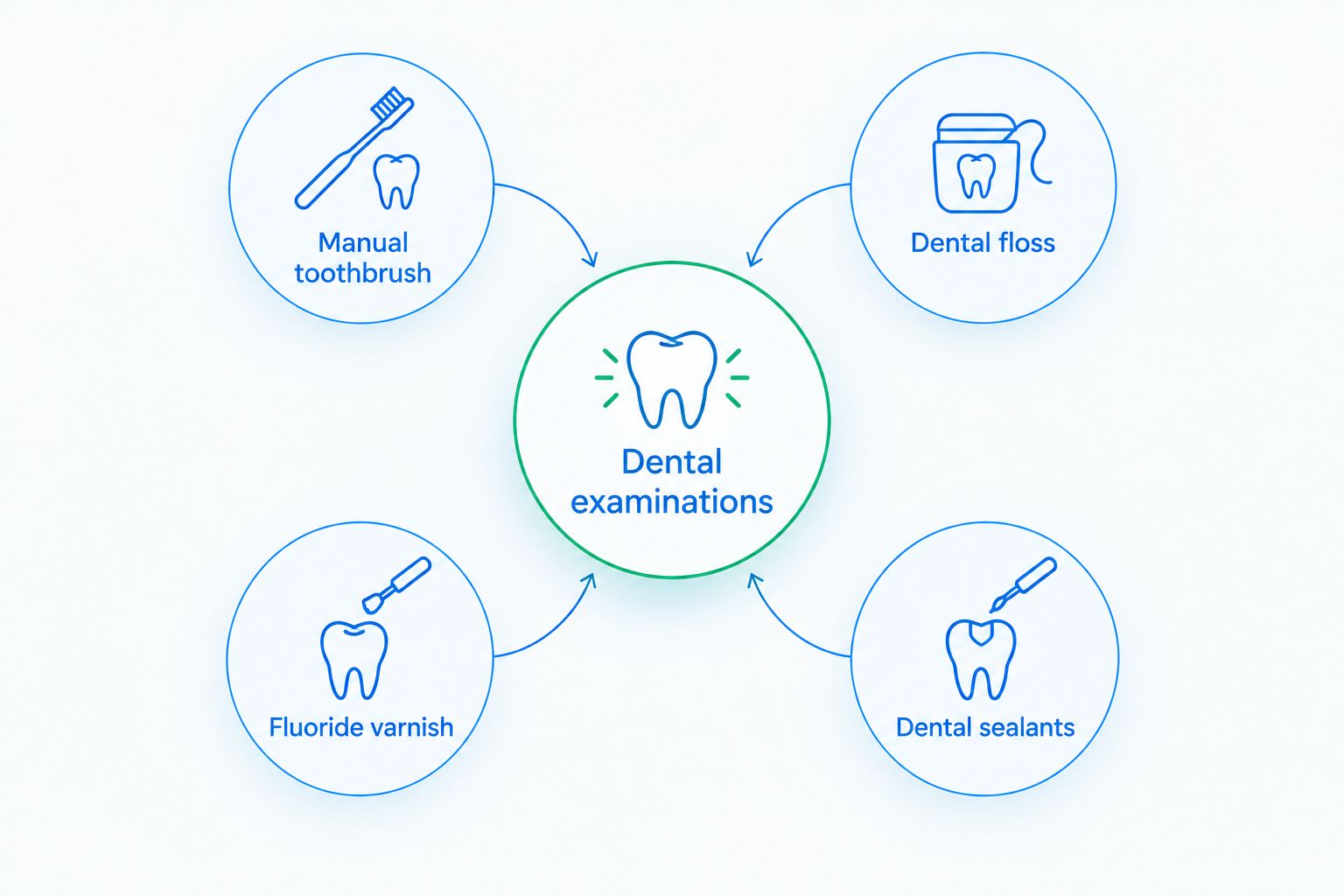
Compare preventive care options for children
The best plan combines home care with dental care; these options solve different problems. Start with daily brushing and cleaning between teeth, then add professional prevention according to the dentist’s findings. No single option covers every surface or every source of risk.
| Option | Best for | Main benefit | Key limitation |
|---|---|---|---|
| Manual toothbrush | Children comfortable with parent-assisted brushing | Simple daily cleaning with direct adult guidance | Technique and complete coverage still matter |
| Electric toothbrush | Children who prefer a powered brush | Another way to clean teeth with adult supervision | Vibration or sound can bother some children |
| Dental floss | Cleaning where neighboring teeth touch | Reaches contact areas a brush misses | Young children need help using it safely |
| Fluoride varnish | Children whose dentist recommends added fluoride protection | Applies fluoride directly to teeth | Does not replace home cleaning or treat a cavity that needs repair |
| Dental sealants | Suitable grooves on back teeth | Creates a barrier over selected chewing surfaces | Does not protect every tooth surface and needs checking |
| Dental examinations | Monitoring risk, growth, and symptoms | Supports an individual prevention and treatment plan | A visit cannot replace daily home care |
These options work together rather than compete. For your child’s 2026 plan, ask which measures address a specific need and which habits you should practice at home.
Common mistakes parents make with children’s dental care
Waiting because baby teeth will fall out
Baby teeth need care while your child uses them. Arrange an examination for pain or visible changes rather than waiting for a loose tooth. The dentist can explain whether the tooth needs treatment and how its condition affects your child.
Letting a young child handle all brushing
Children need time to develop the coordination for thorough cleaning. Keep helping, even when your child wants independence. Let them start, then check and finish the areas they missed without turning the routine into an argument.
Using more toothpaste for extra protection
More toothpaste is not the goal. Use the recommended small amount for your child’s age, keep the tube out of reach, and supervise use. Ask the dentist before adding a fluoride rinse, especially if your child cannot reliably spit it out.
Treating sealants as permission to skip brushing
Sealants protect selected grooves, not the entire mouth. Your child still needs fluoride toothpaste, cleaning between touching teeth, and examinations. Ask the dentist to check sealants rather than assuming they stay intact indefinitely.
FAQ
When should my child first see a dentist?
Arrange your child’s first dental visit when the first tooth appears, no later than the first birthday. The American Academy of Pediatric Dentistry recommends this timing to begin assessment and parent guidance early.
What is the best preventive dental care for children?
The best foundation is parent-assisted brushing with fluoride toothpaste, cleaning between touching teeth, sensible snack habits, and risk-based dental visits. Professional fluoride and sealants add protection when the dentist recommends them.
How much toothpaste should I use for my child?
Use a rice-sized smear of fluoride toothpaste for children younger than age 3 and a pea-sized amount from ages 3 through 6. An adult should dispense it and supervise brushing to limit swallowing.
Is an electric toothbrush better than a manual brush for children?
Either an age-appropriate electric or manual toothbrush can support effective cleaning with adult help. Choose a soft-bristled brush your child tolerates, then focus on reaching every tooth surface.
Does my child need dental sealants?
A dentist should assess whether your child’s back teeth would benefit from sealants. Sealants protect selected chewing grooves, but brushing and cleaning between teeth remain necessary.
How often should children have dental checkups?
Children should return on the schedule their dentist recommends after assessing cavity risk, growth, and treatment needs. Ask for the reason behind the interval instead of assuming every child needs the same schedule.
Can I request a children’s appointment at Dentistry of Tavares?
Ask Dentistry of Tavares whether the practice sees children of your child’s age and can meet their care needs. Share any anxiety, sensory concerns, or medical history when requesting an appointment.
One last thing
A toothbrush demonstration can be more useful than another reminder to brush. Bring your child’s brush to the next visit and ask the dental team to show you how to reach the back teeth comfortably. You leave with a technique you can use that evening.
Related guides
- Water flossers for tight teeth
- Clear aligners for teenagers
- Same-day dental emergency appointments in Tavares
Request an appointment to discuss your child’s brushing routine, dental development, and next steps. Let the team know your child’s age and what would help them feel comfortable.