Is sedation dentistry safe for children?
Sedation dentistry can be safe for children when the dental team checks their health, chooses an appropriate sedation level, monitors them throughout treatment, and has the training and equipment to manage breathing problems. It is not risk-free: your child’s medical history, the medicines used, and the team’s safety procedures matter more than whether an option is described as gentle.
- Is sedation dentistry safe for children? Yes, with appropriate screening, trained staff, monitoring, and supervised recovery—not without risk.
- Nitrous oxide usually allows children to stay awake; deeper sedation requires more extensive monitoring and airway support readiness.
- Ask who monitors your child, what training they have, and how they handle breathing emergencies.
- Dentistry of Tavares provides general dental care for local patients; ask about your child’s needs before scheduling.
Is sedation dentistry safe for children?
The safety of children’s dental sedation depends on the whole care plan, not just the medicine. A suitable plan includes a health review, clear preparation instructions, monitoring matched to the sedation depth, and recovery checks before discharge.
The American Academy of Pediatrics and American Academy of Pediatric Dentistry’s joint guidance addresses these safeguards for children undergoing sedation for diagnostic and treatment procedures. That guidance provides the safety framework for this 2026 guide; it does not establish that every child or every dental office is suitable for sedation.
For everyday care that helps reduce treatment needs, see the guide to preventive dental care for children.
| Sedation level | What your child generally experiences | Best suited to, after assessment | Benefit | Limitation |
|---|---|---|---|---|
| Minimal sedation | Awake and able to respond normally | Children who need help relaxing but can participate | Less change in awareness | Not enough for every child or procedure |
| Moderate sedation | Sleepy but able to respond purposefully to speech or light touch | Selected children needing more help tolerating treatment | Greater relaxation | Breathing and sedation depth require close attention |
| Deep sedation | Difficult to wake; responds only after repeated or painful stimulation | Selected children whose treatment needs justify deeper sedation | Allows treatment when lighter approaches are unsuitable | Breathing assistance can be necessary |
| General anesthesia | Unconscious and not responsive to painful stimulation | Selected children needing an anesthesia-led treatment plan | Allows treatment without conscious participation | Requires anesthesia care and airway management |
These are levels of awareness, not interchangeable product names. Oral medicine, inhaled medicine, and intravenous medicine describe how a drug enters the body; they do not, by themselves, establish sedation depth.
Why this matters
A nervous child does not automatically need sedation. Calm explanations, breaks, gradual introductions to equipment, and local numbing medicine can help some children complete treatment while fully awake.
Other children need additional support because of their age, developmental needs, anxiety, or the amount of dental work required. The goal is an appropriate, individualized approach—not the deepest sedation available. Ask the dentist to explain both the reason for sedation and the alternatives.
Minimal sedation: staying awake with help relaxing
Nitrous oxide mixed with oxygen is a common dental option for reducing anxiety. When used alone at appropriate concentrations in an otherwise suitable patient, it generally produces minimal sedation: your child remains awake and can respond.
Best for: selected children who can tolerate a nasal mask and follow instructions but need help feeling calmer. Its effects usually wear off quickly after administration stops, although the team must still check that your child is ready to leave.
The limitation is cooperation. A child who cannot tolerate the mask, has difficulty breathing through the nose, or needs more extensive behavior support might need a different plan. Combining nitrous oxide with other sedating medicines can deepen sedation and change the monitoring requirements.
Ask the team what your child will feel and how they will introduce the mask. A simple explanation before the visit is more helpful than promising your child will feel nothing.
Moderate sedation: sleepy does not mean unmonitored
Moderate sedation reduces awareness while preserving purposeful responses to speech or gentle touch. A child can become more deeply sedated than intended, so the team needs the skills to recognize that change and provide support.
Best for: selected children whose anxiety or treatment needs cannot be managed adequately with lighter approaches. Oral medicine is one possible route, but a swallowed medicine does not guarantee a particular sedation level.
The benefit is additional relaxation. The limitation is that the response varies, and a medicine already swallowed cannot simply be taken back if the effect is stronger than expected.
For a 2026 appointment, ask for the exact medicine names and the intended depth of sedation. Do not give your child a sleep aid, extra antihistamine, or other calming medicine unless the treating clinician specifically directs it.
Deep sedation: ask about dedicated monitoring
Deep sedation makes a child difficult to wake. Breathing can become inadequate, and the child can need help keeping the airway open.
Best for: selected children whose treatment and individual needs justify a deeper approach after clinical assessment. The benefit is the ability to complete treatment that lighter approaches cannot adequately support.
The limitation is the greater need for airway skills, monitoring, and rescue capability. Ask who is responsible for watching your child’s breathing while the dentist works, and which qualifications and credentials that person holds.
For pediatric deep sedation, the AAP/AAPD guidance calls for an independent observer whose responsibility is monitoring the child and supporting rescue measures. Do not assume the person performing the dental procedure is also the only person monitoring sedation.
General anesthesia: a separate anesthesia plan
Under general anesthesia, your child is unconscious. The anesthesia professional manages the medicines, breathing, and recovery while the dental team performs treatment.
Best for: selected children with extensive treatment needs or circumstances that make other approaches unsuitable. The decision should account for your child’s health, development, treatment needs, and alternatives—not convenience alone.
General anesthesia can make necessary treatment possible, but it carries risks and requires appropriate anesthesia facilities and staff. Ask whether treatment will take place in a dental office, surgery center, or hospital, and why that setting fits your child.
A hospital is not required for every child. Some medical conditions or airway concerns, however, warrant additional assessment or a setting with greater support.
Why sedation safety varies between children
A reassuring explanation should address your child’s actual circumstances. These factors affect the assessment:
- Medical history: heart or lung conditions, seizures, and other health concerns can change the sedation plan.
- Airway and sleep: loud snoring, sleep apnea, enlarged tonsils, and previous breathing problems need discussion.
- Current illness: a cold, cough, fever, or other new symptoms can affect whether treatment should proceed.
- Medicines and previous reactions: prescriptions, over-the-counter medicines, supplements, and past anesthesia problems help the team identify interactions and risks.
- Treatment and sedation depth: the procedure, expected duration, and child’s ability to cooperate influence the approach.
- Staffing and recovery arrangements: trained personnel, appropriate equipment, monitoring, and discharge checks are essential safeguards.
Tell the team about previous sedation or anesthesia problems in your child and relevant family history. Do not dismiss a detail because it seems unrelated to teeth.
What should happen before, during, and after sedation?
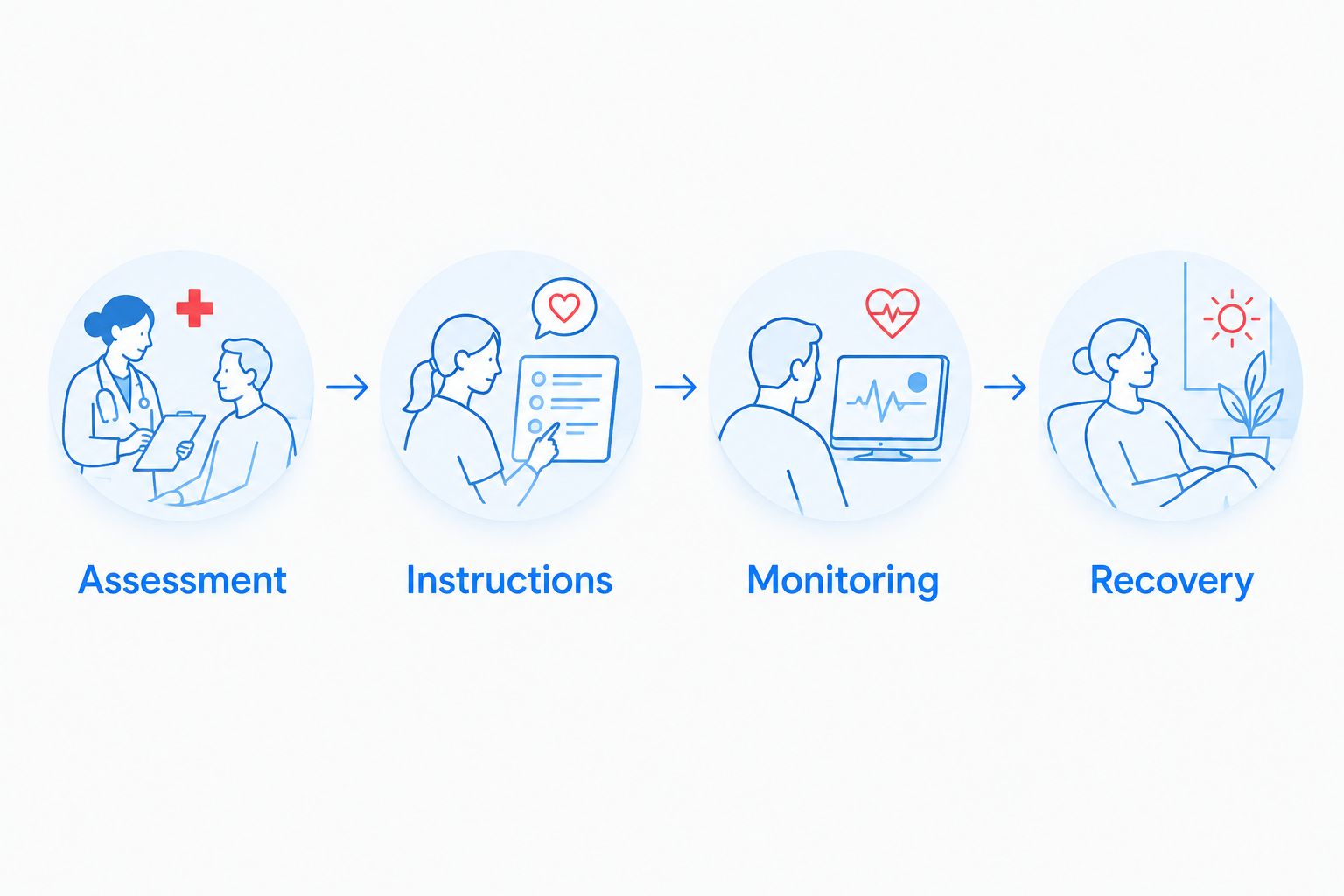
A safe process continues beyond the dental procedure. For your child’s 2026 visit, ask the team to walk you through these stages before you agree to treatment.
- Assessment: the clinician reviews health history, medicines, allergies, airway concerns, and the dental treatment plan. This is also the time to explain your child’s fears and communication needs.
- Instructions: you receive specific directions about eating, drinking, usual medicines, transportation, and what to do if your child becomes ill.
- Monitoring: staff observe your child and use monitoring appropriate to the sedation level, including breathing and oxygen monitoring when indicated.
- Recovery: the team checks readiness for discharge and gives you written instructions, warning signs, and a way to obtain help.
Ask how the team measures breathing, not only whether your child wears an oxygen monitor. Depending on sedation depth, monitoring exhaled carbon dioxide helps staff assess ventilation; an oxygen reading alone does not provide the same information.
You can also ask about dental sedation options for anxious patients, while remembering that children need a pediatric-specific assessment rather than an adult plan scaled down.
Does my child need to stop eating before dental sedation?
Follow the treating team’s written instructions exactly. Fasting requirements depend on the planned sedation and your child’s circumstances; instructions for nitrous oxide alone can differ from those for deeper sedation.
For elective sedation, the AAP/AAPD guidance lists standard minimum fasting intervals of 2 hours for clear liquids, 4 hours for breast milk, and 6 hours for infant formula, nonhuman milk, or a light meal. Fatty foods or meat can require longer fasting.
These intervals explain the guideline; they are not permission to create your own schedule. Ask the team to specify which foods and drinks are allowed and the exact cutoff times for your child’s 2026 appointment.
If your child eats or drinks after the stated cutoff, tell the team. They need that information to decide whether to delay or change the plan.
Will my child feel pain during dental sedation?
Sedation and pain control are not the same thing. Sedation helps with anxiety and awareness; the dentist often also uses local numbing medicine to control pain during treatment.
Ask what sensations your child should expect and how the team checks comfort. Pressure or vibration can feel different from pain, but your child should still have a way to communicate discomfort when awake enough to do so.
Avoid telling your child that sedation guarantees a completely sensation-free visit. A calm, honest explanation helps preserve trust.
What should I watch for after my child comes home?
Some sleepiness, dizziness, or nausea can occur after sedating medicines. Follow the discharge instructions about supervision, drinking, eating, activity, and any pain medicine.
Call 911 for trouble breathing, blue or gray lips, or a child who cannot be awakened. Contact the treating team promptly for other concerning symptoms, including repeated vomiting or recovery that does not match the instructions you received.
Do not leave a recovering child unsupervised or assume a sleeping child needs no checking. Arrange transportation and supervision before the appointment, and ask what to do if your child falls asleep during the ride home.
Questions to bring to a 2026 consultation
You do not need medical vocabulary to ask useful questions. Start with these:
- Why is sedation recommended for my child, and what alternatives are reasonable?
- What level of sedation do you intend, and which medicines will you use?
- Who gives the medicine, and who monitors breathing throughout treatment?
- What training, credentials, and emergency equipment does the team have?
- What happens if my child becomes more deeply sedated than planned?
- What are the preparation instructions and discharge requirements?
- Who do I contact after hours if recovery concerns me?
Dentistry of Tavares provides general and cosmetic dental care in Tavares, Florida. When asking about a child’s appointment, confirm whether the practice evaluates your child’s age group and whether the proposed sedation service is available there or requires referral.
For insurance questions, ask about the dental treatment and sedation separately. Coverage depends on your plan and the proposed services; request an explanation before consenting rather than assuming both are covered.
FAQ
Is sedation dentistry safe for children with asthma?
A child with asthma needs an individual assessment before dental sedation. Tell the team about symptom control, recent attacks, medicines, and any current cough or wheezing; these details can change the plan.
What’s the safest dental sedation for a nervous child?
There is no single safest option for every nervous child. The appropriate choice depends on health, cooperation, and treatment needs, and some children can receive care without sedation.
Is laughing gas the same as putting my child to sleep?
No, nitrous oxide used alone for minimal sedation generally leaves a child awake and responsive. Combining it with other sedating medicines can produce a deeper effect.
Can my child eat before dental sedation?
Your child should eat or drink only as permitted by the treating team’s written instructions. Fasting rules differ by sedation plan, so confirm the exact cutoff times rather than following a general online schedule.
Can children with sleep apnea have dental sedation?
Children with sleep apnea need additional airway assessment before sedation. Tell the team about diagnosed sleep apnea, loud snoring, pauses in breathing, and enlarged tonsils so they can assess the setting and monitoring needs.
Will my child remember dental treatment after sedation?
Memory varies with the medicine and sedation depth, so recall cannot be guaranteed. A child receiving minimal sedation can remain aware of the visit, while some deeper approaches reduce memory.
Should I cancel sedation if my child has a cold?
Contact the treating team before the visit if your child develops a cold, cough, fever, or other illness. The clinician should decide whether to proceed, postpone, or change the sedation plan.
One last thing
A medicine taken by mouth can still affect breathing. The route does not make sedation automatically mild or remove the need for monitoring.
Before signing consent, ask the team to explain the intended sedation depth and recovery plan in everyday language. You deserve an answer you understand, and your child deserves preparation that feels calm and honest.
Related guides
- New patient forms and your first appointment
- Understanding your dental insurance
- Kids’ toothbrushes for cavity prevention
Request an appointment with Dentistry of Tavares to discuss your dental questions and ask about the appropriate care pathway for your child.