Can gum disease be reversed without surgery?
Yes—gingivitis, the earliest stage of gum disease, can usually be reversed without surgery through professional cleaning and consistent daily care. Periodontitis, which damages the tissues and bone supporting your teeth, cannot be fully reversed with brushing or a deep cleaning, but nonsurgical treatment can help control it. For your 2026 treatment plan, the deciding factor is whether inflammation has progressed to loss of tooth support.
- Can gum disease be reversed without surgery? Gingivitis usually can; periodontitis requires ongoing management.
- A professional cleaning removes hardened buildup that brushing and flossing cannot remove.
- Deep cleaning treats buildup below the gumline but does not reliably restore lost bone.
- Dentistry of Tavares is a general dental practice for local patients seeking preventive care.
Why this matters
Bleeding gums need an assessment, not a decision about surgery before you know the diagnosis. Gum disease can develop without significant pain, so how your mouth feels does not tell you whether the bone around your teeth is healthy. A dental examination separates reversible inflammation from damage that needs longer-term care.
Dentistry of Tavares is a general dental practice for Tavares patients seeking preventive care. You can start by requesting an appointment through Dentistry of Tavares and explaining that you have noticed bleeding, swelling, or changes in your gums.
Getting checked does not commit you to a procedure. It gives you a clearer starting point and an opportunity to ask questions before agreeing to treatment.
Can gum disease be reversed without surgery?
Gingivitis can usually be reversed without surgery because it affects the gums without causing the attachment and bone loss that define periodontitis. Removing plaque and hardened deposits, then keeping the gumline clean, allows the inflammation to settle. Existing bone loss changes the goal from reversal to controlling disease and protecting the support that remains.
The National Institute of Dental and Craniofacial Research describes professional treatment and daily oral hygiene as central to managing periodontal disease. The American Dental Association also distinguishes reversible gingivitis from periodontitis, which involves damage to the tissues supporting teeth.
| Condition | Usual treatment approach | Main benefit | Important limitation |
|---|---|---|---|
| Gingivitis | Professional cleaning and daily plaque removal | Can reverse gum inflammation | Requires continued home care; hardened deposits need professional removal |
| Periodontitis suitable for nonsurgical care | Scaling and root planing, followed by reassessment | Reduces deposits and inflammation below the gumline | Does not reliably replace lost bone or attachment |
| Periodontitis with persistent deep pockets or complex damage | Further periodontal treatment, sometimes including surgery | Can improve access to difficult areas or address selected defects | More involved treatment; ongoing maintenance is still necessary |
The best treatment is the least invasive approach that adequately treats your diagnosed condition. A preference to avoid surgery belongs in the discussion, but it cannot replace the examination findings.
Gingivitis: inflammation can improve without surgery
Gingivitis often causes gums to look red or swollen and bleed during brushing or cleaning between teeth. Plaque accumulating at the gumline is a common cause. Hormonal changes, certain medicines, and other health factors can also affect your gums, so bleeding alone does not establish the diagnosis.
For plaque-related gingivitis, professional cleaning removes deposits you cannot clear at home. Your daily routine then limits the plaque that builds back up. Best for: patients whose inflammation has not progressed to loss of tooth attachment or supporting bone.
The advantage is that treatment does not require gum surgery. The limitation is that a cleaning cannot compensate for areas you repeatedly miss at home, and brushing cannot remove hardened tartar already attached to teeth.
During a 2026 preventive visit, ask your dentist to show you where plaque is collecting rather than simply asking whether your brushing is good enough. A small change in how you reach the gumline or clean between crowded teeth can make your routine more useful.
Do not stop cleaning because your gums bleed. Use gentle pressure and arrange an examination; persistent bleeding needs an explanation rather than harder scrubbing.
Periodontitis: control is different from reversal
Periodontitis involves loss of the attachment and bone that hold teeth in place. Nonsurgical care can reduce inflammation and help stabilize the condition, but it does not reliably rebuild what has already been lost. Even when bleeding improves, you still need follow-up to check whether treatment has controlled the disease.
Scaling and root planing, often called a deep cleaning, removes plaque and tartar from below the gumline and cleans affected root surfaces. Local anesthetic can help make treatment more comfortable. Best for: patients whose periodontal findings support an initial nonsurgical approach.
The benefit is treatment of deposits that ordinary brushing and routine cleaning cannot adequately reach. The limitation is that deep or difficult-to-access pockets can remain after treatment, requiring additional care.
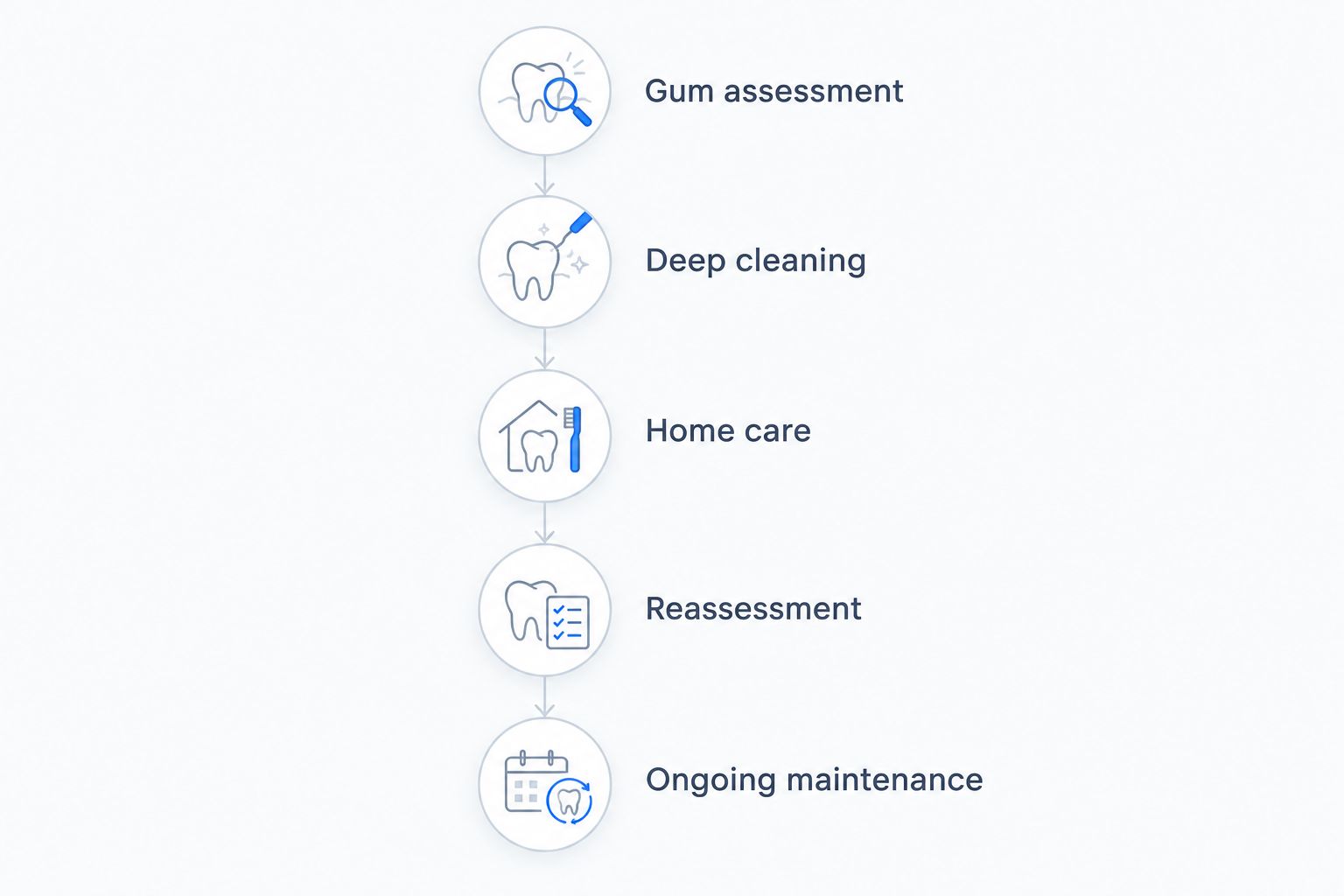
A typical decision process includes:
- Gum assessment. Your dental team checks bleeding, measures gum pockets, and reviews X-rays when needed to assess supporting bone.
- Deep cleaning. If indicated, deposits are removed from affected areas below the gumline.
- Home care. You receive guidance on cleaning the specific spaces and surfaces that need attention.
- Reassessment. Your dental team checks healing and determines whether further treatment is necessary.
- Ongoing maintenance. Follow-up care helps monitor previously affected areas and remove recurring deposits.
These are treatment stages, not a promise that every patient needs the same procedures or appointment schedule.
For a 2026 treatment discussion, ask what findings will show that nonsurgical care has worked. Less bleeding is encouraging, but pocket measurements and the condition of tooth support also matter.
Why the need for gum surgery varies
Two people with bleeding gums can need different treatment. The decision depends on the condition of the supporting tissues, access for cleaning, and how the gums respond—not just whether bleeding is present.
- Existing bone and attachment loss: Inflammation without support loss is different from established periodontitis.
- Pocket depth and tooth anatomy: Deep pockets, root grooves, and areas between the roots of back teeth can be harder to clean thoroughly.
- Response to initial treatment: Persistent inflammation or deep pockets after nonsurgical care can change the next recommendation.
- Daily plaque removal: Cleaning effectiveness affects whether treated areas remain inflamed.
- Smoking: Tobacco use raises periodontal risk and can impair healing.
- Diabetes management: Diabetes, particularly when poorly controlled, can make periodontal disease harder to manage.
If you have diabetes, share your current health information and medication list with your dentist. Coordinating medical and dental care matters; the guide to dental care for diabetic patients explains the broader connection.
These factors guide care rather than predict an individual outcome. Your dentist needs your examination findings and health history to explain which factors apply to you.
Can brushing and flossing alone reverse gum disease?
Brushing and cleaning between your teeth can help reverse gingivitis, but they cannot remove hardened tartar or reverse established periodontal bone loss. Home care is essential, yet it is not a substitute for professional treatment when deposits remain or the disease extends below the gumline.
The American Dental Association recommends brushing for 2 minutes, 2 times a day, with fluoride toothpaste and cleaning between teeth 1 time a day. Use those recommendations as a foundation, then ask your dental team to adapt your technique to your gums, tooth spacing, and any dental work.
For your 2026 home-care routine:
- Use a soft-bristled toothbrush and gentle pressure along the gumline.
- Clean between teeth with a method suited to the space rather than forcing a tool that does not fit.
- Ask for a demonstration if floss catches, your hand movements are difficult, or you consistently miss back teeth.
- Keep recommended follow-up appointments even when your mouth feels better.
More pressure is not better cleaning. Aggressive brushing can injure gum tissue and contribute to recession without solving the underlying buildup.
Can mouthwash replace a deep cleaning?
Mouthwash cannot replace scaling and root planing when deposits below the gumline require professional removal. A rinse reaches surfaces, but it does not physically remove hardened tartar attached to tooth roots.
Some rinses can help with plaque or inflammation as an addition to mechanical cleaning. A prescription rinse also has specific directions and potential side effects, such as staining or changes in taste, depending on the medicine. Your dentist should explain why it is recommended and how long to use it.
Best for: a mouthwash is an addition to a cleaning routine when your dental team identifies a reason to use it. Its benefit is support for that routine; its limitation is that it cannot diagnose disease, remove tartar, or rebuild bone.
Avoid treating improved breath as proof that gum disease has resolved. A fresher mouth and healthy tooth support are different measures.
How do I know whether I need gum surgery?
You cannot determine the need for gum surgery from bleeding, breath, or appearance alone. The decision requires an examination and often a check of your response to initial treatment. Surgery is not automatically necessary whenever periodontitis is diagnosed.
A dentist or periodontist can explain whether remaining pockets are difficult to clean, whether particular bone defects need attention, and what additional treatment is intended to achieve. Some periodontal procedures improve cleaning access; others address selected tissue or bone defects. They do not guarantee complete restoration of all lost support.
Before agreeing to a procedure, ask:
- What problem remains after nonsurgical treatment?
- What is this procedure intended to improve?
- Is another nonsurgical approach appropriate for this area?
- What will recovery and long-term maintenance involve?
Best for: surgical care is for patients whose examination findings justify treatment beyond a nonsurgical approach. Its potential benefit is addressing persistent or inaccessible problems; its limitation is that surgery still requires daily care and continued monitoring afterward.
What to discuss at your appointment
You do not need to arrive knowing the correct dental terms. Tell the team where you notice bleeding, whether teeth feel loose or sensitive, and whether your gums look different. Bring a medication list and mention smoking, diabetes, pregnancy, or other relevant changes in your health.
If you feel nervous, say so when requesting your appointment. Ask for an explanation before each part of the examination and agree on a signal if you need a pause. Discuss numbing options before any treatment rather than assuming you must tolerate discomfort.
At Dentistry of Tavares, you can begin the conversation by requesting a general dental appointment and describing your concerns. Ask what care is recommended, whether specialist assessment is needed, and how the steps fit together.
For a 2026 care plan, request a written explanation of recommended treatment and ask your insurer about coverage, exclusions, and authorization requirements. Insurance benefits vary, so confirm them rather than assuming that a routine cleaning benefit also covers periodontal treatment. If payment is a concern, ask which arrangements are available before scheduling care.
When should I seek prompt help for gum symptoms?
Arrange a dental assessment for ongoing bleeding, swollen gums, persistent bad breath, gum recession, or a tooth that feels loose. These symptoms do not all mean surgery is necessary, but they need a diagnosis.
Contact a dentist promptly for pus, increasing swelling, or significant pain. Seek emergency medical care for difficulty breathing or swallowing, or rapidly spreading facial swelling. Do not wait for a routine cleaning appointment in those situations.
If you need urgent dental help, explain your symptoms when contacting the office. Ask whether same-day care is possible; availability must be confirmed. Avoid putting aspirin directly against your gums, because it can injure the tissue.
FAQ
Can gum disease be reversed without surgery?
Gingivitis can usually be reversed without surgery through professional cleaning and consistent daily plaque removal. Periodontitis can often be managed nonsurgically, but lost bone and attachment do not reliably return with deep cleaning alone.
How do I know if I have gingivitis or periodontitis?
A dental examination distinguishes gingivitis from periodontitis by checking the gums, attachment, and supporting bone. Bleeding or a lack of pain cannot establish which condition you have.
Does a deep cleaning count as gum surgery?
Scaling and root planing is nonsurgical periodontal treatment. It removes deposits below the gumline and cleans affected root surfaces without the surgical approach used to expose those areas.
How long does it take for bleeding gums to improve?
The time depends on the cause, severity, treatment, and effectiveness of daily cleaning. Your dentist should reassess persistent bleeding rather than using a fixed healing deadline for every patient.
Will my gums grow back after a deep cleaning?
A deep cleaning does not reliably regrow receded gums or replace lost bone. As inflammation settles, gums can look less swollen, which is different from rebuilding missing tissue.
Can antibiotics cure gum disease without a cleaning?
Antibiotics do not replace professional removal of plaque and tartar. A dentist can prescribe them for selected situations, but cleaning and ongoing plaque control remain central to periodontal care.
Can I ask about gum bleeding at Dentistry of Tavares?
You can request a general dental appointment at Dentistry of Tavares and describe your gum symptoms. Ask what assessment is appropriate and whether further periodontal care or specialist evaluation is needed.
One last thing
Gums can look more recessed after successful treatment because swollen tissue shrinks as inflammation improves. That change does not, by itself, mean treatment damaged your gums. Ask your dentist to compare the examination findings, not just how your smile looks in the mirror.
The most useful question is not simply whether you can avoid surgery. Ask: What treatment will control my gum disease, and how will we check that it is working? That keeps the discussion focused on protecting your teeth while choosing appropriate care.
Related guides
- How often should you get a dental checkup and cleaning?
- Toothbrush types for gum recession
- Understanding your dental insurance
If your gums bleed or you are unsure what treatment you need, request an appointment and share your concerns. You deserve a clear explanation and time to ask questions.