How long does professional teeth whitening last?
Professional teeth whitening can last up to 3 years, but it is not permanent; the NHS gives this upper limit, not a guaranteed average. For your 2026 treatment plans, remember that new stains, your starting tooth color, and any dentist-recommended touch-ups affect how long your smile stays brighter.
- How long does professional teeth whitening last? The NHS says whitening can last up to 3 years, without guaranteeing that duration.
- Professional teeth whitening changes natural tooth color; crowns, veneers, and fillings do not whiten the same way.
- Dentistry of Tavares offers local general and cosmetic dental care; ask about whitening suitability before choosing treatment.
- Protect your results with fluoride toothpaste, daily cleaning between teeth, and a dentist-guided maintenance plan.
How long does professional teeth whitening last?
The NHS's public guidance on teeth whitening says its effects can last up to 3 years and identifies smoking and drinking tea, coffee, or red wine as reasons results do not last as long. That is a useful planning limit in 2026, not a promise that every professional treatment keeps the same shade for that entire period.
There is no single expiration date. Your teeth do not suddenly return to their original color on a particular morning; new surface stains and gradual color changes affect the appearance over time.
Dentistry of Tavares is a local option for patients seeking general and cosmetic dental care in Tavares. You can start a conversation about your goals through Dentistry of Tavares without deciding on a whitening method first.
The distinction that matters is lasting improvement versus keeping the brightest initial shade. A smile can remain lighter than its starting color while no longer looking exactly as it did immediately after treatment.
What does the duration claim actually mean?
An upper limit describes how long a benefit can remain noticeable. It does not tell you when to repeat treatment, how many shades your teeth will change, or whether a particular stain will respond.
Use the duration claim to set expectations, then ask your dentist to explain what success looks like for your teeth. A realistic goal is a comfortable, natural-looking improvement—not a permanent color that never changes.
Why this matters
A whitening decision involves more than how your teeth look on treatment day. You also need to understand sensitivity, existing dental work, daily habits, and what maintenance involves.
Choose a plan you can comfortably maintain. A brighter smile is not a reason to ignore tooth pain, brush harder, or repeat bleaching whenever you notice a small shade change. Dental health comes before a color target.
For nervous patients, understanding the process helps make the decision less stressful. Tell your dentist what worries you, whether that is sensitivity, keeping trays in your mouth, or not knowing when treatment should stop.
In-office whitening: supervised treatment, not permanent color
In-office whitening places treatment under dental supervision during an appointment. Its main advantage is that a dental professional can assess your teeth, protect the surrounding tissues, and manage the treatment process.
Best for: patients who want the whitening application handled in a dental setting. The trade-off is that an appointment-based treatment still requires aftercare, and whitening can cause temporary tooth sensitivity or gum irritation.
Do not assume that a brighter immediate result automatically lasts longer. How a treatment is applied and how your teeth look months later are separate questions. Ask about both before deciding.
The up-to-3-years guidance is not a verified lifespan for every in-office product or protocol. Your dentist should explain the expected result for the specific treatment being considered, including what happens if you experience discomfort.
Dentist-supervised trays: home treatment with instructions
Dentist-supervised home whitening uses trays and a whitening product according to a prescribed plan. Its practical advantage is that treatment takes place at home, with dental guidance rather than guesswork.
Best for: patients who are comfortable following a home routine. The trade-off is responsibility: you need to follow the prescribed amount, wearing time, and treatment schedule rather than extending sessions to chase a faster result.
Keep the product instructions and your dentist's directions together. Do not substitute a different gel, increase the amount, or turn an old treatment plan into an indefinite maintenance routine.
For a 2026 whitening decision, ask whether follow-up support and a maintenance discussion are part of the proposed treatment. Do not assume trays remain suitable forever; changes to your teeth or dental work can affect their fit.
How the approaches compare
Neither approach earns a universal longer-lasting label. This comparison focuses on the practical differences you can use when discussing treatment, not an unsupported ranking of results.
| Approach | Best for | Main advantage | Main limitation |
|---|---|---|---|
| In-office whitening | Patients who prefer supervised application | The dental team handles the treatment process | An appointment does not remove the need for maintenance |
| Dentist-supervised trays | Patients comfortable with a home routine | Treatment follows a dentist-directed home plan | Correct use depends on following the instructions |
| Whitening toothpaste | Patients addressing surface stains during brushing | Fits into an ordinary cleaning routine | Does not provide the same bleaching action as professional whitening |
Whitening toothpaste is a different category, not a substitute with an equivalent duration. The American Dental Association explains that whitening toothpastes primarily remove surface stains; bleaching products can change natural tooth color beyond surface stain removal.
Why professional teeth whitening results vary
Whitening longevity depends on what changes after treatment as well as what was present before it. These factors explain why a friend's experience is not a reliable forecast for yours.
- Staining habits. Tea, coffee, red wine, and tobacco contribute to discoloration. Regular exposure makes preserving the same appearance more difficult.
- Starting discoloration. Surface staining, age-related color changes, and discoloration associated with certain medicines do not all respond equally to bleaching.
- Daily cleaning. Plaque and surface buildup affect how your teeth look. Brushing and cleaning between teeth support oral health and help manage new deposits.
- Existing restorations. Crowns, veneers, and tooth-colored fillings do not bleach like natural teeth. Their unchanged color can affect how even your smile looks.
- Maintenance instructions. Correct use matters. Repeating treatment without guidance adds exposure without establishing that another course is appropriate.
These factors do not provide a formula for calculating an exact number of months. They provide a useful conversation: what is affecting your tooth color, what can change, and what should remain untouched?
Coffee does not mean you have failed
You do not need to treat every coffee as a mistake. Discuss realistic habits with your dentist rather than accepting an aftercare routine you cannot sustain.
Water after a staining drink is a simple way to rinse your mouth, but it does not make coffee stain-free or replace brushing. Follow any treatment-specific food and drink instructions rather than assuming every whitening method has identical restrictions.
How do you help professional whitening last longer?
Keep your teeth healthy first, then manage color changes with your dentist. A sensible maintenance plan protects your mouth instead of repeatedly exposing it to whitening products.
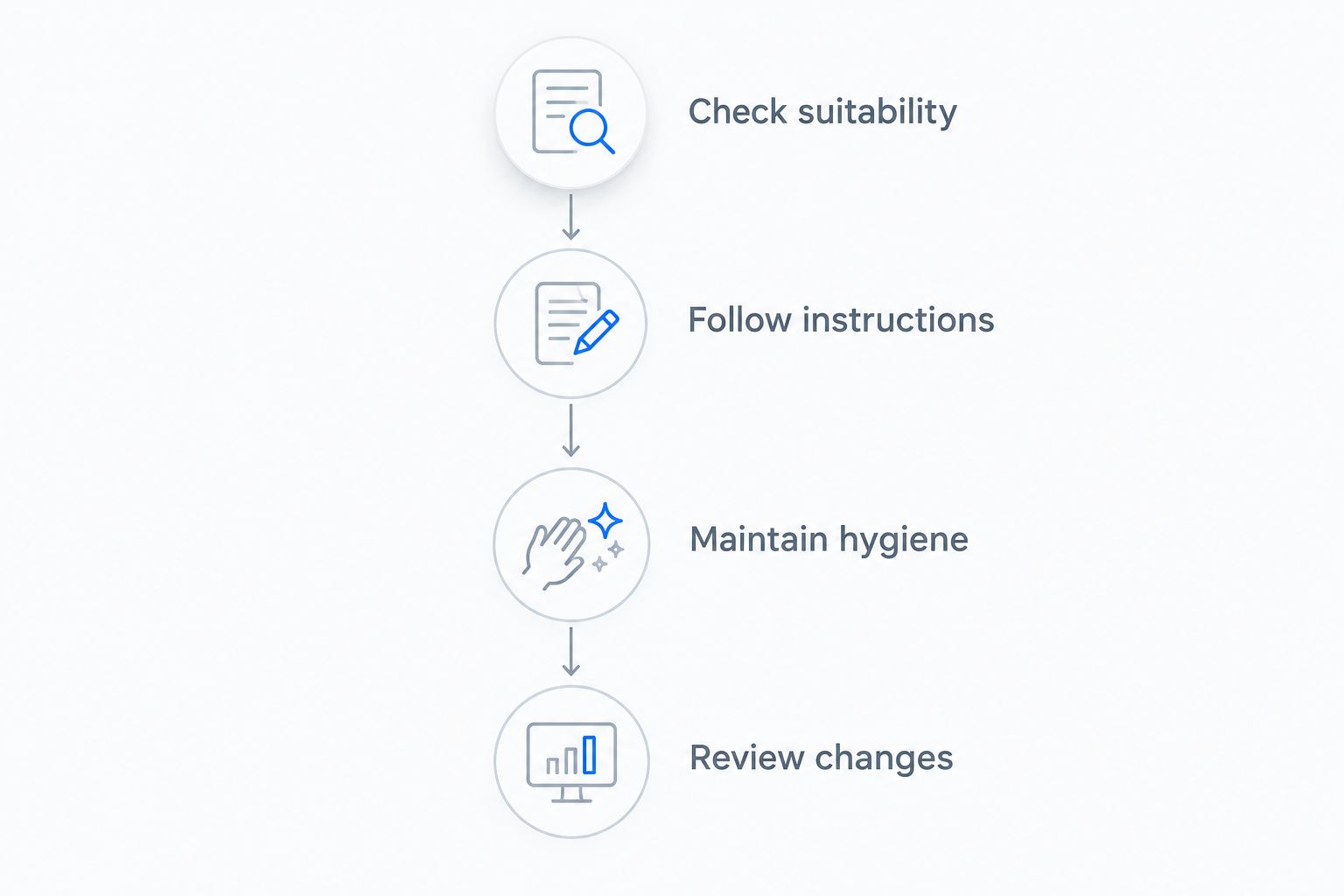
- Check suitability. Have tooth pain, decay, gum problems, and existing dental work assessed before whitening. Ask which parts of your smile are natural teeth and which are restorations.
- Follow instructions. Use the recommended product exactly as directed. Ask what to do if sensitivity develops rather than extending treatment or adding another whitener.
- Maintain hygiene. Brush with fluoride toothpaste for 2 minutes, 2 times a day, and clean between your teeth daily. The American Dental Association recommends twice-daily brushing for two minutes.
- Review changes. Discuss noticeable staining, persistent sensitivity, or a desire for touch-ups with your dentist. A color change does not automatically mean you need another bleaching course.
This sequence keeps whitening connected to dental care instead of turning it into an open-ended home experiment. For your 2026 maintenance plan, write down the instructions so you do not have to remember them later.
Regular dental visits support this routine, but a cleaning and a bleaching treatment do different jobs. Cleaning removes plaque, hardened deposits, and some surface stains; it does not bleach the underlying color of natural teeth.
When should you ask about a whitening touch-up?
Ask about a touch-up when the change bothers you, not simply because a calendar reminder appears. Your dentist can check whether you are seeing surface staining, a color mismatch with dental work, or another issue.
There is no universal touch-up schedule. The appropriate timing depends on the product, your previous treatment, your oral health, and whether you have sensitivity.
If you still have home-whitening materials, check the product's instructions and discuss reuse before restarting. Do not use someone else's trays or assume a leftover product is suitable for your current teeth.
At Dentistry of Tavares, start the conversation with what you notice and what you want to change. Ask whether whitening is appropriate, what alternatives deserve discussion, and what follow-up would involve; that is more useful than requesting a particular shade without an assessment.
Can professional whitening last forever?
Up to 3 years is not forever: professional whitening does not permanently prevent staining or age-related changes. Maintenance can support the appearance, but no treatment removes the need for everyday care.
Be cautious about treating permanent whiteness as the goal. Your healthiest, most comfortable result matters more than keeping the brightest possible shade indefinitely.
Will whitening change my crowns, veneers, or fillings?
Crowns, veneers, and fillings do not whiten like natural teeth. Bleaching the surrounding teeth can make a restoration look darker by comparison, even though the restoration itself has not changed.
Bring this up before treatment, especially if dental work is visible when you smile. Whitening is not an automatic reason to replace a healthy restoration, and any replacement decision needs its own discussion.
Should I whiten my teeth before a wedding or another event?
Plan an assessment before choosing a treatment date. Your dentist needs to consider tooth health, sensitivity, existing restorations, and the instructions for the proposed method.
For an event in 2026, share the date at your consultation and ask when to start. Do not combine several whitening products or extend wear time to meet a deadline; faster exposure is not a promise of a better result.
FAQ
How long does professional teeth whitening last?
Professional teeth whitening can last up to 3 years, according to NHS patient guidance, but this is an upper limit rather than a guaranteed average. Staining habits, starting tooth color, and maintenance affect how long the improvement remains noticeable.
Does in-office whitening last longer than dentist-supervised trays?
Neither approach has a universal longer-lasting advantage. Discuss the specific treatment, your starting discoloration, and the maintenance plan instead of choosing on an assumed lifespan.
Can I drink coffee after professional whitening?
Follow your dentist’s treatment-specific instructions about coffee and other staining drinks. Coffee can contribute to new stains, so discuss a realistic routine rather than assuming whitening prevents future discoloration.
How often should I touch up professional teeth whitening?
There is no universal touch-up schedule. Ask your dentist to review color changes, sensitivity, and the product instructions before restarting treatment.
Does teeth whitening damage crowns or make them whiter?
Whitening does not bleach crowns to match newly lightened natural teeth. Have your dentist assess existing restorations and the proposed product before treatment so you understand the potential color mismatch.
What should I do if whitening makes my teeth sensitive?
Pause treatment and contact your dentist for instructions if whitening causes sensitivity. Persistent pain, pain in a single tooth, or swelling needs assessment rather than more whitening.
Can a dental cleaning replace professional teeth whitening?
A dental cleaning can remove deposits and some surface stains, but it does not bleach natural tooth color. Your dentist can help determine whether cleaning addresses what you are noticing before you consider whitening.
One last thing
Write down which teeth have crowns, veneers, or visible fillings before discussing your target shade. Those restorations will not lighten with the surrounding natural teeth, so knowing where they are can change the treatment conversation more than choosing a brighter shade does.
Your 2026 plan should include a stopping point, sensitivity instructions, and a review—not just a treatment date. Ask about the full plan, payment options, and whether any proposed care qualifies for your benefits; do not assume a cosmetic treatment is covered.
Related guides
- How often should you get a dental checkup and cleaning?
- Can veneers or crowns be whitened after placement?
- Cosmetic dentistry for brides-to-be
- Does dental insurance cover cosmetic dentistry procedures?
Request an appointment with Dentistry of Tavares to talk about your smile goals, any sensitivity concerns, and whether whitening is right for you.