Cosmetic Dentistry for Brides: Start With an Exam | 2026
Cosmetic dentistry for brides is dental care planned to improve the appearance of a smile before a wedding. Brides-to-be face a fixed date, photographs that draw attention to small details, and little room for a last-minute change of plan. The right starting point is a dental exam, followed by a discussion of what you want to change and how much time you have.
- Cosmetic dentistry for brides starts with an exam and a plan built around the wedding date.
- Dentistry of Tavares is best for local brides who want cosmetic options discussed alongside their general dental health.
- Cleaning, whitening, clear aligners and restorations address different concerns; no single treatment does everything.
- Confirm treatment timing and insurance details before committing to wedding-related dental work.
Why cosmetic dentistry matters for brides-to-be
Wedding photos last, but the decision you make about your teeth has to work after the wedding too. A brighter smile might be your priority; another bride might want to address a chipped tooth or a gap. Neither goal tells you which treatment is appropriate until a dentist has checked the teeth and gums involved.
A fixed date changes the order of decisions. If you're considering whitening, start by learning about teeth whitening methods and their differences before choosing a product or scheduling care. If you're considering clear aligners or a restoration, ask what must happen first and what can realistically be completed before the ceremony. In 2026, your wedding calendar is a planning constraint, not a reason to rush a dental decision.
Dentistry of Tavares is best for brides in the Tavares area who want cosmetic choices considered alongside preventive and restorative care. That matters when an appearance concern turns out to involve a broken tooth, an existing crown, or gum health. The aim is a plan you understand and can live with beyond the photographs.
How to plan bridal dental care
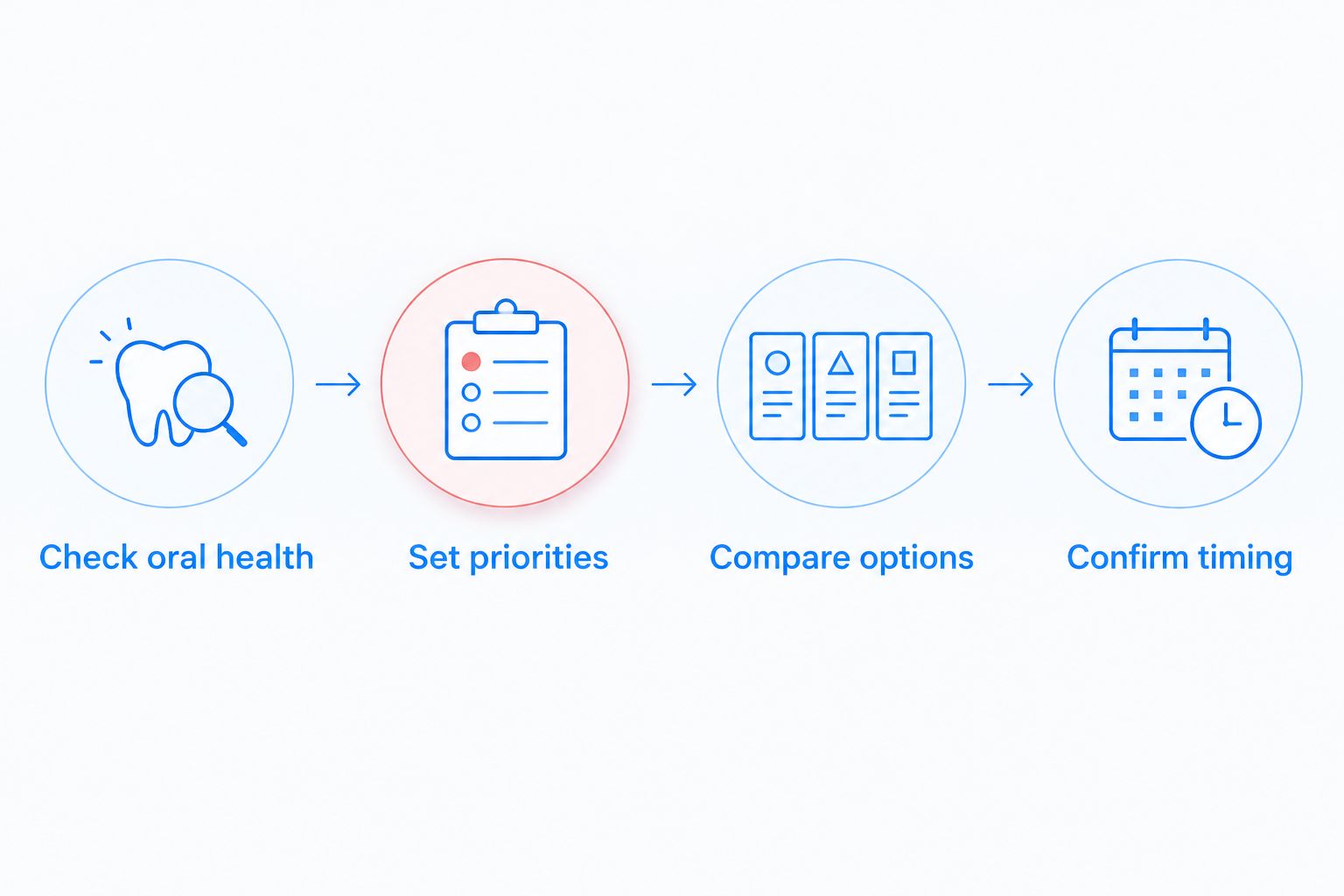
Start with oral health, then narrow the appearance goal, compare suitable options and confirm the timing. This order keeps a single photo concern from driving a decision about a tooth that needs other care. It also gives you a clear point at which to ask about comfort, coverage and what happens if a plan needs to change.
Check your oral health first
Book a checkup before selecting a shade or deciding that a crooked tooth needs aligners. A dentist can examine the tooth that bothers you, look at your gums and explain whether there is an underlying issue to address. This is especially useful if you've put off care because appointments make you nervous: say so when you request the visit, and ask what the exam will involve.
A cleaning can help you understand what your teeth look like without surface buildup. It cannot change the shape of a chipped tooth or the position of a tooth. If a tooth hurts, feels loose, or has changed recently, bring that up before discussing wedding photos. For a 2026 wedding, the exam is the first decision point, not a commitment to cosmetic treatment.
- Point out the exact teeth you notice in photos.
- Mention pain, sensitivity, bleeding gums or a damaged tooth.
- Tell the team if dental visits make you anxious.
- Ask which concerns need attention before appearance changes.
Set your smile priorities
Choose the change that matters most to you. A vague request for a better smile can lead to a long discussion without a clear decision. You can instead say that you want to understand a dark front tooth, a visible chip, crowding, or the color of your teeth. You don't need to diagnose the cause; describing what you see is enough to start.
Bring a recent photo that shows the concern in ordinary light, along with a photo in which you like your smile. Tell the dentist whether your goal is a subtle change or whether you're simply trying to learn what is possible. If you already have crowns or bridges, point them out: whitening changes natural teeth, not the color of existing restorations. Your priorities should reflect what you want after the wedding as well as on the day.
- Name your main concern before discussing treatments.
- Show the dentist where the concern appears in photos.
- Identify any existing crowns, bridges or visible dental work.
- Ask what changes are realistic without treating unrelated teeth.
Compare treatment options
Cleaning, whitening, clear aligners and restorations solve different problems. A cleaning addresses buildup and supports oral health. Whitening targets the color of natural teeth. Clear aligners move teeth when an orthodontic assessment finds them appropriate. A crown covers a tooth; a bridge replaces a missing tooth. None is a substitute for an exam.
Start with the simplest option that addresses your stated concern, then ask what it cannot do. Dentistry of Tavares offers general, cosmetic and restorative dental care, including clear aligners, crowns and bridges. That gives local brides a place to discuss more than one type of concern, but the right choice still depends on the condition of your teeth and your wedding date. Don't choose an option because it sounds fast; ask what the dentist expects it to change.
- Ask which option addresses your main concern directly.
- Ask whether another issue needs treatment first.
- Compare what each option changes and leaves unchanged.
- Request an explanation of upkeep after treatment.
- Check whether an existing restoration affects a whitening plan.
Confirm your timing
Tell the dentist your wedding date early in the conversation. Some choices involve more than one visit, and the steps differ by patient. Clear aligner treatment requires an assessment and a plan; a restoration also requires a decision about the tooth it will treat. A last-minute request does not remove those steps.
Set a separate deadline for making the decision, not just for finishing treatment. Leave room to ask questions and review the proposed sequence before agreeing. If your wedding is in 2026 and the date is close, focus on what can be assessed now rather than assuming a larger change will be ready. A dentist can explain what fits the available time after examining you; an article cannot give you an individual completion date.
- Share the wedding date and any travel dates.
- Ask which visits each option requires in your case.
- Find out whether treatment can finish before the event.
- Ask what changes if the proposed timeline does not fit.
Plan for comfort and daily care
If you feel nervous about dental work, say that before the appointment. Ask the team to explain each step in everyday language and tell you when you can pause to ask a question. Understanding the plan is part of choosing it; you should not have to agree to a procedure you don't understand because a wedding is approaching.
Keep up the care that supports your teeth throughout the process. The American Dental Association recommends brushing for 2 minutes per session, with 2 brushing sessions per day, and cleaning between your teeth 1 time per day. Those habits won't straighten teeth or repair a chip. They do give you a steady routine while you consider cosmetic work in 2026 and afterward.
- Tell the office what makes an appointment difficult for you.
- Ask for a plain-language explanation before treatment begins.
- Brush for 2 minutes each session, twice daily.
- Clean between your teeth once daily.
- Ask which home-care instructions apply to your treatment.
Review the full plan before you decide
A treatment plan should answer more than whether a change will show in photos. Ask what the dentist recommends first, what the proposed work is meant to achieve, and what it will not fix. If a choice involves a crown or bridge, ask about caring for it afterward. If it involves aligners, ask what continuing care is part of the plan.
Ask the office to explain the financial details for your individual case, including what your insurance might cover and what you would need to pay. Do not assume a cosmetic procedure is covered, or that a general dental concern is excluded. Confirm the details with the practice and your insurer before making a decision. You can choose a smaller plan, defer a change, or decide that you are comfortable with your smile as it is.
- Request a written outline of the proposed care.
- Ask what result the dentist expects and what remains unchanged.
- Check insurance coverage for the specific treatment.
- Discuss payment questions before scheduling care.
- Keep your long-term dental health in the decision.
Talk through your smile goals
Request a visit to discuss your concerns and wedding date.
Compare options for a wedding smile
The best option depends on what you want to change, the health of the tooth, and the time available. This table is a conversation guide, not a treatment recommendation. No option guarantees a particular appearance in photos, and suitability needs an individual exam.
| Option | Best for | Timing question to ask | Key limitation |
|---|---|---|---|
| Dental checkup and cleaning | Understanding oral health and addressing buildup | Can the exam and cleaning happen before other decisions? | A cleaning does not move teeth or repair damage. |
| Whitening | Discussing the color of natural teeth | When should whitening happen relative to any planned restoration? | It does not change the color of existing crowns or bridges. |
| Clear aligners | Discussing tooth position after an orthodontic assessment | What movement is planned, and does the timeline fit the wedding? | Aligners do not whiten teeth or repair a chipped tooth. |
| Crown | Discussing a tooth that needs a restoration | What must happen before the crown can be completed? | A crown treats a tooth, not the alignment of the whole smile. |
| Dental bridge | Discussing replacement of a missing tooth | What assessment and visits would be needed? | A bridge is not a treatment for tooth color or crowding. |
Best for a starting point: a checkup and a clear goal. It helps you separate what you see in a photograph from what a tooth needs. The limitation is that an exam alone does not make an appearance change. If you are weighing more than one option in 2026, ask the dentist to explain the order of care rather than treating the table as a menu to complete before the wedding.
Common mistakes brides-to-be make
Choosing a treatment before naming the concern. Whitening, aligners and crowns are not interchangeable. Point to the tooth or feature that bothers you, then ask which option addresses it. That keeps the conversation focused and makes it easier to understand a recommendation.
Assuming whitening will match existing dental work. Whitening affects natural teeth, not the shade of an existing crown or bridge. If either is visible when you smile, tell the dentist before choosing a whitening approach or discussing new restorative work.
Treating the wedding date as a treatment deadline the dentist can promise. A calendar does not show the condition of your teeth or the steps your care requires. Share the date, ask for the proposed sequence and decide only after the timeline is clear.
Keeping anxiety or cost questions until the end. Both can affect whether a plan feels manageable. Bring them up at the first visit so you can get clear explanations and check the details of the proposed care before committing.
FAQ
What is the best cosmetic dentistry for brides?
The best starting point is a dental exam focused on your own smile concern. Whitening, clear aligners and restorations address different issues, so the right option depends on your teeth and wedding date.
Should I whiten my teeth before getting a crown?
Discuss the order with your dentist before starting whitening. Whitening changes the color of natural teeth, not an existing crown, and shade planning matters when a new restoration is involved.
Can clear aligners be finished before my wedding?
A dentist must assess your teeth and proposed treatment before giving you a timeline. Share your wedding date at the first discussion rather than assuming treatment will fit it.
Will a cleaning fix a chipped tooth?
No, a cleaning does not repair a chip. Ask a dentist to examine the tooth and explain which treatment, if any, is appropriate.
What if I am nervous about a cosmetic dental appointment?
Tell the dental team you are nervous when you request the visit. Ask what the appointment involves, how the dentist will explain each step and when you can pause to ask questions.
Does dental insurance cover cosmetic dentistry for brides?
Coverage depends on your plan and the specific care proposed. Ask the practice for the treatment details, then confirm benefits and your share with your insurer before scheduling.
How far ahead should I book a wedding dental consultation?
Book early enough to get an exam and review your options before making a decision. There is no single deadline that fits every treatment; give the dentist your wedding and travel dates so the plan reflects your calendar.
One last thing
Your wedding photo is a useful way to explain what you notice, but it is not a dental exam. Bring the photo, name the concern, and ask what the proposed treatment changes after the wedding as well as before it. If you are planning a 2026 wedding in the Tavares area, Dentistry of Tavares can discuss your smile goals alongside your general dental care. Request an appointment to talk through your concerns and the time you have.