Can veneers or crowns be whitened after placement?
No—veneers and crowns cannot be whitened after placement the way natural teeth can. Whitening gel changes natural tooth color, not the chosen shade of porcelain, ceramic, or tooth-colored restorative material. Professional cleaning can remove some surface stains, but changing a restoration’s underlying shade generally requires replacement rather than stronger whitening treatment.
- Can veneers or crowns be whitened after placement? No; bleaching does not predictably lighten their underlying shade.
- Professional cleaning can remove surface stains without changing the original color of a crown or veneer.
- Whitening natural teeth can make an existing crown or veneer look darker by comparison.
- Dentistry of Tavares provides general and cosmetic dental care for local patients considering their next step.
Can veneers or crowns be whitened after placement?
Whitening treatment does not change a crown or veneer’s selected shade. The American Dental Association’s patient guidance distinguishes whitening natural teeth from restorations, which do not respond to bleaching in the same way. That distinction applies whether you use strips, trays, or an in-office whitening treatment.
Before choosing a treatment, separate surface staining from a true shade mismatch. This guide to teeth whitening methods explains options for natural teeth; an existing restoration needs a separate assessment.
| Tooth or restoration | Does bleaching lighten it? | What can improve its appearance? | Main limitation |
|---|---|---|---|
| Natural tooth enamel | Yes, for suitable discoloration | Dentist-guided whitening or removal of surface stains | Results depend on the cause of discoloration; sensitivity can occur |
| Porcelain or ceramic veneer | No change to the selected ceramic shade | Cleaning or material-appropriate polishing for surface stains | A different underlying shade generally requires replacement |
| Tooth-colored ceramic crown | No change to the selected ceramic shade | Cleaning, assessment of the edges, or replacement when appropriate | Whitening neighboring teeth can make the mismatch more noticeable |
| Composite veneer or bonding | No predictable lightening of its selected shade | Polishing, repair, or replacement depending on the problem | Deeper discoloration does not necessarily polish away |
The practical takeaway for 2026 is straightforward: treat the reason for the color difference, not just the color you see. A stain on the outside, a darker natural tooth nearby, and a restoration made in the wrong shade require different decisions.
Why this matters
A crown that once matched your smile can look different after you whiten the surrounding teeth. The crown has not necessarily become darker; the natural teeth have become lighter. Repeating the whitening treatment can increase that contrast instead of correcting it.
The reverse also happens. Natural teeth can develop stains while a ceramic restoration stays closer to its original shade, making the restoration look unusually bright. You need an examination to tell which part of the smile has changed.
Neither situation automatically means you need new dental work. Start with a cleaning and shade assessment, then discuss whether leaving the restoration alone, treating natural teeth, or replacing the restoration makes sense for you.
Surface stains: cleaning can help without changing the shade
Professional cleaning is best for deposits and stains on the outside of a restoration. It can remove material that makes a crown or veneer look dull or discolored. It cannot turn the restoration’s original shade into a lighter one.
Your dentist or hygienist needs to choose cleaning and polishing methods that suit the material. Ceramic, composite, and the edges where a restoration meets your tooth do not all need the same approach. Scrubbing harder at home is not a substitute for that assessment.
A cleaning also makes it easier to judge the true shade. If you compare tooth colors before plaque and surface stains are removed, you risk planning treatment around something that cleaning alone can address.
Ask a simple question: is the discoloration sitting on the surface, or is it part of the restoration itself? The answer guides the next step and helps you avoid an unnecessary whitening purchase.
A shade mismatch: replacement changes the restoration’s color
Replacement is the option that changes a crown or veneer’s selected shade. It deserves careful consideration because removing an existing restoration is dental treatment, not a color touch-up. Your dentist should assess the tooth, the restoration’s condition, and your goals before recommending it.
A healthy restoration does not need replacement simply because a brighter shade is possible. You can decide that the current appearance is acceptable, especially when the difference is small or outside the part of your smile you show most.
If replacement is appropriate, discuss color matching before the new restoration is made. The dentist needs to account for nearby teeth, the material, and, for veneers, the tooth underneath. A shade chosen from a photograph alone does not replace an examination.
For a 2026 treatment plan involving a new crown, understanding how long a dental crown procedure takes helps you plan the appointment sequence. Your own schedule depends on the treatment recommended for your tooth.
Natural teeth: whitening can help, but matching comes first
Whitening is best for suitable discoloration in natural teeth, not for lightening restorations. If your natural teeth are darker than an existing crown or veneer, whitening them can be part of a matching plan. It does not guarantee that every tooth will reach the restoration’s shade.
If your restoration is already darker than the surrounding teeth, additional whitening is not the correction. It can make the difference more obvious. Ask your dentist to show you which teeth would change and which would stay the same.
Whitening can also cause temporary tooth sensitivity or gum irritation. Existing decay, irritated gums, exposed roots, and problems around a restoration need assessment before you begin. A brighter smile should not come at the expense of treating those concerns.
If you feel nervous about the examination, say so when you request the appointment. You can ask for explanations before each step and discuss a pause signal with the dental team.
Why the appearance of crowns and veneers varies
A restoration’s appearance depends on more than its shade label. These factors explain why the same whitening approach does not solve every color concern:
- Restoration material: Ceramic and composite have different surface properties and different cleaning or repair needs.
- Surface deposits: Plaque and external stains can change how bright a restoration looks without changing its underlying shade.
- Neighboring teeth: Whitening or staining of natural teeth changes the contrast around a crown or veneer.
- The underlying tooth: The tooth beneath a veneer can influence its appearance, depending on the veneer’s thickness and opacity.
- Restoration edges and gums: Gum recession can expose areas that look different from the visible restoration. Discoloration at an edge needs examination rather than automatic bleaching.
- Lighting: Bathroom lighting, daylight, and photographs can make shade differences look more or less noticeable.
In 2026, use these factors as questions for your appointment, not as a self-diagnosis checklist. Tell your dentist when you first noticed the change and whether it followed whitening, staining, or a change in your gums.
What should you do before whitening a smile with crowns or veneers?
Start with an examination and a shared color plan. That approach helps you avoid whitening natural teeth to a shade that no longer matches dental work you intend to keep.
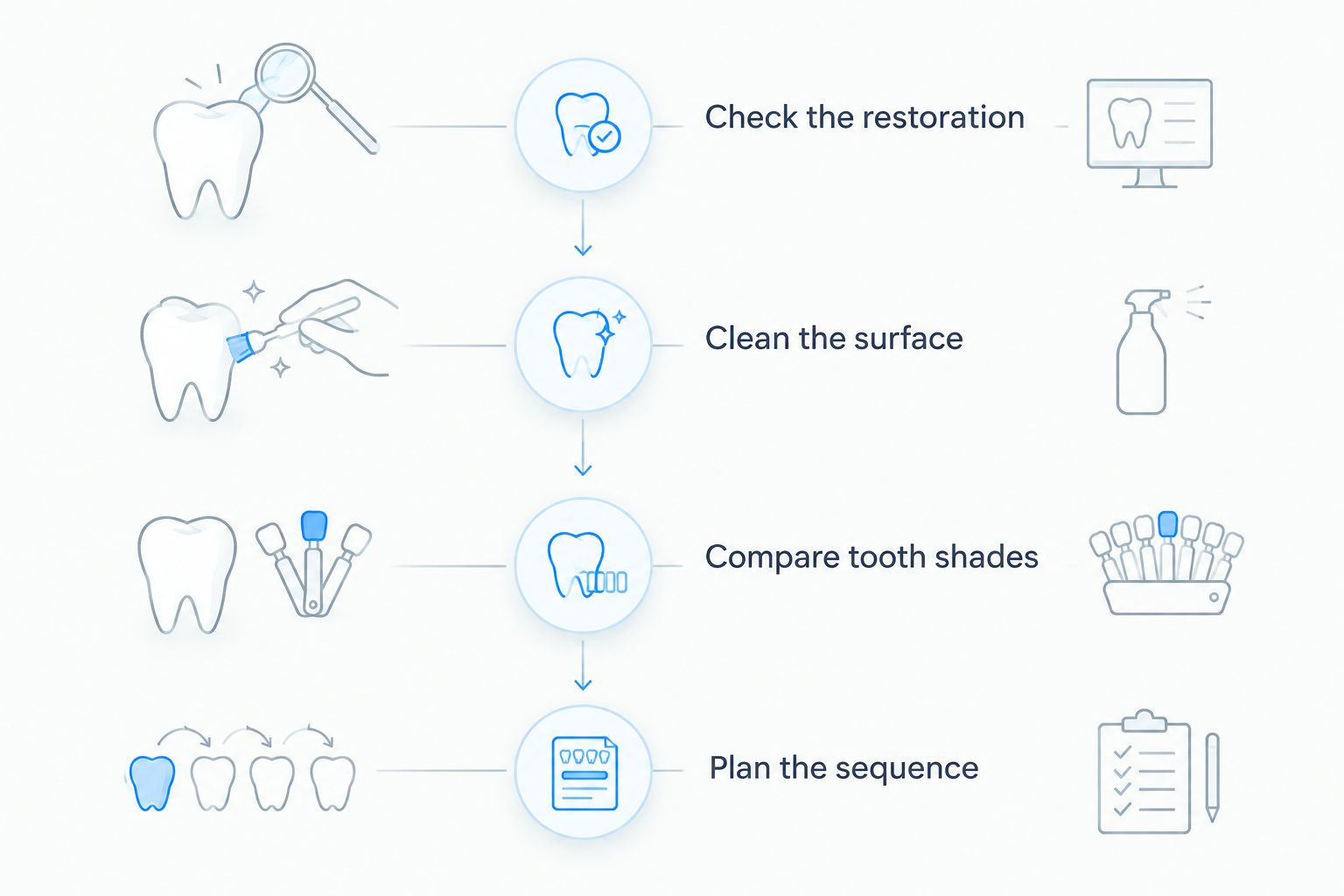
- Check the restoration. Ask the dentist to assess its condition, edges, and surrounding gums. Mention pain, sensitivity, looseness, or a recent color change.
- Clean the surface. Remove deposits and assess whether professional cleaning resolves the appearance concern before choosing further treatment.
- Compare tooth shades. Identify whether the natural teeth, the restoration, or both are contributing to the mismatch.
- Plan the sequence. Discuss whether to keep the restoration, whiten suitable natural teeth, or consider replacement. If replacement follows whitening, ask when the final shade should be selected.
Bring details of any whitening product you already use, including its instructions. A photograph taken before the color change can also help explain your concern, although lighting means it cannot establish the exact shade.
Dentistry of Tavares is best suited to local patients seeking general and cosmetic dental care. For this concern, the useful next step is a discussion about the health of the restoration and the appearance you want—not a promise that bleaching will change it.
Ask about your smile’s color
Discuss crowns, veneers, and natural tooth color with Dentistry of Tavares.
Can whitening toothpaste make a crown or veneer lighter?
Whitening toothpaste does not change a crown or veneer’s selected shade. Some toothpaste helps remove surface stains from teeth, but that is different from bleaching restorative material. Ask your dentist which toothpaste suits your restoration and any sensitivity you have.
Avoid trying to sand away discoloration with abrasive powders or improvised tools. You can damage a polished surface or irritate your gums without correcting the shade. Do not use household bleach on teeth or dental work.
Should you whiten your teeth before replacing a crown or veneer?
Discuss whitening before the replacement shade is selected. If whitening is part of your plan, the dentist can arrange the sequence so the new restoration is matched to the intended natural tooth color rather than the starting color.
There is no universal schedule that fits every treatment. Ask when whitening should finish and when the shade will be reassessed; do not choose a replacement shade immediately after treatment without your dentist’s guidance.
Does a dark line around a crown mean it needs whitening?
A dark line around a crown needs assessment, not stronger whitening. It can have different causes, including an exposed restoration margin or discoloration near the edge. Bleaching does not establish the cause or correct a problem with the crown’s fit.
Tell your dentist about bleeding, discomfort, looseness, or food catching around the area. A color concern accompanied by symptoms should be evaluated before cosmetic treatment.
How do you keep restorations and natural teeth looking consistent?
For your 2026 home-care routine, follow the American Dental Association’s basic guidance: brush for 2 minutes per session, complete 2 brushing sessions per day with fluoride toothpaste, and clean between teeth 1 time per day. These habits support oral health; they do not bleach a crown or veneer.
Choose an interdental cleaning method you can use comfortably and correctly. Your dental team can show you how to clean around a restoration without forcing tools against the gums. Regular professional care also gives the dentist an opportunity to assess changes at the edges.
Do not assume a darker-looking restoration means you have failed at home care. Material, shade contrast, and gum changes also affect appearance. Focus on a repeatable routine and get a new color change checked rather than scrubbing harder.
FAQ
Can veneers or crowns be whitened after placement?
No, veneers and crowns cannot be bleached to a lighter selected shade like natural teeth. Cleaning can remove some surface stains, while a true shade change generally requires replacement.
Will whitening strips damage my crowns?
Whitening strips will not lighten your crowns, and product suitability depends on your teeth, gums, and restorations. Ask your dentist before using strips, especially if you have sensitivity or a problem around a crown’s edge.
Can professional cleaning make my veneers look brighter?
Professional cleaning can make veneers look brighter when removable surface stains or deposits are the cause. It does not change the original shade of the veneer material.
Why does my crown look yellow after I whitened my teeth?
Your crown can look yellow by comparison because whitening lightened the surrounding natural teeth but not the crown. An examination can distinguish that contrast from surface staining or another change.
Can composite veneers be whitened like real teeth?
Composite veneers do not whiten predictably like natural teeth. Depending on the cause of discoloration, your dentist can assess polishing, repair, or replacement.
Do I need to replace a healthy crown just to match whiter teeth?
No, a healthy crown does not automatically need replacement for a shade difference. Discuss how noticeable the mismatch is and the benefits and drawbacks of replacing otherwise sound dental work.
What should I ask before whitening teeth with veneers?
Ask which teeth will respond to whitening, whether your veneers have removable surface stains, and how the final shades will match. Also discuss sensitivity and whether any dental problems need treatment first.
One last thing
A restoration can look darker without becoming darker. Before you repeat whitening in 2026, compare what changed: the restoration, the neighboring teeth, or the lighting. That distinction can prevent treatment aimed at the wrong problem.
You do not have to decide on replacement before asking for help. Start with an explanation of what you see and what bothers you, then review the options after an examination.
Related guides
- Whitening toothpaste for coffee and wine stains
- Does dental insurance cover cosmetic dentistry procedures?
- Cosmetic dentistry planning for brides-to-be
Request an appointment with Dentistry of Tavares to discuss your crowns, veneers, and a color plan that fits your smile.