Dental care for snowbirds Florida: Plan ahead 2026
Florida snowbirds’ dental care is the coordination of dental visits between your home state and Florida, with the aim of keeping your teeth healthy throughout seasonal travel. Use this 2026 guide to prepare records, check coverage, and plan visits with a local practice such as Dentistry of Tavares.
- Dental care for snowbirds Florida checklist: share records, confirm coverage, and arrange follow-up before changing locations.
- Dentistry of Tavares is best for snowbirds seeking general and restorative dental care in Tavares.
- Keep your home dentist involved, but establish a Florida dental contact before an urgent problem interrupts your stay.
- Schedule treatment around required follow-up visits, not just your departure date.
Why dental care matters for Florida snowbirds
Seasonal travel changes where you receive care, not whether your teeth need attention. Your home dentist might know your history, while your Florida dentist needs that information to evaluate a new symptom or continue treatment.
The main challenge is continuity, not choosing one dentist forever. A recent X-ray, an updated medication list, and a clear follow-up plan help both offices understand what has already happened. Without that handoff, you can arrive with an unfinished treatment plan and no clear owner for the next visit.
For your 2026 stay, focus on the practical details: which office handles routine visits, where you will seek urgent help, and who checks treatment after you return home. You do not need to repeat every appointment in both states. You need a schedule based on your dental needs, with records available wherever you receive care.
How to plan dental care between Florida and home
Gather your dental records before traveling
Start by contacting your home dental office yourself. Ask how to authorize a records transfer and what the receiving office needs. An organized handoff gives your Florida dentist context without requiring you to remember every past procedure.
Useful information includes recent dental images, treatment notes, and details about ongoing care. Your Florida dentist decides whether existing images answer the current clinical question; bringing records does not guarantee that additional imaging will be unnecessary.
Keep a medication list you can access without logging into a patient portal. Include supplements, allergies, and relevant medical conditions. If you take a blood thinner or osteoporosis medication, tell the dentist rather than changing it yourself.
- Request recent X-rays and the dates they were taken.
- Ask for notes about unfinished treatment or teeth under observation.
- Save both offices’ contact details in your phone.
- Bring an updated medication and allergy list.
- Confirm that the receiving office can open the transferred files.
Check your insurance before booking
Start with your insurer’s member portal or telephone support. Check the specific dentist and office location, not just whether your plan provides benefits in Florida. Coverage outside your home state depends on your policy and the provider’s participation.
Before a planned procedure, ask for a written treatment estimate and have the office explain what the insurer is expected to cover. A benefit estimate is not a guarantee of payment. Waiting periods, exclusions, frequency limits, and remaining annual benefits can affect the final claim.
If you need help with the terminology, read the guide to understanding your dental insurance. For 2026 travel, also confirm which benefit year applies to appointments on either side of your trip.
- Verify the office’s network status directly with your insurer.
- Ask whether prior visits affect cleaning or imaging benefits.
- Check whether planned treatment requires advance review.
- Ask how claims are handled when care involves different offices.
- Request a written explanation of your expected responsibility.
Establish a Florida dental contact early
You can begin by calling a local office and explaining when you arrive, when you leave, and whether you have an immediate concern. Ask what information to send before an appointment. This simple conversation helps separate a routine visit from a problem needing prompt evaluation.
Dentistry of Tavares provides general, cosmetic, and restorative dental care in Tavares. It is an option for seasonal residents seeking local dental care; appointment timing and the suitability of any treatment still require confirmation with the practice.
If dental visits make you nervous, say so when you book. Ask how the dentist explains treatment, how you can signal for a pause, and whether a discussion can happen before a procedure begins. Do not assume a particular comfort service is offered without asking.
- Explain your arrival and departure dates.
- Describe symptoms rather than requesting a specific procedure.
- Ask what records and forms the office needs.
- Share any anxiety or previous difficult dental experiences.
- Confirm how to contact the office about urgent concerns.
Keep your daily routine consistent
Start with the supplies you already use successfully at home. Put them somewhere easy to reach in your Florida accommodation, rather than leaving them in a travel bag. A familiar routine is easier to maintain than a new collection of products.
The American Dental Association’s home-care guidance recommends brushing for 2 minutes, 2 times per day, using fluoride toothpaste, and cleaning between your teeth 1 time per day. Choose an interdental method you can use comfortably and ask your dentist to check your technique.
Travel also makes it easy to forget appliance care. Follow the instructions for your own dentures, retainers, aligners, or night guard; these are not interchangeable. If a device stops fitting or causes soreness, arrange an assessment rather than forcing it into place.
- Pack your usual toothbrush, fluoride toothpaste, and interdental supplies.
- Keep appliance cases and cleaning instructions together.
- Tell your dentist about persistent dry mouth.
- Limit frequent sugary snacks and drinks between meals.
- Replace a damaged appliance only with professional guidance.
Decide where to turn for an urgent problem
Save local contact information before you need it. If pain, a broken tooth, or swelling develops, contact a dental office and describe the symptoms, when they started, and any relevant medical conditions. Let the office determine the appropriate appointment timing.
Trouble breathing or swallowing, or rapidly spreading facial or neck swelling, requires emergency medical attention. Do not wait for a routine dental appointment in those circumstances. For a dental injury or other urgent tooth problem, seek prompt professional advice rather than relying on home treatment.
Same-day dental care depends on the clinical need and appointment availability. Ask what is possible, but keep a backup plan for care outside normal office hours. A pain reliever does not repair a broken tooth or treat the cause of an infection.
- Save a local dental office’s number and hours.
- Ask how the office handles after-hours concerns.
- Report swelling, fever, injuries, and worsening symptoms clearly.
- Do not place aspirin directly against a tooth or gum.
- Follow professional instructions rather than using leftover antibiotics.
Match treatment to your travel calendar
Bring your departure date into the discussion before agreeing to a treatment sequence. Ask which stages require in-person visits, whether temporary work is involved, and who will review healing or fit. Your calendar should support the treatment plan, not pressure the dentist to shorten it.
For a crown, bridge, extraction, or orthodontic treatment, the relevant timeline depends on your diagnosis and the proposed approach. There is no single safe travel interval that applies to every patient. Ask what would make travel inappropriate and what symptoms require a call.
For your 2026 visit, distinguish necessary treatment from elective changes you can schedule more flexibly. If care must continue in your home state, confirm that the receiving dentist agrees to that arrangement before starting.
- Tell the dentist your actual departure date.
- Ask which visits must happen before you leave.
- Confirm who manages temporary work or postoperative concerns.
- Request written aftercare instructions.
- Discuss alternatives if the schedule does not allow appropriate follow-up.
Arrange a clear handoff before leaving Florida
Before your final Florida visit, ask for a summary of the treatment completed and what remains. Share that information with your home dentist using the offices’ recommended transfer process. Keep your own copy of aftercare instructions and appointment details.
For your return trip in 2026, confirm responsibility rather than assuming either office will contact the other. The dentist who receives the handoff needs to know whether the next visit is routine monitoring, a treatment stage, or a review of a specific concern.
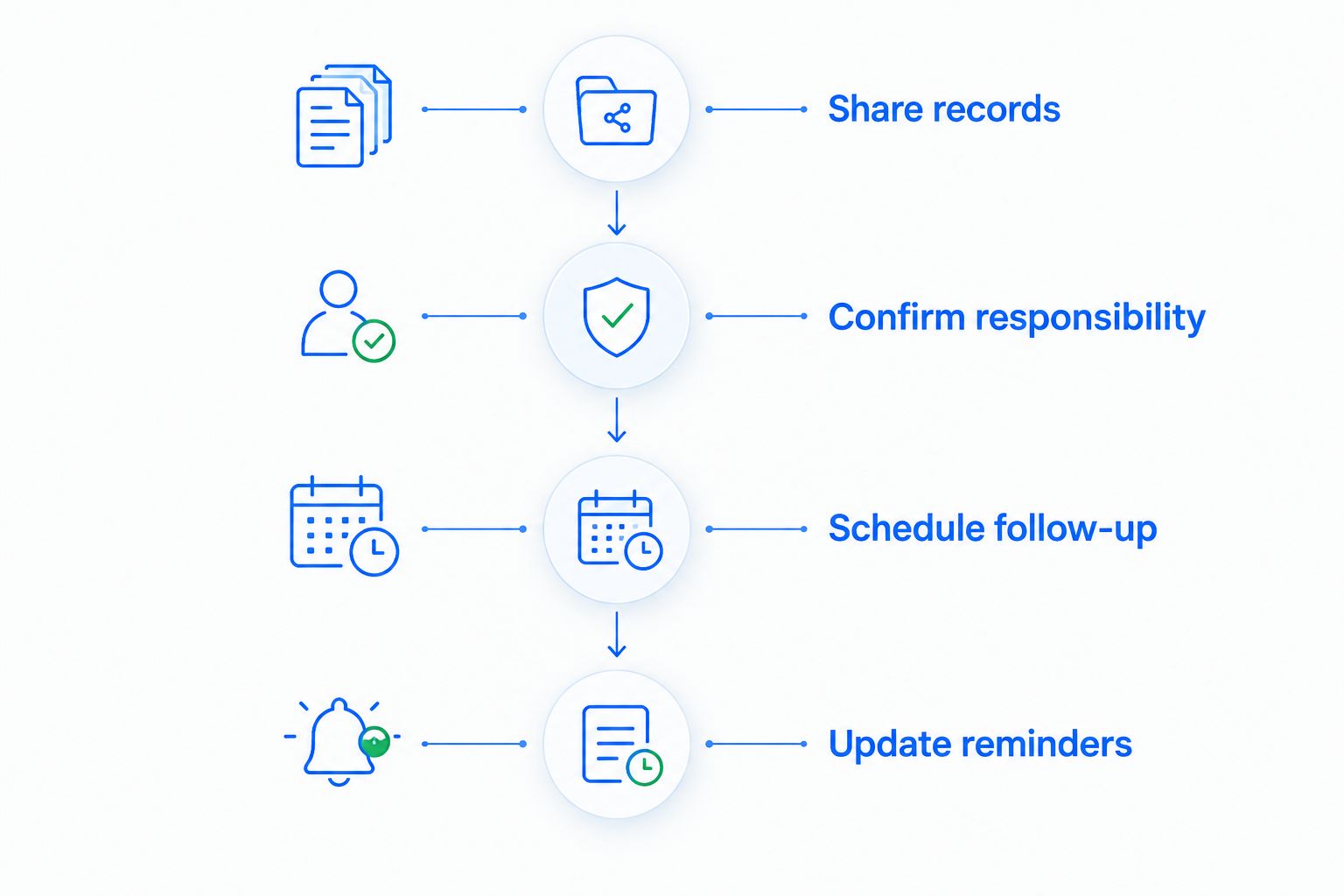
- Share records: request updated notes and relevant images.
- Confirm responsibility: identify which office handles the next stage.
- Schedule follow-up: arrange required visits before travel disrupts the plan.
- Update reminders: save instructions and appointment details where you can find them.
A handoff works best when the next action is explicit: which dentist you will see, what that visit is for, and what changes should prompt earlier contact.
Compare dental care arrangements for snowbirds
The best arrangement depends on your existing dental relationship, the length of your Florida stay, and any ongoing treatment. Choose the arrangement that keeps follow-up clear, rather than assuming all care must happen in one state.
| Option | Best for | Main advantage | Key limitation |
|---|---|---|---|
| Home-state dentist for planned care | Short Florida stays without unfinished treatment | Keeps planned care with a dentist who knows your history | Does not provide a nearby Florida contact for unexpected problems |
| Dentistry of Tavares for local care | Snowbirds seeking general and restorative care in Tavares | Offers a local setting for dental assessment and treatment | Scheduling and treatment suitability require an individual assessment |
| Planned care shared between two dentists | Seasonal residents with needs in both locations | Lets you arrange care around where you live | Requires records, clear responsibilities, and agreed follow-up |
| Urgent visits only | An unexpected problem before an ongoing local relationship is established | Addresses a current concern | Does not replace preventive visits or a longer-term treatment plan |
Shared care is a practical choice when both dentists understand their roles. Keeping planned treatment with your home dentist is also reasonable when the timing suits your needs, provided you know where to seek help in Florida.
Common mistakes Florida snowbirds make
Treating a Florida visit as a duplicate appointment
A local appointment should have a purpose: evaluating symptoms, providing due preventive care, or discussing ongoing treatment. Bring prior records and explain what you need. The dentist can then decide what assessment is appropriate instead of starting with an unclear request to repeat everything.
Assuming dental coverage follows your medical coverage
Check dental benefits separately. A medical insurance card does not establish coverage for routine dental care, and a familiar insurer name does not confirm that a Florida dentist participates in your particular dental plan.
Starting treatment just before departure
An available appointment is not proof that the entire treatment sequence fits your stay. Before beginning, confirm the expected stages, required reviews, and arrangements if you leave with work unfinished. Do not leave the handoff until travel day.
Bringing an appliance but forgetting its history
Tell the Florida dentist who prescribed your aligners, retainer, dentures, or night guard and whether adjustments are already planned. Bring the appliance to the appointment when relevant. Avoid switching treatment approaches without explaining the existing plan.
Waiting until pain becomes the only reason to call
New sensitivity, a loose restoration, bleeding gums, or difficulty chewing deserves a discussion even if you can tolerate it. Describe the change and let the dental office advise you on timing. Your 2026 travel schedule is useful information, but symptoms determine clinical urgency.
FAQ
Can I keep my dentist back home and see a dentist in Florida?
Yes, you can receive dental care in both locations. Share records and agree on which dentist handles each treatment stage so follow-up does not become unclear.
What should I bring to a Florida dental appointment as a snowbird?
Bring your medication and allergy list, insurance details, and information about recent or unfinished dental treatment. Ask your home office to transfer relevant records and images using the receiving office’s preferred process.
Will my dental insurance work in Florida in 2026?
Your dental policy determines whether Florida care is covered and how network rules apply. Verify the specific office with your insurer and ask about benefit limits before planned treatment.
Do I need another set of dental X-rays when I change states?
Changing states alone does not determine whether you need new X-rays. The dentist considers your symptoms, examination, dental history, and the usefulness of existing images.
Can a snowbird get same-day help for a dental emergency?
Same-day dental help depends on the symptoms and appointment availability. Contact a local dental office promptly; trouble breathing or swallowing requires emergency medical attention rather than waiting for a dental appointment.
Should I start a crown or bridge before leaving Florida?
Start only after discussing whether the required treatment stages and follow-up fit your travel schedule. If another dentist will continue care, confirm the handoff before treatment begins.
What if I am nervous about seeing a new dentist?
Tell the office about your anxiety when you request the appointment. Ask for clear explanations, an agreed signal for breaks, and a discussion of comfort options appropriate to your care.
One last thing
Your most useful travel document might be a short treatment summary, not a new set of images. Ask the dentist to record what was completed, what still needs attention, and what should trigger earlier review.
That summary gives your next dentist a clear starting point. Keep it with your medication list and both offices’ contact details so your dental history travels with you.
Related guides
- Same-day dental emergency appointments in Tavares
- Dental care for seniors
- Dental bridge versus implant for one missing tooth
Planning a stay near Tavares? Request an appointment with Dentistry of Tavares and share your travel dates, dental concerns, and comfort preferences.