Can clear aligners fix an overbite?
Yes, clear aligners can correct some overbites, especially when the problem comes from tooth position rather than a large difference between the upper and lower jaws. Your dentist needs to assess your bite first: aligners alone do not correct every jaw-related problem, and treatment can require attachments, elastics, or an orthodontic referral.
- Can clear aligners fix an overbite? Yes, for suitable cases; tooth position and jaw alignment determine the treatment.
- Dentistry of Tavares offers clear aligner care for local patients seeking an assessment of their bite.
- Clear aligners and braces both move teeth; neither is automatically the right choice for every overbite.
- Ask about bite correction, daily wear, attachments, and retainers before starting treatment.
Can clear aligners fix an overbite?
Clear aligners can treat an overbite when the planned tooth movements address its cause. They apply controlled pressure through a sequence of fitted trays. Depending on your bite, treatment can change the position or angle of front teeth and the way your back teeth meet.
If you are considering clear aligners in 2026, start with a bite assessment, not a decision about which trays to buy. Dentistry of Tavares offers clear aligner orthodontics for local patients, alongside general and restorative dental care.
The options below describe different treatment roles. They are not a diagnosis or a recommendation for your particular bite.
| Treatment approach | Best for, after an assessment | Main advantage | Main limitation |
|---|---|---|---|
| Clear aligners | Suitable tooth-position problems and patients who can follow the wear schedule | Removable for eating and cleaning | Depend on consistent wear; some movements need attachments or elastics |
| Braces | Cases where fixed appliances suit the required tooth movements | Work without removing and replacing trays | Require careful cleaning around brackets and wires |
| Orthodontic care with a surgical assessment | Significant jaw-position differences that tooth movement alone cannot address | Evaluates the jaw relationship as well as tooth alignment | Involves a more complex treatment pathway; surgery is not necessary for every skeletal problem |
A straight-looking smile does not necessarily mean the bite has been corrected. Ask your dentist to explain both goals: how your teeth will look and how they will fit together.
Why this matters
An overbite describes how much your upper front teeth overlap your lower front teeth vertically. Some overlap is normal. A deeper overlap needs assessment in the context of your whole bite, rather than treatment based on appearance alone.
A deep bite can sometimes contribute to tooth wear or contact between the lower teeth and the gum tissue behind the upper teeth. Those findings matter more than whether your smile matches a photograph. They also help your dentist decide whether monitoring or treatment is appropriate.
You do not need to arrive knowing dental terms. Bring your concerns in everyday language, such as difficulty biting food, uncomfortable contact, or wanting to improve the appearance of your front teeth.
A tooth-position overbite: when aligners can help
A dental overbite comes mainly from the position of the teeth. Clear aligners can be appropriate when moving those teeth creates a healthier overlap and better contact between the upper and lower arches.
The trays do more than straighten visible crowding. A treatment plan can include changes to tooth angle and vertical position, although the suitability and predictability of each movement depend on the individual case.
Small tooth-colored attachments sometimes help the trays grip particular teeth. Elastics sometimes help coordinate the upper and lower teeth. An aligner plan with attachments is still clear aligner treatment; the trays do not always work alone.
The advantage is removability for meals and brushing. The trade-off is responsibility: you must replace the trays and follow the prescribed schedule for them to deliver the planned pressure.
A jaw-related overbite: when aligners alone are not enough
A skeletal bite problem involves the relationship between the upper and lower jaws. Moving teeth can improve some aspects of that bite, but it does not necessarily resolve the underlying jaw difference.
An orthodontist considers the size of the discrepancy, your age and growth status, your symptoms, and the limits of tooth movement. For a growing child, the treatment discussion differs from the discussion for an adult whose jaw growth is complete.
Some adults with substantial jaw differences need an assessment that includes jaw surgery. Others receive orthodontic treatment without surgery. A referral does not mean you need an operation; it means the treatment decision needs specialist evaluation.
The important question is not whether clear trays exist for your teeth. It is whether the proposed plan addresses your bite safely and realistically.
Why clear aligner overbite treatment varies
Two people with similar-looking smiles can need different treatment. The front teeth show only part of the picture; the back teeth, gums, and jaw relationship also affect the plan.
These factors help explain why treatment recommendations differ:
- Tooth position: The angle and height of the front teeth influence the movements needed to reduce a deep overlap.
- Jaw relationship: A tooth-position problem and a substantial jaw-position difference require different planning.
- Growth stage: Growing patients and adults have different treatment possibilities because their jaws are at different stages of development.
- Oral health: Cavities, gum disease, existing restorations, and the support around teeth affect treatment readiness and planning.
- Wear consistency: Removable trays work only while you wear them, so your daily routine matters.
- Treatment goals: Correcting crowding, improving appearance, and changing bite contacts are related but distinct goals.
None of these factors can be judged reliably from a smiling selfie. Your dentist needs to examine how your teeth meet and gather the records appropriate for your case.
What happens at an overbite assessment in 2026?
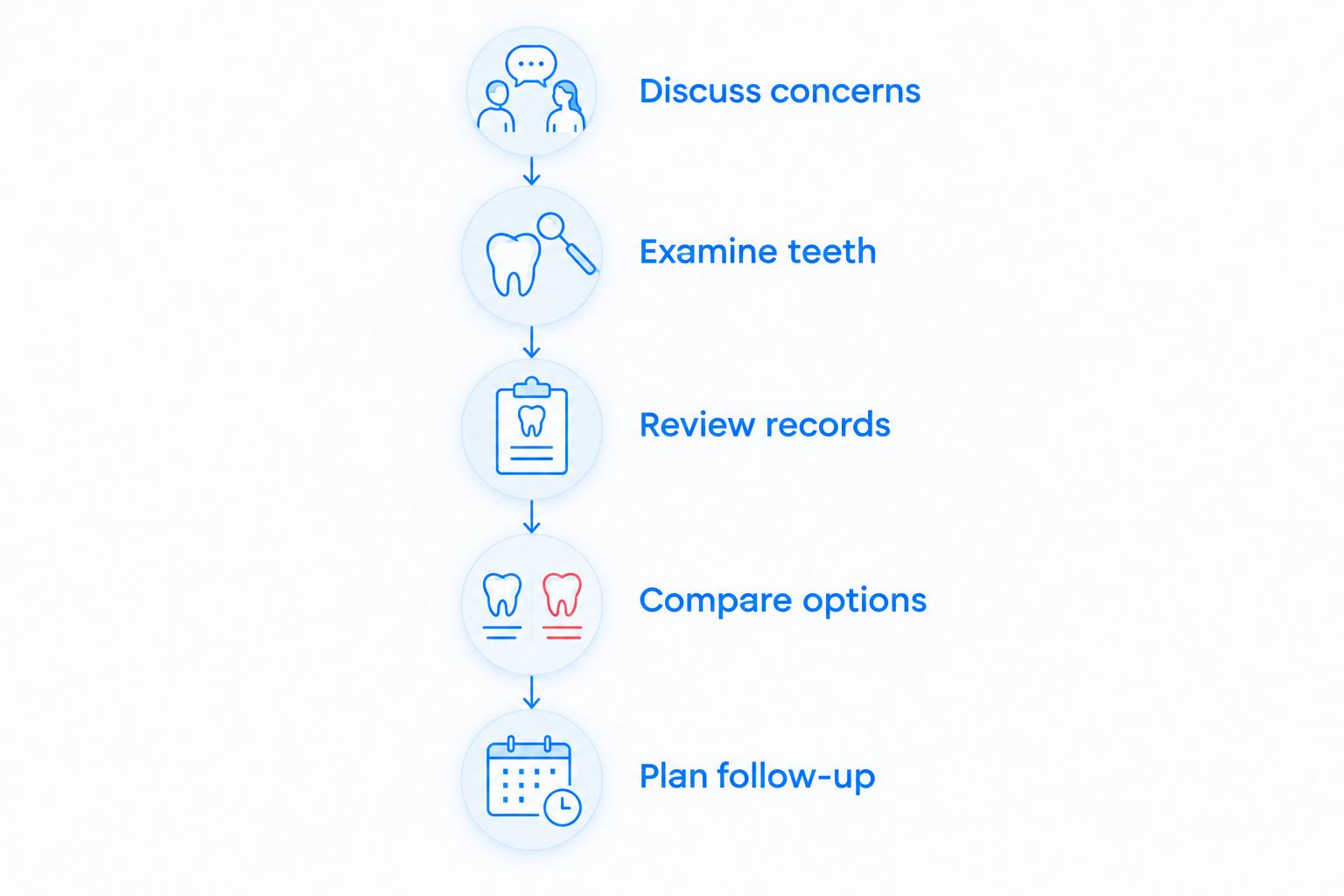
An overbite assessment starts with your concerns and ends with an explanation of suitable next steps. You should understand what the proposed treatment is intended to change before agreeing to it.
- Discuss concerns. Explain what bothers you, any discomfort, and whether you have had orthodontic treatment before. Mention grinding, jaw symptoms, and any difficulty biting or chewing.
- Examine teeth. Your dentist checks tooth health, gums, existing dental work, and the way the upper and lower teeth meet. An unhealthy tooth or gum problem can need attention before movement begins.
- Review records. Photos, scans or impressions, and appropriate X-rays help assess the teeth and supporting structures. Your clinician decides which records are necessary.
- Compare options. Ask why aligners, braces, monitoring, or a specialist assessment fits your situation. The explanation should include limitations, not just an image of a possible future smile.
- Plan follow-up. Discuss tray wear, review appointments, possible adjustments, and retention after active treatment. You should also know whom to contact if a tray stops fitting.
If dental visits make you nervous, say so when you request the assessment. Ask the clinician to explain each step before starting and agree on a signal for a pause. That conversation helps you participate without feeling rushed.
How many hours a day do you wear clear aligners?
Clear aligner instructions commonly call for 20–22 hours per day, with the exact schedule set by your treating clinician. Removing trays for longer than prescribed reduces the time they apply the planned pressure.
Meals, snacks, brushing, and cleaning all use time out of the trays. Think about how these fit into your actual day before choosing removable treatment, especially if you frequently sip drinks or graze between meals.
Do not change trays early, double up on elastics, or try to force a poorly fitting tray into place. Contact your dental team for instructions if the fit changes or you cannot follow the schedule.
Is an overbite the same as an overjet?
An overbite is vertical overlap; an overjet is the horizontal distance between the upper and lower front teeth. People often use the word overbite for both, but they describe different bite relationships.
Clear aligner planning depends on which relationship needs correction. Ask your dentist to show you the difference in your own mouth so you understand the goal rather than relying on a label.
Can adults get clear aligners for an overbite?
Adults can receive clear aligner treatment for suitable overbite cases. The decision depends on the bite, the health of the teeth and gums, and the movements required—not simply on being an adult.
Because adult jaw growth is complete, a significant jaw discrepancy needs a different discussion from a tooth-position problem. A dentist or orthodontist can explain whether tooth movement alone is appropriate.
Daily care during clear aligner treatment
A good 2026 aligner routine includes caring for your teeth, not just cleaning the trays. Trays cover much of the tooth surface, so brushing and cleaning between teeth remain important throughout treatment.
The American Dental Association recommends brushing for 2 minutes per session, twice per day, with fluoride toothpaste, and cleaning between teeth daily. Your dental team can explain how to fit that routine around your meals and aligner schedule.
Remove aligners for eating and follow your clinician's instructions about drinks. Clean trays as directed, and avoid hot water that can distort them. Rinse and clean your mouth appropriately before replacing the trays rather than trapping food against your teeth.
Some pressure or tenderness can occur after a tray change. Persistent pain, gum injury, or a tray that no longer seats properly deserves a call to your dental team rather than a homemade adjustment.
What should you ask about insurance in 2026?
Before treatment begins, ask your insurer whether your plan includes orthodontic benefits and whether those benefits apply to clear aligners. Do not assume that routine dental coverage includes orthodontic treatment.
Ask about eligibility, age restrictions, waiting periods, lifetime orthodontic limits, and any required authorization. Then ask the practice for a written treatment estimate that explains what is included, such as reviews, additional trays, and retainers.
The guide to connecting a dental insurance claim to clear aligner treatment explains questions to bring to that conversation. Confirm your own benefits directly before making a treatment decision.
Choose a plan you understand, including its financial terms. If payment is a concern, tell the practice and ask what arrangements are currently available; do not assume a particular financing program applies.
FAQ
Can clear aligners fix an overbite without braces?
Yes, clear aligners can correct suitable overbites without braces. The decision depends on whether the required tooth movements can address your bite; attachments, elastics, or specialist care can still be necessary.
Are clear aligners better than braces for an overbite?
Neither clear aligners nor braces are better for every overbite. Aligners offer removability, while braces provide fixed tooth movement; your clinician should explain which approach fits your bite and daily routine.
How long does it take clear aligners to fix an overbite?
The treatment timeline depends on your bite and the movements required. Ask for an individual estimate after an examination, including whether additional trays or changes to the plan could extend treatment.
Will I need attachments or rubber bands with my aligners?
Some overbite treatment plans require attachments or elastics. They help deliver particular movements, and your clinician should explain their purpose before treatment starts.
Can I wear clear aligners only at night to fix my overbite?
Do not substitute nighttime-only wear for your prescribed schedule. Clear aligner instructions commonly call for 20–22 hours per day; follow the schedule your treating clinician gives you.
Will I need retainers after my overbite is corrected?
Retainers are generally needed after orthodontic treatment to help maintain tooth position. Follow your clinician’s retention schedule rather than stopping when your teeth look straight.
How do I start clear aligner treatment in Tavares in 2026?
Request a dental assessment to find out whether clear aligners suit your overbite. Dentistry of Tavares offers clear aligner orthodontics for local patients; treatment suitability requires an examination.
One last thing
Ask your clinician to show you where your back teeth meet, not just how your front teeth will look. Bite correction is about how the teeth work together, not only whether they look straight. That question helps separate cosmetic goals from the changes your bite actually needs.
Dentistry of Tavares is a local option for Tavares patients seeking clear aligner care. Bring your questions about comfort, wear time, insurance, and retainers so the conversation addresses your everyday concerns.
Related guides
- Clear aligners for teenagers
- Water flossers for tight teeth
- New patient forms and your first appointment
Request an appointment with Dentistry of Tavares to discuss your overbite and find out whether clear aligners fit your needs.