Can children get clear aligners instead of metal braces?
Yes, some children can get clear aligners instead of metal braces when their tooth development, bite, and ability to follow the treatment plan make aligners suitable. Removable trays require consistent daily wear and careful cleaning; they are not the right choice for every child or every tooth movement.
- Can children get clear aligners instead of metal braces? Yes, when their developing teeth, bite, and daily habits support treatment.
- Clear aligners suit children who can reliably wear, clean, and keep track of removable trays.
- Metal braces keep working without your child remembering to put trays back in.
- Dentistry of Tavares offers clear aligner orthodontics; a dental evaluation determines whether treatment is appropriate.
Can children get clear aligners instead of metal braces?
Children can use clear aligners, but age alone does not determine eligibility. A dentist or orthodontist needs to examine which teeth have come in, how the jaws meet, and what needs to move. Your child's willingness to wear the trays matters just as much as wanting a less noticeable treatment.
For older children, the clear aligners for teenagers guide explains the everyday responsibilities. Use this 2026 comparison to start the conversation, not to choose treatment without an examination.
| Question | Clear aligners | Metal braces |
|---|---|---|
| Best for | Suitable tooth movements and a child who reliably follows a removable-tray routine | Children who need fixed treatment or tooth movements better managed with braces |
| Main advantage | Trays come out for eating, brushing, and flossing | Brackets stay attached, so your child cannot forget to wear them |
| Main limitation | Missed wear and lost trays interrupt the prescribed routine | Cleaning around brackets and wires takes extra attention |
| Appearance | Less noticeable, although attachments can show | Visible brackets and wires |
| Eating | Remove trays before meals and snacks | Avoid foods that damage brackets or wires |
| Daily responsibility | Track wear, clean trays, and store them safely | Clean carefully and follow instructions about food and any elastics |
Neither option is automatically faster, more comfortable, or better for every child. Choose the treatment that fits the bite and the child—not appearance alone.
Why this matters
Your child lives with the treatment between appointments. A plan that looks appealing in the dental chair still needs to work during school lunches, sports, sleepovers, and busy mornings.
In 2026, the useful question is not simply whether children's aligners exist. Ask whether removable treatment can safely achieve your child's goals and whether your family can support the routine. Straight-looking front teeth do not tell you everything about how the bite fits together.
Clear aligners: Best for a reliable removable-tray routine
Clear aligners are an option when the proposed tooth movements suit the treatment and your child can follow the prescribed wear schedule. Some children appreciate removing trays to eat and cleaning their teeth without brackets in the way.
The trade-off is responsibility. A tray left in a lunchbox cannot move teeth, and repeatedly missing wear can affect how well the next tray fits. Parents often need to help with reminders and storage rather than leaving the entire routine to the child.
Many clear aligner plans call for 20–22 hours of wear per day, a commonly published patient-care recommendation from the American Association of Orthodontists. Your child's treating clinician sets the actual schedule. Do not shorten it because the teeth already look straighter.
Aligners also are not always just clear plastic trays. Treatment can include tooth-colored attachments or elastics, depending on the movements needed. Ask what will be visible and what your child will need to manage before agreeing to a plan.
Metal braces: Best when fixed treatment fits the child's needs
Metal braces stay attached to the teeth, which removes the task of remembering to reinsert trays. They also give the treating clinician ways to manage movements that are less suitable for aligners.
Fixed does not mean maintenance-free. Your child still needs careful brushing, cleaning between teeth, appointments, and any prescribed elastics. Sticky or hard foods can damage brackets and wires.
Braces deserve a fair discussion if your child frequently loses belongings or finds routines difficult. That is not a judgment about maturity. It is a practical way to match treatment to everyday life.
For nervous children, ask the clinician to explain how brackets or trays are placed, how adjustments work, and how your child can signal for a pause. Understanding the next step makes the appointment less unfamiliar.
Why clear aligner suitability varies between children
An examination should explain why one approach fits your child better than another. These are the main factors to discuss at a 2026 consultation:
- Tooth development: A mixture of baby and permanent teeth affects treatment planning. Some early aligner approaches accommodate developing teeth, but not every child needs early treatment.
- Bite and jaw growth: Crowding, spacing, and the way the upper and lower teeth meet require different plans. Some problems need growth-focused appliances or specialist care rather than aligners alone.
- Required tooth movements: The clinician must judge whether trays can predictably deliver the intended movements or whether another approach is more appropriate.
- Daily wear habits: School meals, snacking, and forgetfulness can make a removable-tray routine difficult. A realistic plan needs to account for those habits.
- Tooth and gum health: Cavities, gum inflammation, and cleaning problems need attention before and during orthodontic care.
- Family support: Children need help remembering appointments, protecting trays, and reporting fit problems rather than quietly stopping treatment.
None of these factors can be settled by a smile photograph alone. Your clinician decides what examination records or imaging are needed and explains what they show.
What happens before a child starts clear aligners?
A useful evaluation connects the diagnosis to daily life. You should leave knowing what needs treatment, why now is the right time—or why waiting makes sense—and what your child must do.
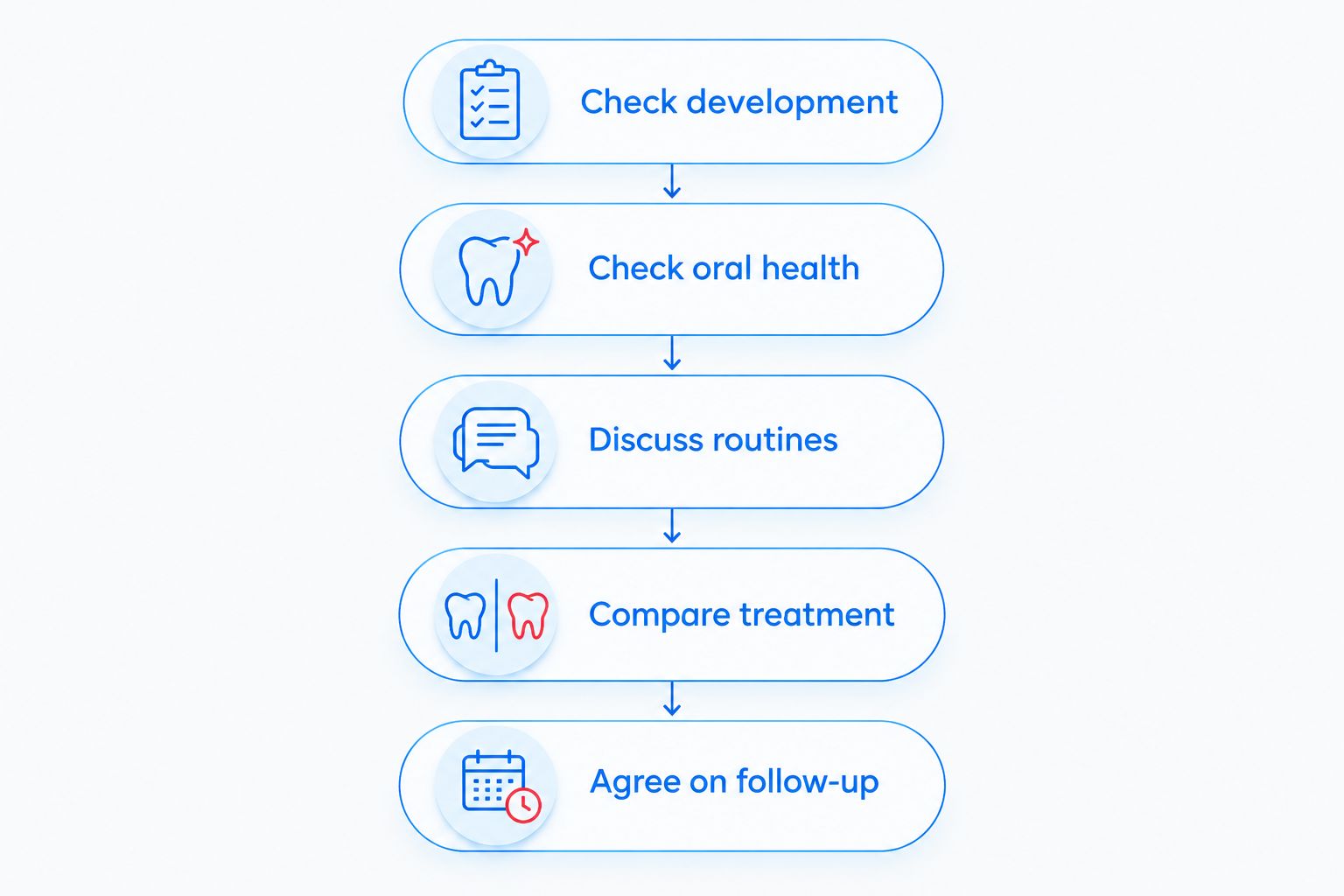
- Check development. The clinician examines the teeth, bite, and stage of dental development. Share previous orthodontic advice and any concerns about chewing or tooth eruption.
- Check oral health. The examination looks for decay, gum problems, and hygiene issues that need treatment or a better home routine.
- Discuss routines. Explain how your child handles school lunches, sports, brushing, and keeping track of belongings. Be honest about reminders they still need.
- Compare treatment. Ask why aligners, braces, another appliance, or observation best fits the findings. Request a plain-language explanation of the limitations.
- Agree on follow-up. Confirm wear instructions, appointment expectations, what to do about a lost tray, and how retention will work afterward.
These steps keep the choice focused on your child rather than on a particular appliance. You can ask for explanations again before making a decision.
At what age should my child have an orthodontic check?
Age 7 is the American Association of Orthodontists' recommended age for a first orthodontic check. That recommendation is not an instruction to start aligners or braces at 7 years old. An early check can identify developing concerns or establish that observation is appropriate.
Some children need early care; others benefit from waiting for more permanent teeth. Ask what treatment now would accomplish and what would happen if the clinician monitored development instead.
If your child is already older than 7 years and has not had an orthodontic evaluation, you can still request one. The recommendation is a checkpoint, not a deadline your family has missed.
Can my child manage aligners during the school day?
A 20–22-hour daily wear schedule leaves limited time for trays to stay out, so school routines need planning. Your child should know where the case goes, when trays come out, and how to clean teeth before putting them back in according to the clinician's instructions.
Practice the routine at home before relying on it at school. Wrapping trays in a napkin makes them easy to throw away accidentally; a protective case gives them a consistent place to go.
In your 2026 family plan, include after-school snacks and sports rather than thinking only about breakfast and dinner. If the routine repeatedly breaks down, discuss it with the clinician. Do not skip ahead to another tray to make up for missed wear.
Does my child still need dental checkups during orthodontic treatment?
Brushing for 2 minutes, twice a day, remains the American Dental Association's basic home-care recommendation. Your child also needs cleaning between teeth and dental checkups on a schedule based on their individual needs. Orthodontic progress visits do not replace preventive dental care.
Remove aligners for cleaning as instructed, and ask how to clean the trays without damaging them. With braces, ask for a demonstration of cleaning around brackets and beneath wires.
The preventive dental care for children guide covers the wider routine. If brushing already causes daily battles, work on that problem before adding a removable appliance that requires more care.
Questions to ask before accepting a treatment plan
A clear explanation matters more than an impressive-looking digital preview. A preview illustrates a proposed plan; it does not guarantee the final result.
Bring these questions to the consultation:
- What specific bite or alignment problem are you treating?
- Why are aligners suitable for these movements?
- What are the advantages and limitations of braces for my child?
- Will treatment involve attachments, elastics, or another appliance?
- What happens if a tray is lost or stops fitting?
- How will you assess progress and decide whether the plan needs changes?
- What retainers will my child need afterward?
Dentistry of Tavares offers clear aligner orthodontics for local patients; an examination determines suitability. Ask whether your child's needs fit the proposed care or call for an orthodontic specialist's assessment.
For your 2026 paperwork, request a written treatment estimate and ask your insurer about orthodontic benefits, age restrictions, and authorization requirements. Coverage is a separate question from clinical suitability. Ask about payment arrangements rather than assuming a particular option is offered.
FAQ
Can a child get clear aligners while they still have baby teeth?
Some children with a mixture of baby and permanent teeth can receive clear aligner treatment. Suitability depends on dental development, the bite problem, and whether the proposed treatment accommodates erupting teeth.
Are clear aligners better than metal braces for children?
Clear aligners are not better than metal braces for every child. Aligners require reliable wear, while braces stay attached; the required tooth movements and your child’s habits guide the choice.
Will clear aligners hurt my child?
Clear aligners can cause pressure or tenderness as teeth begin moving or trays change. Contact the treating clinician about severe or persistent pain, sores, or a tray that does not fit rather than forcing it into place.
Can my child eat with clear aligners in?
Your child should remove clear aligners for meals and snacks unless the treating clinician gives different instructions for the prescribed appliance. Follow the care plan for cleaning teeth and reinserting trays afterward.
Will my child need a retainer after clear aligners?
Children generally need retainers after clear aligners or braces to help maintain tooth positions. The treating clinician specifies the retainer type and wear schedule; finishing the last tray does not end the need for follow-up care.
Does Dentistry of Tavares offer clear aligner treatment?
Dentistry of Tavares offers clear aligner orthodontics. Request an evaluation to discuss whether aligners are suitable for your child and whether a specialist assessment is needed.
One last thing
An orthodontic evaluation does not commit your child to treatment. Sometimes the most useful outcome is a monitoring plan and a clear explanation of what to watch as permanent teeth come in.
Ask your child what worries them, too. Appearance, speaking with trays, and remembering a case are different concerns, and each deserves a practical answer before treatment begins.
Related guides
- How long does it take to see results from clear aligners?
- Can clear aligners fix an overbite?
- How to connect a dental insurance claim to clear aligner treatment costs
Request an appointment with Dentistry of Tavares to talk through your child's smile, daily routine, and next steps.