Is it safe to get dental work done while pregnant?
Yes—preventive dental care, necessary fillings, root canals, and extractions can be performed safely during pregnancy, with dental X-rays and local numbing medicine used when clinically needed. For your 2026 treatment plan, tell your dentist how far along you are, share your medicines and pregnancy complications, and distinguish necessary care from elective cosmetic work that can wait.
- Is it safe to get dental work done while pregnant? Yes—necessary treatment should not be postponed solely because of pregnancy.
- American Dental Association guidance supports necessary dental X-rays and local anesthesia during pregnancy.
- A comfortable trimester is not a reason to delay treatment for dental pain or infection.
- Dentistry of Tavares offers general dental care for local patients; share pregnancy details before treatment.
Is it safe to get dental work done while pregnant?
Necessary dental care is safe throughout pregnancy; the treatment plan should reflect your health, symptoms, and comfort. The American Dental Association and the American College of Obstetricians and Gynecologists support preventive, diagnostic, and necessary restorative dental care during pregnancy. Their guidance includes treating conditions that require fillings, root canals, or extractions rather than postponing them solely because you are pregnant.
For a broader overview of daily habits and appointment planning, read the dental care during pregnancy guide.
The useful question is not simply whether dental work is allowed. It is whether the treatment is necessary now, what medicines it involves, and whether your pregnancy requires coordination with your obstetric clinician.
| Dental care | Best for | Benefit during pregnancy | Limitation or planning point |
|---|---|---|---|
| Examination and cleaning | Checking teeth and maintaining gum health | Identifies problems and removes plaque and tartar | Nausea or sore gums can require breaks |
| Filling | Treating a tooth with decay | Repairs the affected tooth | Material choice and treatment needs require discussion |
| Root canal | Treating an infected or inflamed tooth pulp | Treats the problem inside a tooth that can be saved | Requires an individual assessment and sometimes several visits |
| Extraction | Removing a tooth that cannot be retained | Removes a source of dental disease | Recovery medicines need pregnancy-specific review |
| Whitening or cosmetic veneers | Elective appearance changes | Not needed to treat dental disease | Usually postponed until after pregnancy |
These are general treatment categories, not a recommendation that you need any particular procedure. An examination determines what is appropriate for your tooth.
Why this matters
Pregnancy does not make a tooth infection or cavity disappear. Waiting can allow a dental problem to progress and make treatment more involved. At the same time, a cosmetic change does not carry the same urgency as treating pain or infection.
Pregnancy-related hormone changes can make gums more sensitive to plaque, leading to swelling or bleeding. Vomiting can expose teeth to stomach acid. These changes make preventive care useful, but bleeding gums do not automatically mean you need major treatment.
Keep necessary care on your calendar and make elective decisions separately. That distinction helps you avoid both unnecessary delay and unnecessary treatment during your 2026 pregnancy.
Routine dental care: examinations and cleanings
Examinations and cleanings are appropriate during pregnancy. Tell the dental team about your pregnancy before the visit so they can discuss positioning, nausea, gum tenderness, and any medical concerns.
A cleaning removes deposits that brushing cannot remove at home. Its limitation is straightforward: it does not repair a cavity or treat an infection inside a tooth. If the examination finds another problem, ask the dentist to explain what needs treatment and what can be monitored.
At home, brush for 2 minutes twice a day with fluoride toothpaste and clean between your teeth once a day, consistent with American Dental Association home-care recommendations. Use a soft-bristled toothbrush and gentle pressure rather than scrubbing tender gums.
If morning sickness makes brushing difficult, try a different time of day. After vomiting, rinse your mouth with water rather than brushing immediately while acid is still affecting the tooth surface. Ask your dentist for a plan if vomiting is frequent or your teeth feel sensitive.
Necessary treatment: fillings, root canals, and extractions
Necessary restorative treatment can be performed during pregnancy. A dentist determines whether the tooth needs a filling, root canal treatment, extraction, or another approach based on the examination and any needed images.
A filling addresses decay in a tooth that can be repaired that way. Root canal treatment addresses disease inside the tooth. An extraction removes a tooth when keeping it is not appropriate. None of these decisions should be made from pain intensity alone; some dental problems produce little discomfort at first.
Ask these questions before treatment:
- What problem does this procedure treat?
- What happens if treatment is postponed?
- What numbing medicine will be used?
- Will I need a prescription afterward?
- Does my obstetric clinician need to help plan the care?
Necessary treatment has a benefit and a burden: it addresses disease, but it also involves appointment time, recovery, and sometimes medication. Your dentist should explain both. Pregnancy alone is not a reason to leave an infection untreated.
Elective cosmetic treatment: plan it separately
Whitening and purely cosmetic veneers are usually deferred until after pregnancy. They do not treat infection or another urgent health need, and pregnancy-specific safety evidence for whitening is limited.
That does not mean every treatment affecting appearance is cosmetic. Repairing a broken tooth or placing a crown to protect a damaged tooth can serve a necessary restorative purpose. Ask what the procedure is intended to accomplish before deciding to delay it.
For elective work, use your 2026 appointment to discuss goals rather than rushing into treatment. A future cosmetic plan should account for your oral health, not just the appearance you want to change.
Why dental treatment planning varies during pregnancy
The safety of necessary dental care does not depend on a single universal appointment rule. These factors shape the plan:
- Urgency: Pain, infection, and a damaged tooth need a different response from an optional appearance change.
- Pregnancy stage: Nausea early in pregnancy and discomfort later in pregnancy affect how a visit feels.
- Pregnancy complications: A high-risk pregnancy or other medical condition can require coordination with your obstetric clinician.
- Medicines: Prescriptions, over-the-counter medicines, supplements, and allergies affect treatment choices.
- Procedure needs: Necessary imaging and local anesthesia are different from sedation or general anesthesia.
- Positioning and anxiety: Chair adjustments, breaks, and clear explanations help make care more manageable.
The second trimester is often more comfortable for planned appointments because early nausea has eased and lying back is less difficult than later in pregnancy. That is a comfort consideration, not a rule requiring you to wait when treatment is necessary.
How should I prepare for a dental appointment while pregnant?
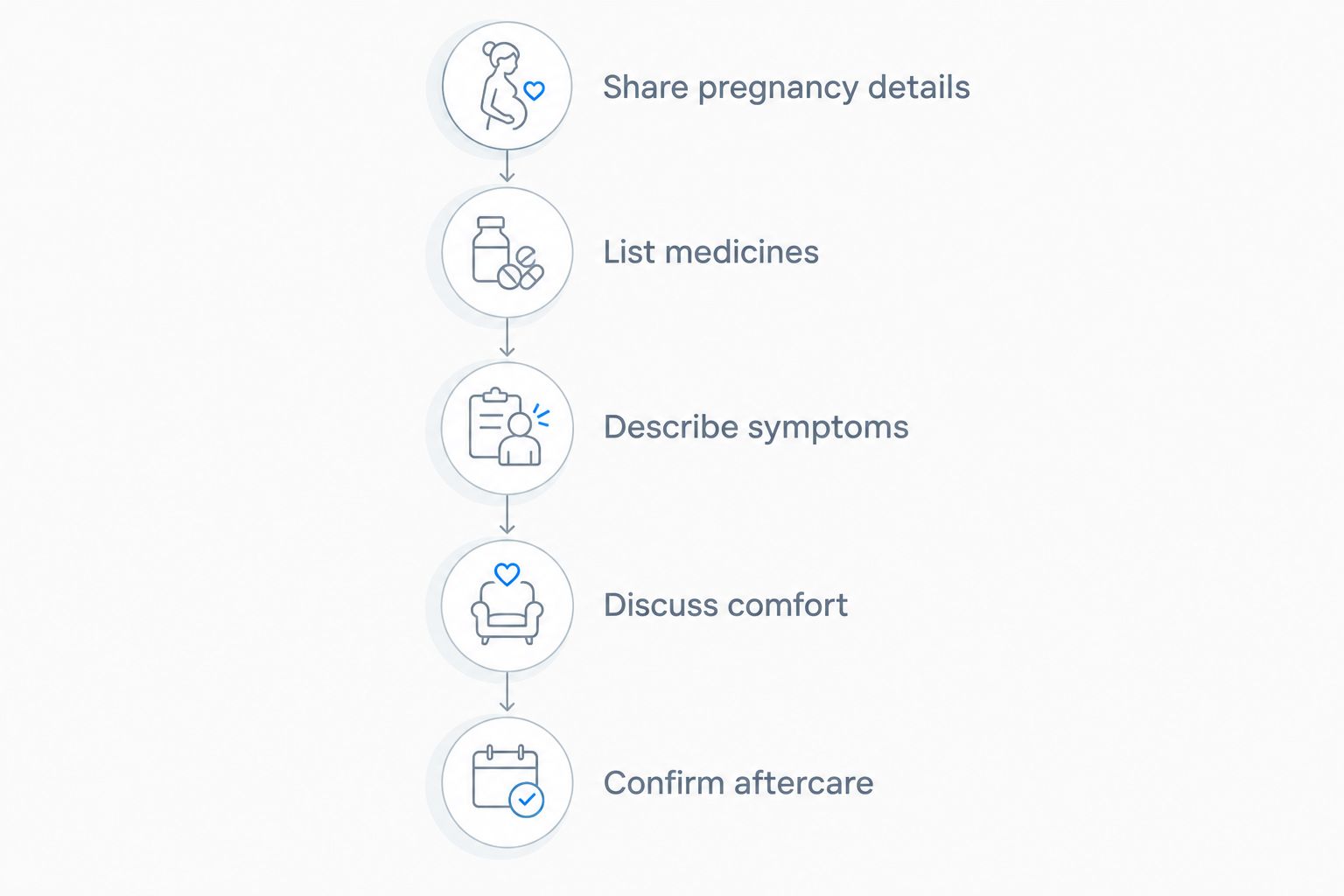
Prepare by sharing your pregnancy details and a current medication list before treatment starts. You do not need to know every dental term; you need to give the team enough information to plan safely.
- Share pregnancy details. Give your due date or pregnancy week, and mention complications or instructions from your obstetric clinician.
- List medicines. Include prescriptions, vitamins, supplements, over-the-counter medicines, and allergies.
- Describe symptoms. Explain where the problem is, when it began, and whether you have swelling, fever, or trouble eating.
- Discuss comfort. Mention nausea, dizziness when reclining, and dental anxiety. Ask for a way to signal that you need a break.
- Confirm aftercare. Before leaving, understand any medication instructions, follow-up needs, and symptoms that require a call.
You can ask for each step to be explained before it happens. If lying back makes you dizzy or uncomfortable, tell the team immediately; adjusting the chair and your position can help.
Dentistry of Tavares is a local option for patients seeking general dental care in Tavares. Tell the practice that you are pregnant when requesting a visit, and describe symptoms rather than assuming they can wait until after delivery.
Are dental X-rays and numbing shots safe during pregnancy?
Necessary dental X-rays and local anesthesia can be used during pregnancy, according to American Dental Association and American College of Obstetricians and Gynecologists guidance. The dentist should use imaging when it helps diagnose or treat a problem—not simply because an image is available.
Local numbing medicine is not the same as sedation. Lidocaine, including lidocaine with epinephrine, is an accepted option during pregnancy when used appropriately. Your dentist still needs your medical history and medication list to choose treatment for you.
Sedation, nitrous oxide, and general anesthesia require a separate discussion. Do not assume that reassurance about a local numbing shot applies to every form of anesthesia. If sedation is proposed, ask why it is needed and how your obstetric clinician will be involved.
For your 2026 visit, a useful question is: What does this image or medicine help you do, and does my pregnancy change the plan? That invites a clear explanation without requiring you to choose treatment yourself.
Should I wait until after delivery if my tooth hurts?
Do not postpone an assessment for tooth pain solely because you are pregnant. Pain can come from different causes, and an examination is needed to decide whether treatment is urgent or can be scheduled.
Contact a dentist promptly for swelling, worsening pain, drainage, or a broken tooth. If you have difficulty breathing or swallowing, seek emergency medical care. Facial swelling with fever also needs urgent assessment.
Avoid using leftover antibiotics or someone else's medication. Pain relief can reduce a symptom without treating its cause, and the safest medicine choice depends on pregnancy stage and your health history.
The U.S. Food and Drug Administration advises avoiding nonsteroidal anti-inflammatory drugs, such as ibuprofen and naproxen, at 20 weeks of pregnancy or later unless a clinician specifically directs their use. Do not stop prescribed low-dose aspirin on your own; that has a separate role in some pregnancy care plans.
What should I ask about payment and insurance?
Ask the dental office and your insurer how the proposed treatment is covered before agreeing to nonurgent work. Pregnancy does not tell you which dental benefits your plan includes.
Request a written treatment estimate, ask whether a deductible or benefit limit applies, and clarify which parts of a multi-visit procedure are included. If payment is a concern, say so early and ask which options the office actually offers.
Keep coverage questions separate from clinical urgency. You deserve an explanation of both the treatment recommendation and the payment responsibilities, without having to guess what insurance will pay.
FAQ
Is it safe to get dental work done while pregnant in the first trimester?
Yes, necessary dental care can be performed in the first trimester. Tell your dentist about your pregnancy and any complications; nausea can affect appointment comfort, but pregnancy alone is not a reason to delay needed treatment.
Can I get a dental cleaning while pregnant?
Yes, dental examinations and cleanings are appropriate during pregnancy. Tell the team if your gums are tender or you need breaks because of nausea.
Can I get a cavity filled while pregnant?
Yes, a necessary filling can be placed during pregnancy. Your dentist should explain the material choice, numbing medicine, and whether delaying treatment would allow the problem to worsen.
Are dental X-rays safe when I am pregnant?
Necessary dental X-rays can be taken during pregnancy under American Dental Association and American College of Obstetricians and Gynecologists guidance. Tell your dentist that you are pregnant and ask why the image is needed.
Can I have a root canal or tooth extraction while pregnant?
Yes, a necessary root canal or extraction can be performed during pregnancy. The dentist should review your pregnancy history and plan any medicines or medical coordination needed.
Can I take ibuprofen for tooth pain while pregnant?
Do not choose ibuprofen for pregnancy-related tooth-pain relief without medical advice. The U.S. Food and Drug Administration advises avoiding NSAIDs at 20 weeks of pregnancy or later unless a clinician directs their use.
Should I postpone teeth whitening until after pregnancy?
Yes, elective teeth whitening is generally postponed until after pregnancy because it is not necessary treatment and pregnancy-specific safety evidence is limited. A dental examination can still address sensitivity, decay, or gum problems now.
One last thing
Being comfortable enough to speak up is part of a good dental visit. A request for a pause, a less reclined chair, or an explanation before a numbing shot is useful information—not an inconvenience.
For your 2026 care plan, bring your medication list and tell the team what worries you most. This article provides general education; your dentist and obstetric clinician should guide decisions involving your individual health.
Related guides
- How often should you get a dental checkup and cleaning?
- How root canal treatment helps save your tooth
- Understanding your dental insurance
Have a dental concern during pregnancy? Request an appointment with Dentistry of Tavares and share your pregnancy details so the team can discuss your next step.