How long does it take to recover from wisdom teeth removal?
Plan on about 2 weeks for recovery from wisdom teeth removal in 2026, although many people resume light daily activities within 3–5 days. Initial recovery commonly falls within 1–2 weeks; the tooth sockets and underlying bone continue healing after you feel better. Your surgeon’s instructions take priority, especially after a difficult extraction or sedation.
- How long does it take to recover from wisdom teeth removal? Allow 1–2 weeks for initial recovery.
- Cleveland Clinic describes swelling that commonly peaks around the third day after wisdom tooth extraction.
- Returning to desk work does not mean you are ready for strenuous exercise or crunchy foods.
- Contact your dentist if pain worsens after improving, bleeding persists, or fever develops.
Why this matters
Recovery has several finish lines: returning to work, eating comfortably, and healing inside the socket. They do not happen together. For your 2026 schedule, plan around the demands of your day rather than treating the procedure date as your only time commitment.
Dentistry of Tavares is a local option for Tavares patients seeking general dental care and oral surgery. You can start with Dentistry of Tavares to discuss your dental needs. An examination—not a general recovery calendar—determines what treatment and follow-up fit your situation.
How long does it take to recover from wisdom teeth removal?
Initial recovery usually takes 1–2 weeks, but you can feel ready for light activities before the surgical sites have finished healing. Cleveland Clinic’s patient guidance on wisdom tooth extraction describes this recovery window and notes that many people return to their usual routines in 3–5 days. NHS guidance also explains that soreness, swelling, and jaw stiffness can last up to 2 weeks.
Use the timeline below for planning, not as permission to restart every activity. Your symptoms and your surgeon’s instructions matter more than reaching a particular day.
| Recovery stage | What commonly happens | What to do |
|---|---|---|
| First 24 hours | A blood clot forms; some oozing and soreness are expected | Rest, follow gauze instructions, and protect the clot |
| Days 2–3 | Swelling and jaw stiffness can become more noticeable | Continue the prescribed care plan and keep activities gentle |
| Days 3–5 | Many people feel ready for light daily routines | Return gradually if symptoms are improving and sedation restrictions have passed |
| Days 7–14 | Soreness and swelling generally continue settling | Follow cleaning instructions and attend any recommended review |
| Following weeks | The socket continues healing beneath the surface | Keep the area clean as directed; do not probe it |
A straightforward extraction and a surgical extraction do not always feel the same afterward. A tooth that is buried in the gum or bone can require more involved treatment, so your dentist should explain the expected recovery before the procedure.
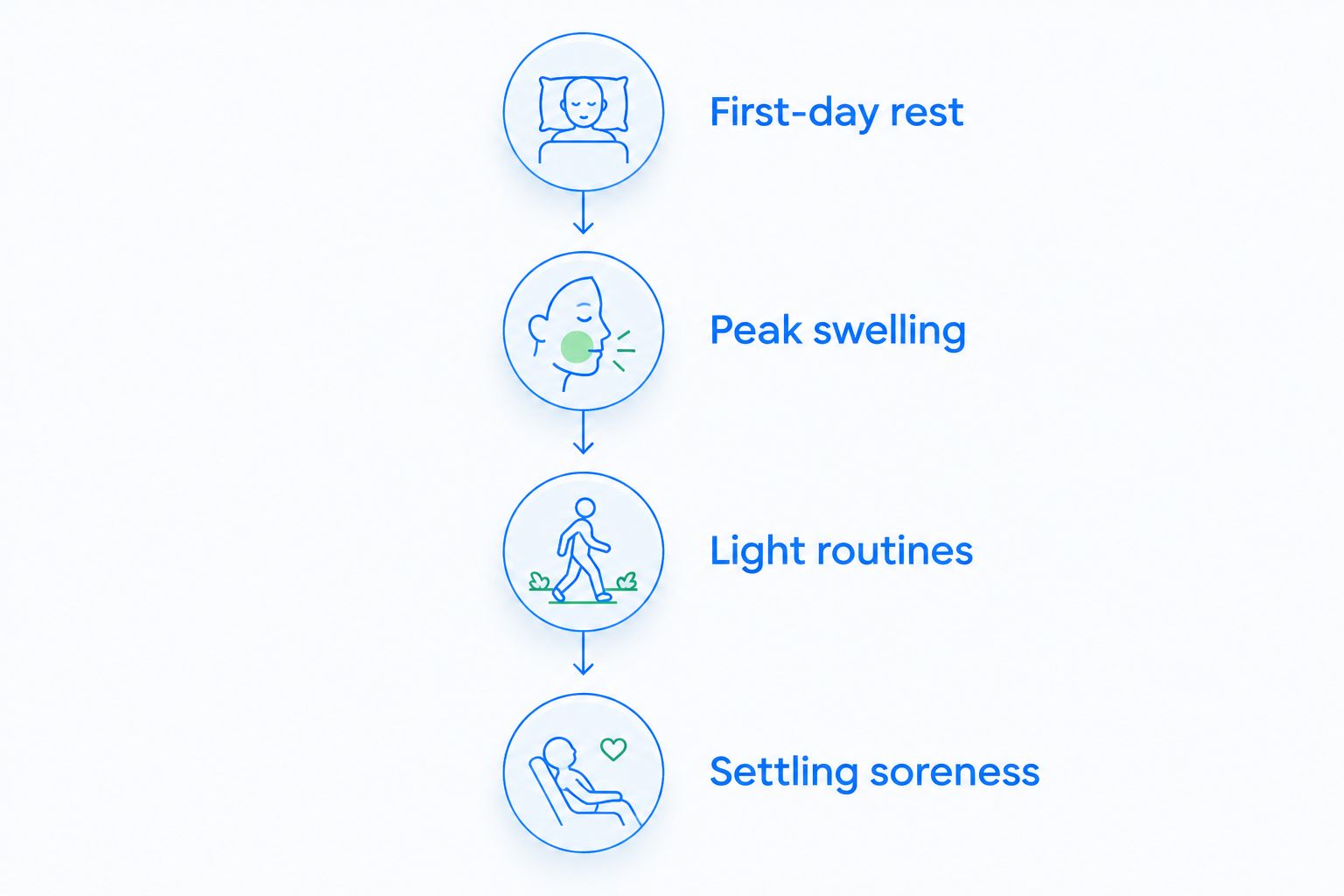
First-day rest: the first 24 hours
Your main job during the first 24 hours is to rest and protect the extraction sites. Follow the instructions about biting on gauze, eating, drinking, and taking medicine. A little blood mixed with saliva can look more dramatic than it is, but ongoing active bleeding needs a call to your dental team.
Avoid vigorous rinsing, forceful spitting, and drinking through a straw during this early period. These actions can disturb the clot. Do not keep checking the socket with your tongue or fingers.
Peak swelling: days 2–3
Swelling often becomes more noticeable before it begins to settle. Cleveland Clinic describes swelling that commonly peaks around the third day, so a puffier cheek on day 2 does not automatically mean something is wrong.
Follow your surgeon’s instructions for cold packs and pain medicine. A trend toward improvement matters more than an exact deadline. New fever, spreading swelling, or worsening symptoms after initial improvement deserve professional advice.
Light routines: days 3–5
Many people return to light routines within 3–5 days. That can mean working at a desk, studying, or taking a gentle walk—not lifting heavy equipment or completing a strenuous workout.
Before returning, check whether you can drink comfortably, manage your symptoms, and concentrate without impairing medication. A job involving physical effort, prolonged talking, or safety-sensitive tasks needs a separate discussion with your surgeon.
Settling soreness: days 7–14
During days 7–14, swelling and jaw stiffness generally continue improving. You should not assume that every symptom must disappear on a particular day, but you should expect progress rather than a steady decline in comfort.
Food can still collect around healing sockets. Use only the cleaning method your dental team recommends, and do not start using an irrigation syringe unless you have been told when and how to use it.
These stages overlap; they are not separate deadlines you must meet.
Why wisdom teeth recovery time varies
Your recovery depends on the procedure and your health, not just the number of days since surgery. Ask your surgeon which of these factors applies to you:
- Tooth position. A fully erupted tooth can be easier to remove than a tooth trapped beneath gum or bone.
- Surgical complexity. Removing bone or dividing a tooth can involve more tissue healing than a straightforward extraction.
- Number of extraction sites. Several healing areas can make eating and cleaning more uncomfortable.
- Smoking and tobacco use. Tobacco interferes with healing and increases the risk of complications such as dry socket.
- Medical conditions and medicines. Conditions affecting healing and medicines affecting bleeding can change your care plan. Do not stop prescribed medicine on your own.
- Aftercare and complications. Protecting the clot and following cleaning instructions support healing; dry socket or infection requires assessment rather than simply more waiting.
Share your full medication list, supplements, allergies, and relevant health conditions before treatment. If you take a blood thinner or have diabetes, ask for individualized instructions. A generic recovery article cannot replace that conversation.
How many days should I take off work after wisdom teeth removal?
Many people resume light routines within 3–5 days, but the right time off depends on your procedure, symptoms, and job. For 2026 planning, keep your return date flexible until your surgeon explains the likely recovery and any sedation restrictions.
Choose your return based on what you actually do during a shift:
| Activity | Best for | Advantage | Limitation |
|---|---|---|---|
| Quiet desk work | People who can take breaks and avoid physical strain | Easier to pace around eating, drinking, and medicine | Concentration and prolonged talking can still be difficult |
| Gentle walking | People ready for light movement | Lets you resume activity gradually | Stop if it brings on bleeding or throbbing |
| Physical work or exercise | People cleared to resume exertion | Supports a return to normal responsibilities | Straining can trigger bleeding; clearance depends on your recovery |
| Driving | People whose sedation restrictions have passed and who are not impaired | Restores independent travel | Sedation and some pain medicines make driving unsafe |
Ask specifically about lifting, bending, driving, and operating machinery. Being comfortable while sitting does not establish that you are ready for those tasks.
When can I eat normally after wisdom teeth removal?
During the 1–2 weeks of initial recovery, return to your usual foods gradually rather than on a fixed day. Start with soft foods that require little chewing, then add firmer textures as comfort improves and your surgeon permits.
Smooth yogurt, cooled soup, mashed potatoes, and soft eggs are common early choices. Their advantage is that they reduce chewing effort; the limitation is that you still need enough food and fluids to support recovery. Choose meals you can manage, not just foods that are easy to swallow once.
Avoid crunchy, sharp, or very chewy foods while the extraction sites are tender. Small pieces can lodge around the sockets, and hard edges can irritate healing tissue. If numbness remains, wait until you can safely judge temperature and avoid biting your cheek or tongue.
Do not use pain relief as a reason to rush back to difficult foods. Less discomfort does not mean the clot and surrounding tissue are ready for extra pressure.
How to support a comfortable recovery in 2026
You do not need a complicated routine. You need clear instructions and a way to contact your dental team if something changes.
- Follow the written plan. Keep your discharge instructions where you can find them. Ask someone helping you at home to read them too.
- Take medicine as directed. Follow the prescription or package directions and your clinician’s advice. Check with a pharmacist before combining medicines, especially products containing the same ingredient.
- Protect the clot. Avoid straws, forceful spitting, and vigorous rinsing during the early healing period. Ask how long your restrictions should continue.
- Clean gently. Keep brushing the rest of your teeth while avoiding direct trauma to the extraction sites. Begin gentle rinsing only when your surgeon instructs you to do so.
- Eat and drink regularly. Choose manageable meals and take fluids throughout the day. Call if pain or nausea prevents you from drinking.
- Keep follow-up arrangements. Attend any recommended review and ask whether your stitches need removal. Do not pull at a loose stitch yourself.
Before a visit to Dentistry of Tavares, write down your concerns about discomfort, medicines, or returning to work. Bring the instructions from your treating surgeon if you are seeking help after a procedure elsewhere. That gives the clinician useful context without requiring you to remember everything while you are uncomfortable.
When should I call the dentist during recovery?
Call when symptoms are worsening rather than improving, or when you cannot manage recovery with the instructions you received. You do not need to diagnose the problem yourself before asking for help.
Contact your surgeon or dentist for:
- Bleeding that does not settle with the pressure method you were instructed to use.
- Severe pain or pain that increases after initial improvement.
- Fever, pus, or swelling that continues worsening.
- A persistent unpleasant taste or smell alongside increasing pain.
- Numbness that lasts beyond what your clinician told you to expect.
- Difficulty drinking or keeping fluids down.
Dry socket occurs when the protective clot is lost or does not form properly. It often causes significant pain several days after an extraction and needs dental assessment. It is not the same as an infection, and it is not something to treat by placing household remedies inside the socket.
Difficulty breathing or swallowing, or rapidly spreading swelling, requires emergency medical care. Do not wait for a routine appointment.
What should I arrange before the procedure?
For a 2026 appointment, confirm your transport, time off, and home support before treatment day. If sedation is planned, ask who needs to take you home, whether someone must stay with you, and how long restrictions apply.
Tell the dental team if you feel nervous. Ask them to explain what you should expect afterward, how to use your medicines, and whom to call outside normal office hours. Clear answers are more useful than trying to remember instructions after treatment.
You can also ask for a written treatment estimate and clarification about insurance before proceeding. Recovery advice does not establish your coverage, and the procedure recommended after an examination determines which benefits need checking.
FAQ
How long does it take to recover from wisdom teeth removal in 2026?
Initial recovery generally takes 1–2 weeks, with many people returning to light routines in 3–5 days. The socket and underlying bone continue healing after everyday activities feel comfortable.
Is it normal to feel more swollen on the third day?
Swelling commonly peaks around the third day after wisdom tooth extraction. Contact your dental team if swelling keeps worsening, comes with fever, or affects swallowing or breathing.
Can I go back to work the next day?
Do not assume you will be ready for work the next day. Your procedure, symptoms, job duties, sedation, and medicines determine when returning is safe.
How do I know if I have dry socket?
Increasing or severe pain several days after extraction can be a sign of dry socket, but a dentist must assess the cause. Do not probe the socket or place home remedies inside it.
When can I start brushing my teeth again?
Keep the rest of your mouth clean according to your surgeon’s instructions while avoiding direct trauma to the extraction sites. Ask when to begin rinsing and whether any special cleaning method is needed.
Can I exercise when my mouth stops hurting?
Less pain alone does not mean you are ready for strenuous exercise. Follow your surgeon’s activity restrictions and stop activity that triggers bleeding or throbbing.
Can Dentistry of Tavares help me decide whether I need an appointment?
Contact Dentistry of Tavares to discuss your dental symptoms and request an appointment. Describe when the extraction occurred, whether symptoms are improving, and any instructions your surgeon provided.
One last thing
Before you leave the procedure, know exactly whom to call if recovery changes. Save the contact information and keep your written instructions nearby. That small step makes it easier to get advice when you are tired, sore, or unsure whether a symptom is expected.
Related guides
- Foods to eat after wisdom teeth removal
- Pain relief options after a tooth extraction
- Recovery after a tooth extraction
- Same-day dental emergency appointments in Tavares
Have questions about your recovery or upcoming treatment? Request an appointment with Dentistry of Tavares to discuss your concerns and next steps.