
How long does it take to see results from clear aligners?
Clear aligner results appear gradually, and the first visible change does not tell you when treatment will be finished. Your dentist’s estimate depends on which teeth need to move, how your bite fits together, and how consistently you wear your trays; additional aligners can also extend the original plan.
- How long does it take to see results from clear aligners? Your treatment plan determines the timeline, not a universal deadline.
- Visible tooth alignment and a finished bite are different milestones; keep wearing trays as prescribed.
- Dentistry of Tavares offers clear aligner orthodontics for local patients seeking dental care.
- Ask your dentist about wear time, tray fit, progress checks, and retainers before starting treatment.
How long does it take to see results from clear aligners?
There is no single deadline for seeing clear aligner results. A small change in a front tooth can become noticeable before the rest of your bite is ready. Other treatment plans address movements that are difficult to judge in the mirror, so visible improvement is not a reliable measure of completion.
Your dentist can explain the sequence of movement in your individual plan. For a 2026 consultation, ask for separate expectations for visible improvement, active treatment, and retainer wear rather than one finish date.
| Treatment milestone | What you notice | What it means | What it does not prove |
|---|---|---|---|
| Early movement | A subtle change in spacing or tooth position | Some planned movement is becoming visible | That every tooth is moving as intended |
| Visible improvement | Front teeth look straighter or gaps look smaller | Your smile is changing | That your bite correction is complete |
| Finishing adjustments | Smaller changes that are harder to see | Your dentist is assessing the final fit of your teeth | That you should stop wearing aligners yourself |
| Retention | Teeth are held in their corrected positions | Active movement has ended and maintenance has begun | That teeth will stay put without retainers |
The benefit of this milestone approach is clarity: you know what your dentist is checking. Its limitation is that photographs alone cannot confirm root position, gum health, or the way your teeth meet.
Why this matters
A straighter-looking smile is encouraging, but stopping early can leave planned movements unfinished. The useful question is not only whether your teeth look different; it is whether they are following the treatment plan.
Dentistry of Tavares is a local option for Tavares patients seeking clear aligner treatment alongside general dental care. You can discuss your goals with Dentistry of Tavares and ask what an examination needs to establish before treatment starts.
If you feel nervous about dental visits, say so at the beginning. Ask the dentist to explain each step and agree on a way to signal that you need a pause. Understanding what happens next helps you participate without feeling rushed.
Early changes: look for progress, not a finish line
The first changes you notice depend on where treatment begins. A visible gap getting smaller is easy to recognize. Changes farther back in your mouth, or movements that prepare space for another tooth, are less obvious.
Pressure after a tray change is not a stopwatch for progress. Some trays feel different from others, and the amount of discomfort does not tell you how much useful movement has occurred. Avoid judging success by soreness.
Ask your dentist which changes you should expect to notice first. If your main concern is a particular front tooth, find out whether that tooth moves early or later in the sequence. That explanation is more useful than comparing your smile with someone else’s progress photos.
Keep the prescribed tray schedule even when your teeth already look better. Do not move ahead because a tray feels loose or because you want faster results.
Finishing treatment: appearance is only part of the result
Active treatment aims to address the movements agreed upon in your plan, not simply create a better photograph. Your dentist also checks how the teeth meet and whether the trays are producing the intended movement.
Some patients need additional aligners after the original series. These finishing adjustments are often called refinements. They address remaining movement rather than automatically meaning the original treatment failed.
Ask how your dentist decides whether refinements are needed and how that decision affects the estimated finish. A treatment estimate should explain what completion means for you, including any limits to what aligners can correct.
For your 2026 treatment plan, separate the expected end of active movement from the start of retention. Those are connected stages, but they have different purposes and instructions.
Retainers: keeping the result after active treatment
Retainers help hold teeth in their corrected positions after active treatment. Teeth can shift afterward, so completing the last aligner does not remove the need for ongoing care.
Your dentist will prescribe a retainer schedule based on your situation. Follow that schedule rather than borrowing a friend’s routine or assuming that nighttime wear is appropriate immediately.
Ask what to do if a retainer breaks, becomes uncomfortable, or no longer fits. Do not force a poorly fitting retainer into place. Contact the dental office for instructions instead of waiting for a visible change in your smile.
The benefit of retention is maintaining the correction achieved during treatment. The trade-off is continued responsibility: retainers need consistent use, cleaning, and replacement when your dentist recommends it.
Why clear aligner results vary
Your timeline reflects both the treatment being planned and how treatment progresses. These factors help explain why another patient’s experience is not a reliable deadline for yours:
- Starting position. Closing a space and correcting crowding require different movements. The amount of movement alone does not describe the whole task.
- Bite correction. Straightening visible front teeth is not the same as correcting how upper and lower teeth meet. Your plan can include both.
- Movement type. Turning a tooth, changing its angle, and moving it into a space place different demands on treatment.
- Daily wear. Aligners need consistent wear to apply the planned forces. Long periods out of your mouth interrupt that routine.
- Tray fit. A tray that does not seat as intended needs attention. Moving to the next tray without advice does not solve the underlying issue.
- Oral health and finishing needs. Gum problems, untreated decay, or remaining tooth movements can change the treatment sequence or require additional care.
Ask which of these factors matters most in your case. A clear explanation connects the estimated timeline to your teeth rather than to a general promise.
How to monitor progress without guessing
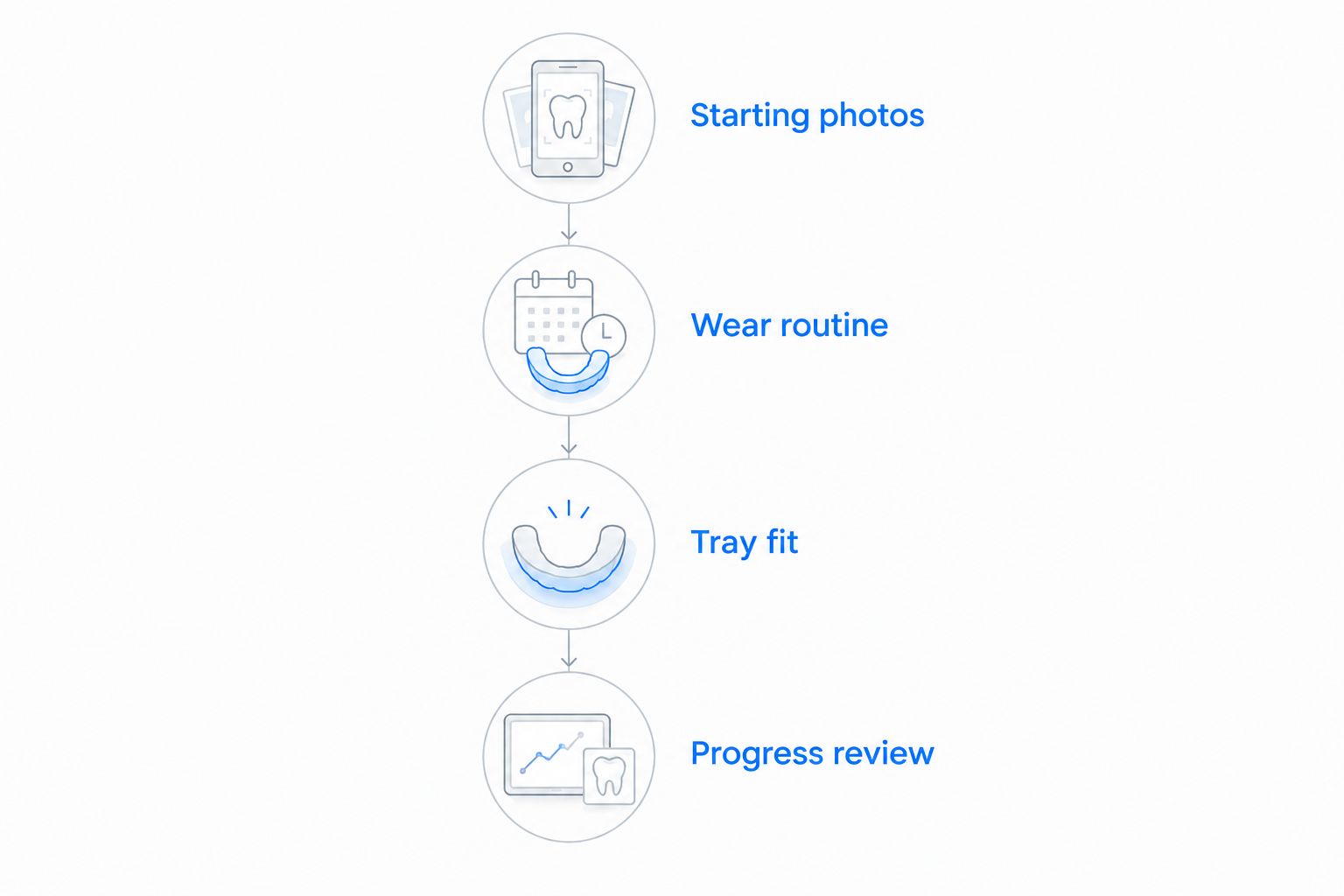
Use your dentist’s instructions as the reference point. A simple routine helps you report useful information at appointments without turning daily mirror checks into a source of worry.
- Starting photos. Keep a record of your starting smile if your dentist recommends it. Use similar lighting and angles for later comparisons; photographs support discussion but do not replace an examination.
- Wear routine. Follow the daily wear target and tray-change schedule you receive. Keep track of interruptions so you can describe them accurately.
- Tray fit. Check whether each tray seats as your dentist demonstrated. Report persistent gaps, damage, or trouble placing a tray.
- Progress review. Attend the planned reviews and ask whether movement matches the treatment plan. Let the dentist decide when to advance or adjust treatment.
Bring your current trays to an appointment if the office asks you to. Describe what changed, when you noticed it, and whether anything interrupted your wear routine. Specific observations give your dentist more to work with than saying treatment feels slow.
What daily habits support clear aligner treatment?
Consistent wear matters more than trying to hurry through trays. The American Association of Orthodontists describes approximately 22 hours per day of aligner wear as a common expectation; your treating dentist’s instructions determine your actual schedule.
For your 2026 daily routine, plan meals and oral care around that prescribed wear time. Remove aligners for eating and for drinks other than water unless your dentist gives different instructions. Clean your teeth before putting the trays back in, and use the cleaning method recommended for your aligners.
The American Dental Association recommends brushing for 2 minutes per session, 2 times per day, with fluoride toothpaste. Clean between your teeth daily, too. Aligners do not replace these habits, and trays should not become a reason to leave food or plaque against your teeth.
Ask before using hot water or household cleaning products on aligners. Follow the instructions supplied for your trays rather than a cleaning shortcut from social media.
What if I cannot see a difference yet?
No visible difference does not establish that clear aligners are failing. Some planned movements are subtle or happen where you cannot easily see them. A progress review is the right way to check whether your teeth are following the plan.
Look at tray fit and your wear routine, then contact your dentist if you remain concerned. Do not double up on trays, skip ahead, or increase pressure yourself. Bring your concern to the office without waiting for a dramatic change.
Can I make clear aligners work faster?
You cannot safely set a faster schedule yourself. The useful steps are following prescribed wear time, changing trays only as instructed, and reporting fit problems promptly.
Ask about a specific event date before treatment begins. If you are planning a wedding or another occasion in 2026, distinguish what you hope to see by that date from when your full treatment is expected to finish. Do not treat an event deadline as a reason to rush tooth movement.
Does tighter pressure mean better results?
Tighter pressure does not prove that an aligner is working better. Mild tenderness can occur with a new tray, but pain intensity is not a measure of successful movement.
Contact your dentist about persistent or worsening pain, a tray that will not seat, or irritation that does not settle. Seek urgent advice for swelling, fever, or signs of infection rather than assuming they are normal aligner effects.
Questions to ask before starting in 2026
A useful consultation leaves you with an understandable plan, not just a projected finish. Ask these questions before agreeing to treatment:
- Which changes are expected to become visible first?
- What does a finished result mean for my teeth and bite?
- What daily wear and tray-change instructions will I follow?
- How will you check that the teeth are moving as planned?
- What happens if I need additional aligners?
- What retainer routine will follow active treatment?
If payment or insurance is a concern, ask for a written explanation of the proposed treatment and what your plan covers. The guide to connecting a dental insurance claim to clear aligner treatment costs offers a related starting point. Coverage depends on your benefits; do not assume an orthodontic benefit applies to every proposed service.
FAQ
How long does it take to see results from clear aligners?
Clear aligner results become visible gradually, and the timing depends on your planned tooth movements and wear routine. Your dentist can explain which changes should appear first and how progress will be checked.
Will my teeth look straight before clear aligner treatment is finished?
Your teeth can look straighter before clear aligner treatment is finished. Your dentist still needs to assess the remaining movements and how your teeth meet.
How many hours a day should I wear clear aligners?
Approximately 22 hours per day is a common aligner wear expectation described by the American Association of Orthodontists. Follow the specific schedule prescribed by your treating dentist.
Should I change aligners early if they feel loose?
Do not change aligners early unless your dentist instructs you to. A looser feeling does not confirm that every planned movement is complete.
Do I need retainers after clear aligners?
Retainers are needed to help maintain tooth positions after clear aligner treatment. Your dentist will explain your wear schedule and what to do if a retainer stops fitting.
What should I ask at a clear aligner consultation in 2026?
Ask about expected visible changes, active treatment, progress reviews, possible finishing aligners, and retainers. Share any event deadline so your dentist can discuss expectations without promising a particular result.
Does Dentistry of Tavares offer clear aligner treatment?
Dentistry of Tavares offers clear aligner orthodontics for local patients. Request an appointment to discuss whether this treatment fits your dental needs and goals.
One last thing
Looking better and being ready to stop treatment are different decisions. Before your final aligner, ask your dentist to explain the handoff to retainers. Knowing that next step prevents your improved smile from becoming the reason you stop too soon.
Related guides
Request an appointment with Dentistry of Tavares to talk through your clear aligner goals, questions, and next steps.