
Is Invisalign better than traditional braces for adults?
Invisalign is not automatically better than traditional braces for adults: it suits people who want removable, less noticeable treatment and can follow a daily wear schedule, while braces suit people who need fixed appliances or movements better managed with brackets and wires. The right choice depends on your bite, gum health, and routine—not just how the appliances look.
- Is Invisalign better than traditional braces for adults? Not always; bite needs and daily habits decide.
- Invisalign is best for suitable cases when you want removable trays and can follow the prescribed wear schedule.
- Traditional braces are best when fixed appliances better support your treatment needs or daily routine.
- Dentistry of Tavares offers clear aligner orthodontics for local patients; discuss suitability before choosing treatment.
Why this matters
Adult orthodontic treatment affects more than photographs. You need a plan that fits meals, cleaning, work, and the health of the teeth that will move. An appliance that looks convenient is not convenient if you struggle to use it correctly.
Choose the treatment you can follow consistently and that your dental professional recommends for your bite. For a local starting point, Dentistry of Tavares offers clear aligner orthodontics alongside general and restorative dental care.
Is Invisalign better than traditional braces for adults?
Neither treatment is better for every adult. Invisalign uses removable clear trays, while traditional braces use fixed brackets and wires. Both can move teeth, but they differ in how you manage treatment throughout the day.
For your 2026 decision, compare the practical differences below before focusing on appearance. A dental examination is still necessary to determine which approach fits your teeth and bite.
| What matters | Invisalign | Traditional braces |
|---|---|---|
| Appliance | Removable trays | Fixed brackets |
| Best for | Suitable cases where you want discreet treatment and can maintain wear | Cases where fixed appliances better support tooth movements or daily habits |
| Appearance | Clear trays are less noticeable, but attachments can show | Brackets and wires are visible |
| Eating | Remove trays for meals and snacks | Keep braces on; avoid foods that damage brackets or wires |
| Cleaning | Remove trays to brush and clean between teeth | Clean carefully around brackets and under wires |
| Daily responsibility | Follow the prescribed wear schedule and keep track of trays | Follow cleaning, food, appointment, and any elastic instructions |
| Main advantage | Removability makes meals and tooth cleaning more familiar | Fixed appliances do not depend on remembering to put trays back in |
| Main limitation | Repeatedly leaving trays out interrupts planned wear | Brackets and wires add cleaning steps and can irritate cheeks |
The table is a starting point, not a treatment prescription. Crowding, tooth rotations, the way your jaws meet, and existing dental work all need individual assessment. Some adults are suitable for either approach; others need a more specific recommendation.
Invisalign: best for adults who can maintain daily wear
Invisalign's main everyday advantage is removability. You take the trays out to eat and clean your teeth, so you do not need to brush around fixed brackets. Clear trays also make treatment less noticeable, although they are not invisible.
Invisalign's published patient guidance generally calls for 20 to 22 hours of wear per day. Your treating professional gives you the instructions for your plan, including when to change trays. Wearing them only at night does not meet that usual schedule.
The trade-off is responsibility. Every meal, snack, or drink other than water requires you to think about the trays, store them safely, and put them back in as instructed. Repeated breaks can make an otherwise suitable treatment difficult to follow.
Attachments—small tooth-colored shapes placed on certain teeth—can help aligners move teeth. Depending on your plan, elastics or other treatment steps can also be necessary. Ask to see what your actual treatment involves rather than assuming it means clear trays alone.
Invisalign is a strong option when your teeth are suitable and you can make consistent wear part of your day. It is a poor lifestyle match if you regularly lose removable items or know you will leave trays out for long stretches.
Traditional braces: best for adults who need fixed treatment
Traditional braces stay attached to your teeth. That removes the need to remember to reinsert an appliance after every meal, and brackets and wires give the treating professional control over tooth movement. Certain movements or bite problems favor this approach.
Fixed does not mean effortless. You still need careful cleaning, regular appointments, and any prescribed elastic wear. Hard or sticky foods can damage appliances, so food choices need more attention than they do with trays removed.
Braces are also more visible. Brackets or wires can rub the cheeks, and cleaning between teeth requires working around the hardware. Your dental team can explain cleaning tools and ways to manage irritation.
Traditional braces are a strong option when fixed treatment better fits your bite or habits. They are a less convenient match if visibility and removing appliances for meals are your highest priorities, but those preferences should not override a clinical recommendation.
What does each option change in your daily routine?
Think through a normal workday, not an ideal one. If you snack frequently, drink coffee over a long morning, or eat away from home, removable trays require planning. With braces, the appliance stays in place, but your food choices and cleaning routine change.
The most useful 2026 comparison is therefore about habits you already have. Be honest about what you can change without making treatment feel unmanageable.
Meals and drinks
With Invisalign, remove the trays before eating and drinking anything other than water, following your treating professional's instructions. Keep a protective case nearby rather than wrapping trays in a napkin, where they are easy to misplace.
With traditional braces, avoid biting into foods that can break brackets or bend wires. Your treating professional should give you a specific food list and explain how to prepare foods you enjoy safely.
Brushing and cleaning between teeth
The American Dental Association recommends brushing for 2 minutes, twice a day, with fluoride toothpaste and cleaning between teeth daily. Orthodontic treatment makes careful cleaning especially important because food and plaque collect around appliances or beneath trays.
Removable aligners let you use your usual brushing access, but you must also clean the trays as directed. Braces need extra attention around the brackets and beneath the wires. Neither option replaces everyday dental care.
Comfort and confidence
Both treatments can cause temporary tenderness as teeth move. Clear trays can irritate their edges against soft tissue, while brackets and wires can rub cheeks or lips. Neither should be described as pain-free.
If dental visits make you nervous, say so before treatment starts. Ask for plain-language explanations, a chance to pause, and guidance on what sensations are expected. Understanding the next step helps you approach treatment with fewer surprises.
Why the better choice varies between adults
The same appliance can fit one adult well and another poorly. These factors explain why an examination matters more than a general preference:
- Bite needs: Straight-looking front teeth do not show every issue with how the upper and lower teeth meet.
- Tooth movements: The direction and type of movement influence which appliance gives appropriate control.
- Gum and tooth health: Active gum disease, decay, or other concerns need assessment before orthodontic treatment.
- Existing dental work: Crowns, bridges, implants, and missing teeth affect treatment planning; implants do not move like natural teeth.
- Daily habits: Consistent tray wear favors aligners, while fixed braces remove that particular responsibility.
- Cleaning ability: Both choices require a routine that keeps teeth and gums clean throughout treatment.
Bring these topics to your consultation in 2026. A recommendation should explain how the proposed appliance addresses your needs, not simply describe one option as newer or more attractive.
How do you choose between Invisalign and braces?
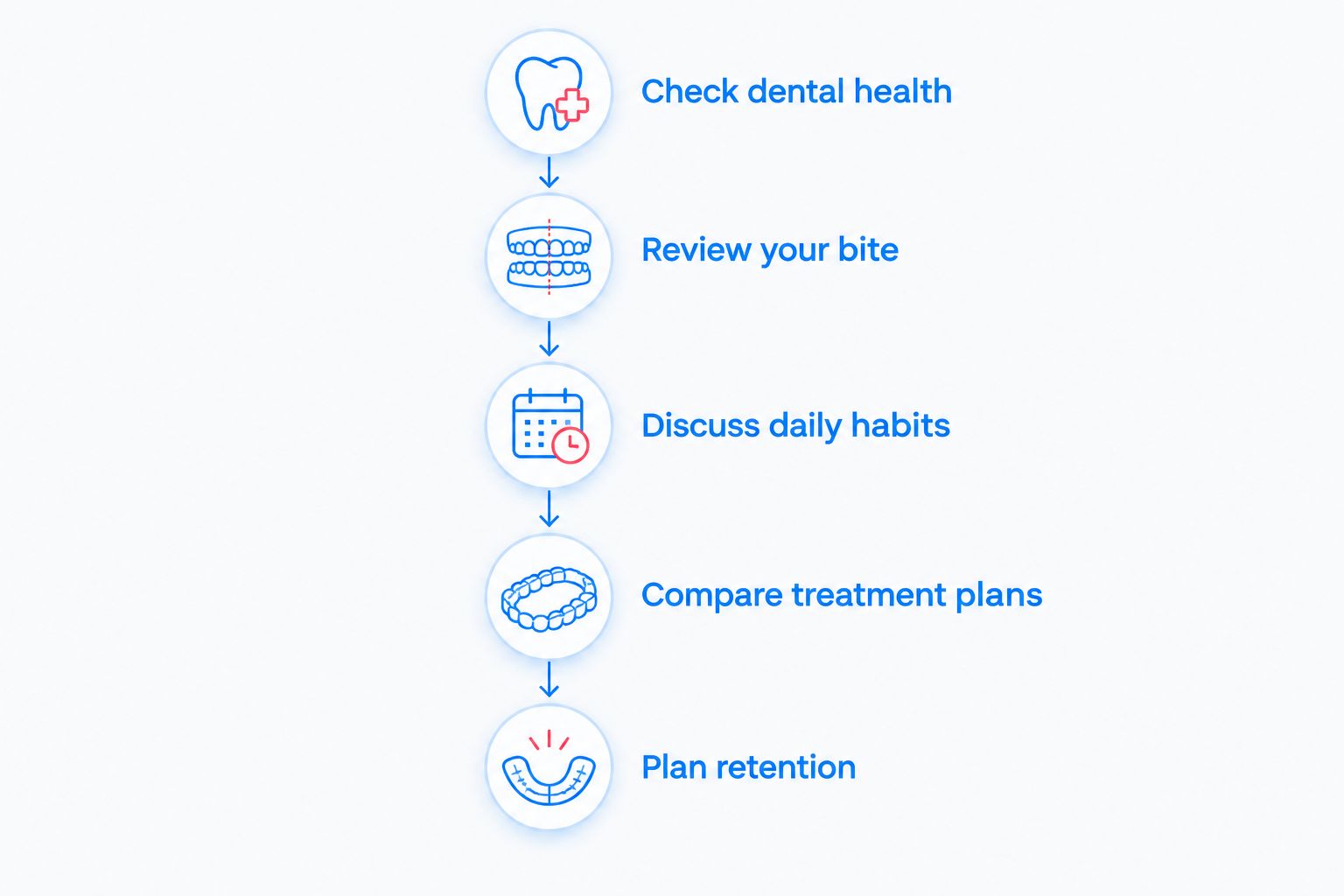
Start with an examination, then compare the plan with your daily life. The right recommendation connects your dental needs with instructions you can realistically follow. These steps help you turn a broad comparison into a useful conversation.
- Check dental health. Discuss your gums, cavities, previous treatment, and any areas that hurt or bleed. Ask what needs attention before tooth movement begins.
- Review your bite. Ask which teeth need to move and whether the problem involves tooth position, jaw relationships, or both.
- Discuss daily habits. Describe meals, snacks, travel, work schedules, and anything that makes cleaning or tray wear difficult.
- Compare treatment plans. Ask about attachments, elastics, appointments, possible additional steps, and why the recommended appliance suits your case.
- Plan retention. Ask how you will keep teeth in position after active treatment and what retainer care involves.
These are planning steps, not a way to diagnose yourself. Photographs and an online description cannot replace a clinical assessment of your teeth, gums, and bite.
Dentistry of Tavares is a fit for Tavares adults seeking clear aligner orthodontic care. Ask whether the practice's clear aligner treatment suits your needs, which system it uses, and whether an orthodontic referral is appropriate. Clear aligner services should not be assumed to mean a particular brand or every type of orthodontic treatment.
Is Invisalign faster than braces for adults?
Invisalign is not automatically faster than braces. Treatment length depends on the planned movements, your response to treatment, attendance, and how closely you follow instructions.
Ask what the estimated schedule covers: initial tooth movement, additional aligner stages or adjustments, and the transition to retainers. For a 2026 treatment plan, a personalized estimate is more useful than a general timeline borrowed from someone else's case.
Is Invisalign more comfortable than braces?
Invisalign avoids fixed brackets and wires, but it does not eliminate soreness from moving teeth. Tray edges and attachments can still feel unfamiliar or irritate soft tissue.
Traditional braces can cause tenderness after adjustments and rubbing from brackets or wires. Tell your treating professional about persistent discomfort or an appliance problem rather than trying to alter the appliance yourself.
Does dental insurance cover adult Invisalign or braces?
Adult orthodontic coverage depends on your specific dental plan. A plan that covers children's orthodontics does not automatically include adult treatment, and clear aligner coverage needs confirmation rather than assumption.
Before starting, ask about adult eligibility, exclusions, waiting periods, and benefit limits. The guide to connecting a dental insurance claim to clear aligner treatment costs explains the questions to bring to that discussion.
Request a written treatment estimate and ask what payment options are available. You can discuss affordability without choosing an appliance before you know whether it is clinically suitable.
FAQ
Is Invisalign better than traditional braces for adults in 2026?
Invisalign is not better for every adult in 2026. It suits appropriate cases when you want removable, less noticeable treatment and can maintain prescribed wear; braces suit cases or habits better served by fixed appliances.
How many hours a day do adults wear Invisalign?
Invisalign’s published patient guidance generally recommends 20 to 22 hours per day. Follow your treating professional’s instructions for your individual plan, including tray changes and removal for meals.
Can Invisalign handle every problem that braces can?
Invisalign is not the right treatment for every tooth movement or bite problem. An examination determines whether aligners, braces, additional treatment, or an orthodontic referral fits your needs.
Can I eat normally with Invisalign?
You remove Invisalign trays before eating, so meals do not require chewing around fixed brackets. Store the trays safely and follow instructions for cleaning your teeth and putting them back in.
Is cleaning easier with Invisalign than braces?
Invisalign lets you remove the trays to brush and clean between your teeth without fixed brackets in the way. You still need to clean the trays, while braces require careful cleaning around brackets and wires.
Can adults with crowns or implants get orthodontic treatment?
Adults with crowns or implants need an individual assessment before orthodontic treatment. Existing restorations affect planning, and dental implants do not move through bone like natural teeth.
Do I need retainers after Invisalign or braces?
You generally need retainers after either Invisalign or braces to help maintain tooth position. Your treating professional will explain the type, wear schedule, and care instructions for your retainers.
One last thing
A retainer belongs in the decision from the start, not just at the end. Teeth can shift after either Invisalign or braces, so ask about retention before committing to active treatment. An appealing appliance is only one part of the plan.
Bring a short description of your everyday routine and your main concern to the appointment. Whether that concern is appearance, cleaning, discomfort, or affordability, naming it helps your dental professional explain the choices in terms that matter to you.
Related guides
- How long does it take to see results from clear aligners?
- Can clear aligners fix an overbite?
- Can you eat normally while wearing clear aligners?
Request an appointment with Dentistry of Tavares to discuss clear aligner care and the next step for your smile.