
How much does a root canal cost in Florida in 2026?
A root canal cost in Florida in 2026 depends on the tooth, the treatment needed, and your dental insurance; your dentist’s written estimate gives you the amount to budget. A quote for the root canal alone does not necessarily include the examination, imaging, or the filling or crown needed afterward. Ask for the complete treatment estimate and your expected out-of-pocket share before you agree to care.
- How much does a root canal cost in Florida? Request a tooth-specific estimate that includes the final restoration.
- Root canal treatment and a dental crown are separate parts of care; confirm what your estimate includes.
- Dental insurance benefits depend on your plan, remaining annual allowance, and the provider’s network status.
- Dentistry of Tavares serves local patients seeking general and restorative dental care.
How much does a root canal cost in Florida in 2026?
Your root canal estimate should identify the tooth being treated, the recommended procedure, and any separate services needed to finish treatment. The amount you pay also depends on how your insurance applies to each service—not just whether you have dental coverage.
Start with the treatment plan, then review the benefits. This guide to understanding your dental insurance explains the terms to discuss with your insurer before treatment.
Use this breakdown to check whether you are comparing complete estimates:
| Part of care | What it covers | What to ask |
|---|---|---|
| Examination | Assessing the tooth and discussing treatment | Is the examination included or billed separately? |
| Imaging | Evaluating the tooth, roots, and surrounding area | Which images are needed, and are they included? |
| Root canal treatment | Removing affected tissue, cleaning the canals, and sealing them | Does this estimate cover the recommended procedure for this tooth? |
| Temporary restoration | Protecting the tooth between stages of care | Will I need a temporary filling or crown? |
| Final restoration | Rebuilding and protecting the treated tooth | Does the total include a filling, buildup, or crown? |
| Additional care | Services needed for your particular situation | Is a specialist referral or other treatment part of the plan? |
The useful comparison is the complete plan for the same tooth—not two headline quotes with different inclusions. A lower-looking estimate that leaves out the final restoration does not tell you your total treatment expense.
Why this matters
Root canal treatment addresses the tissue inside your tooth, but that is not always the end of care. The tooth also needs an appropriate restoration so you can use it and protect the remaining tooth structure.
For your 2026 dental budget, separate the clinical question from the payment question. First ask whether the tooth can be restored and what treatment it needs; then ask how insurance and payment arrangements apply to that plan.
You do not need to understand every dental term before the appointment. You do need an explanation of what is recommended, why it is needed, and what comes next.
Root canal treatment: what the estimate should include
A root canal removes inflamed or infected tissue from inside the tooth. The dentist cleans and shapes the canals, then fills and seals that internal space. Local anesthetic is used to numb the treatment area.
The procedure aims to preserve a tooth that can still be restored. It does not repair every possible crack, replace missing tooth structure, or guarantee that every damaged tooth can be saved.
Ask the dentist to name the tooth and explain the diagnosis. Tooth pain alone does not tell you whether you need a root canal, a filling, treatment for gum problems, or another approach.
A useful written estimate should make these details clear:
- The tooth: Which tooth needs treatment?
- The procedure: Is this first-time treatment or treatment of a previously treated tooth?
- The provider: Who will perform the procedure, and is a referral needed?
- The inclusions: Which examinations, images, and temporary materials are covered?
- The next stage: What restoration is recommended after the root canal?
If you are nervous about treatment, say so before the appointment begins. Ask how the team checks that you are numb, how you can signal for a pause, and what sensations to expect. Clear explanations help you participate in care without having to guess what is happening.
The final filling or crown: a separate part of the plan
A root canal treats the inside of the tooth. A filling or crown restores the outside. These serve different purposes, so ask about both even when they appear together on a treatment plan.
The restoration depends on the tooth’s location, how much healthy structure remains, and the forces it takes when you bite. Back teeth commonly need crowns after root canal treatment because they handle substantial chewing pressure; the dentist must assess the right restoration for your tooth.
Do not assume a root canal quote includes a crown. Ask whether a buildup, temporary restoration, and final restoration are separate items. Also ask who will provide each stage of care if a specialist performs the root canal.
The benefit of completing the restoration is that it rebuilds and protects the treated tooth. The practical limitation is that it adds another stage of care, and sometimes another appointment, to the plan. Knowing that at the start helps you arrange both your schedule and your budget.
Why root canal estimates vary
Different teeth and different treatment plans are not interchangeable. These factors explain why a quote for another person’s tooth is not a reliable estimate for yours:
- Tooth anatomy: The number, shape, and accessibility of canals affect the work involved. Ask which tooth the estimate covers.
- Previous treatment: A tooth that has already had a root canal needs a different assessment from one receiving treatment for the first time.
- Treatment complexity: Difficult anatomy or other complications can lead to a specialist referral. Confirm which office will bill for each stage.
- Remaining tooth structure: The amount of healthy tooth left helps determine the restoration needed afterward.
- Imaging and additional services: The examination determines what information and care are necessary. Confirm whether these appear separately on the estimate.
- Insurance terms: Network status, deductibles, covered services, and remaining annual benefits affect your share of the bill.
For a 2026 estimate, ask the office to use your current coverage information rather than an old benefit summary. A prior explanation of benefits describes a past claim; it is not a promise about a new procedure.
How do you get a useful root canal estimate?
You can make the financial conversation easier by gathering the clinical plan and insurance details in a clear sequence. You do not need to shop by procedure name alone.
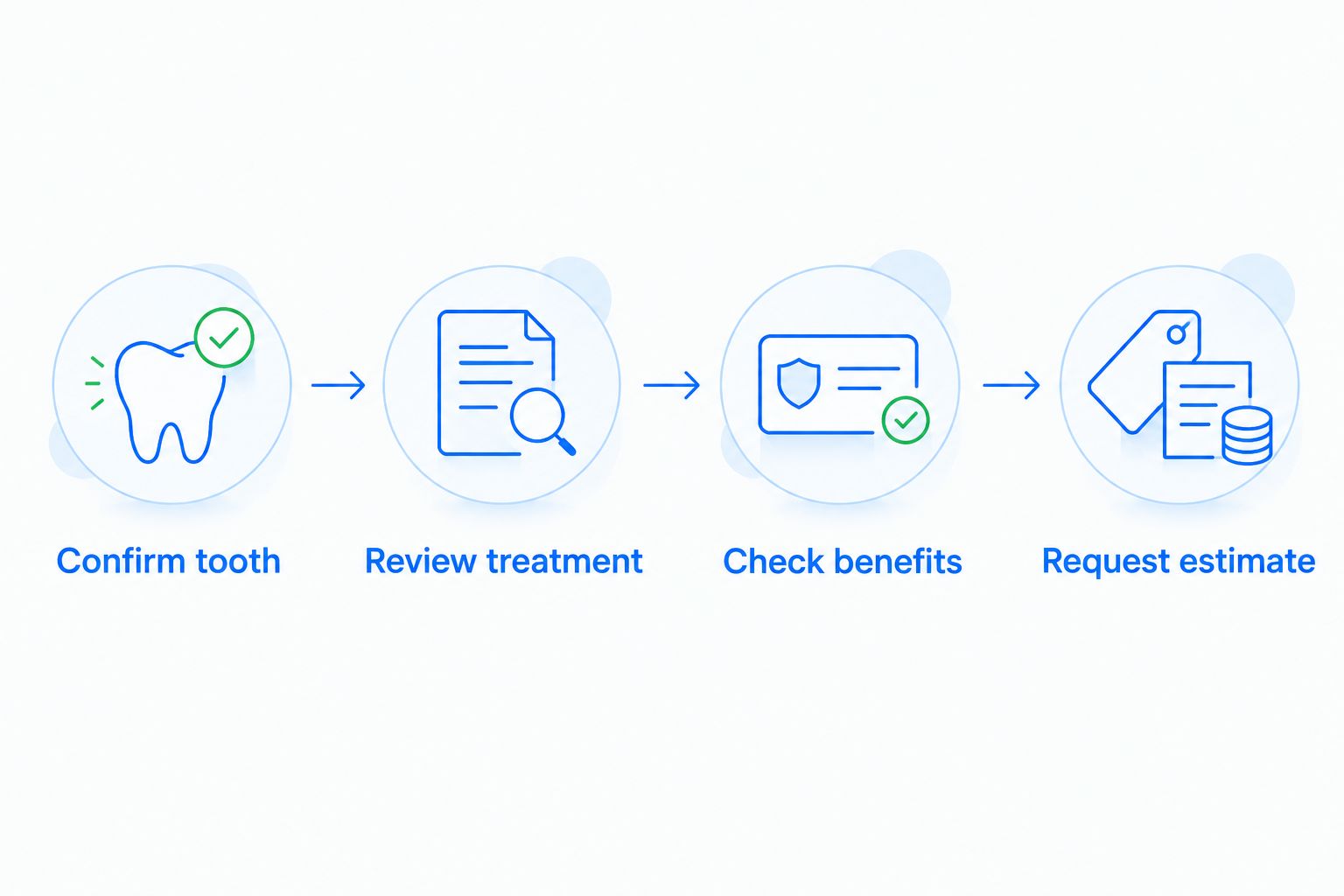
- Confirm tooth. Have the dentist identify the tooth, explain the diagnosis, and discuss whether it can be restored. Ask what the recommended treatment is intended to accomplish.
- Review treatment. Request a plan covering the examination, necessary imaging, root canal, and final restoration. Ask which services happen at another office, if any.
- Check benefits. Give the office your current insurance information and ask your insurer about the recommended services. Confirm the provider’s network status for your specific plan.
- Request estimate. Ask for the total planned charges, estimated insurance contribution, and estimated patient responsibility. Have the office distinguish confirmed information from benefit estimates.
Keep a copy of the estimate and the treatment plan together. If the plan changes after further examination, ask for an updated explanation and estimate before the additional work begins, whenever the clinical situation allows.
Dentistry of Tavares is best suited to local patients seeking general and restorative dental care. Bring your symptoms, concerns, and insurance questions to the evaluation; the next step should follow the diagnosis, not a guessed procedure.
Does dental insurance cover a root canal in Florida?
Dental insurance coverage depends on your individual plan. Root canal treatment and the final restoration can have different benefit rules, so ask about each service separately.
Check these details before you rely on an estimated insurance payment:
- Is the provider in-network for your exact plan?
- Does a deductible apply to this treatment?
- How much of your annual benefit remains?
- Is there a waiting period or other coverage limitation?
- Does the insurer need a pretreatment estimate or supporting records?
- How will the crown or other final restoration be covered?
A pretreatment estimate helps you understand expected benefits, but it is not a guarantee of payment. Your insurer determines payment under the policy’s terms when the claim is processed.
When planning care in 2026, use the benefit period shown in your policy. Do not assume every plan resets on the same date. If a deductible or annual maximum affects your estimate, ask the office or insurer to explain it in everyday language.
Is saving the tooth always the right choice?
Saving a restorable natural tooth is a meaningful goal, but a root canal is not appropriate for every damaged tooth. The dentist must assess the tooth’s structure, any cracks, and the surrounding support before recommending treatment.
The advantage of a suitable root canal is that it can preserve your natural tooth. Its limitations include the need for a final restoration, the possibility of further treatment, and the fact that an unrestorable tooth cannot be repaired by treating its canals alone.
If you are weighing treatment against removing the tooth, ask about the complete plan for each—not just the first procedure. Removing a tooth creates a separate decision about whether and how to replace it.
For a plain-language explanation of tooth preservation, read how root canal treatment helps save your tooth. Your examination determines whether that approach fits your situation.
What if you need care before you can sort out payment?
Call a dental office promptly if you have persistent tooth pain, swelling, or a broken tooth. Explain your symptoms and ask how soon you should be evaluated. Same-day help is available only when scheduling and clinical circumstances allow; do not assume a same-day evaluation means the full procedure will be completed that day.
Trouble breathing or swallowing, or rapidly spreading facial swelling, requires emergency medical attention. Payment planning should not delay that assessment.
For other situations, ask what needs attention now and what can be scheduled after the diagnosis. You can also ask about payment arrangements, insurance assistance, or financing, without assuming that a particular option is offered or that you will qualify.
Dentistry of Tavares provides general and restorative dental care for local patients. An evaluation gives you a place to discuss your symptoms, comfort concerns, and next steps.
FAQ
How much does a root canal cost in Florida in 2026 without insurance?
Your uninsured root canal amount depends on the tooth and the complete treatment plan. Request a written estimate that separates the procedure, examination, imaging, and final filling or crown.
Does the root canal estimate include the crown?
A root canal estimate does not automatically include a crown. Ask whether the buildup, temporary restoration, and final crown are included or listed separately.
Will my dental insurance pay for the whole root canal?
Your dental insurance pays according to your plan’s coverage rules, not simply because a root canal is recommended. Check your deductible, remaining annual benefit, network status, and coverage for the final restoration.
Can I get a root canal on the same day I call?
Same-day root canal treatment depends on the diagnosis, provider, and appointment availability. Ask about an evaluation first; same-day help is offered when possible, not guaranteed.
Does a painful tooth always need a root canal?
A painful tooth does not always need a root canal. A dental examination and appropriate imaging help identify the cause and the treatment needed.
What should I ask if I am scared of a root canal?
Ask how the dentist will numb the tooth, check your comfort, and let you request a pause. Share any previous difficult dental experiences and ask for an explanation before each stage begins.
Should I compare root canal estimates from different offices?
Compare estimates only after checking that they describe the same tooth and include the same stages of care. A quote that excludes the final restoration is not directly comparable with a complete treatment estimate.
One last thing
Before you leave the appointment, ask: Who is responsible for restoring my tooth after the root canal, and when should I return? That question connects the procedure to the finished treatment plan, especially when different offices provide different stages.
For your 2026 planning, keep the written estimate and those follow-up instructions together. You should leave knowing the next step—not just the name of the procedure.
Related guides
- Using an HSA or FSA card for dental treatment payments
- Crown versus filling after a tooth breaks
- Same-day dental emergency appointments in Tavares
Request an appointment with Dentistry of Tavares to discuss your tooth, your comfort concerns, and the treatment recommended for you.