How much does a dental crown cost in Florida in 2026?
A dental crown’s cost in Florida in 2026 depends on the tooth being treated, the crown material, any additional treatment, and your insurance benefits. Your most useful number is a written estimate for the complete treatment—not just the crown itself. Ask whether the estimate includes the examination, imaging, temporary crown, and any work needed to support the final crown.
- How much does a dental crown cost in Florida? Compare complete treatment estimates, not isolated crown fees.
- Dentistry of Tavares offers crowns and general dental care for local patients.
- Dental insurance benefits depend on your specific plan; an estimate is not a payment guarantee.
- Ask which crown material fits your tooth and what additional treatment is necessary.
Why this matters
A crown estimate should help you make a decision, not leave you guessing. Two treatment plans can look similar while including different work, so a lower crown fee does not necessarily mean a lower total bill.
Before comparing estimates, separate the treatment recommendation from the insurance calculation. The dentist explains what your tooth needs; your plan determines what benefits apply. This guide to understanding your dental insurance explains terms you can use when discussing your estimate.
You deserve to understand both parts before agreeing to treatment. If something is unclear, ask for a plain-language explanation and a written copy you can review at home.
How much does a dental crown cost in Florida in 2026?
The amount you pay for a dental crown is specific to your treatment plan and insurance benefits. Ask for an itemized estimate that distinguishes the crown from any separate procedures, then confirm the estimated insurance contribution and your remaining responsibility.
Use this breakdown to check what you are comparing. Not every patient needs every item, and practices can package services differently.
| Estimate item | What it covers | What to ask |
|---|---|---|
| Examination and imaging | Assessing the tooth and surrounding structures | Are these included or listed separately? |
| Crown | The restoration that covers the prepared tooth | Which material is recommended, and why? |
| Temporary crown | Protecting the prepared tooth when a temporary restoration is needed | Is it included in the crown estimate? |
| Core buildup | Replacing missing tooth structure beneath the crown when necessary | Does my tooth need this, and is it a separate item? |
| Root canal treatment | Treating the inside of the tooth when clinically necessary | Is this part of my treatment plan or a separate procedure? |
| Additional gum treatment | Addressing gum or tooth exposure issues when necessary | Why is it needed before the crown? |
| Insurance adjustment | Applying the plan’s payment rules to the estimate | What is the estimated patient responsibility? |
Ask whether the estimate covers placement of the final crown and routine adjustments associated with that treatment. Keep a copy of the proposed plan so you can identify changes if the dentist discovers something that affects the recommended care.
A written estimate is a planning document. Ask what circumstances would change it and how the practice would explain any additional treatment before proceeding.
Why dental crown costs vary
The biggest differences come from what your tooth needs and how your benefits apply. These are the main factors to discuss when reviewing a crown estimate:
- Remaining tooth structure: A tooth with substantial damage can need a buildup before it can support a crown.
- Crown material: Ceramic, zirconia, and metal restorations have different appearance and treatment considerations.
- Tooth condition: Decay, cracks, or problems inside the tooth can require care beyond the crown itself.
- Treatment scope: Examination, imaging, temporary restorations, and supporting procedures affect what the estimate includes.
- Insurance rules: Deductibles, annual maximums, waiting periods, and exclusions affect benefits when those provisions apply to your plan.
- Network status: Your plan’s rules for participating and nonparticipating dentists can change your responsibility.
These factors explain why a friend’s bill is not a reliable estimate for your tooth. Even patients with the same insurer can have different employer plans, remaining benefits, or treatment needs.
For a 2026 treatment plan, confirm your current benefits rather than relying on a previous visit’s coverage. Ask the insurer to explain the specific provisions that apply to the proposed crown.
Ceramic crowns: appearance is a key consideration
Ceramic crowns are tooth-colored restorations used when matching the surrounding teeth matters. The broad term includes different materials, so ask the dentist to identify the proposed material rather than accepting ceramic as a complete explanation.
Appearance is a benefit, but material choice also depends on the tooth’s location, the available space, and your bite. No material is the right choice for every tooth. The recommendation should connect those considerations to your situation.
Zirconia crowns: strength and appearance need balancing
Zirconia is a type of ceramic used for dental crowns. Its strength makes it an option when the restoration needs to tolerate chewing forces, while its appearance depends on the particular material and design.
Ask how the recommended zirconia crown will meet the needs of your tooth. If you are restoring a visible tooth, discuss shade matching and appearance before the crown is made—not only when it is ready to place.
Metal crowns: visibility is the main trade-off
Metal crowns are another established option, particularly where appearance is less important. Their metallic appearance is the clearest limitation for patients who want a tooth-colored result.
Tell your dentist about any known metal allergies. The dentist can discuss the proposed alloy and whether it fits your needs. Material selection should reflect your health history as well as the tooth being restored.
| Crown option | Best for discussion when | Main benefit | Main limitation |
|---|---|---|---|
| Tooth-colored ceramic other than zirconia | Matching a visible tooth is a priority | Natural-looking appearance | Suitability depends on the material and bite |
| Zirconia | Strength and a tooth-colored restoration are priorities | Combines strength with a tooth-colored appearance | Shade and translucency vary by material |
| Metal | Appearance is less important for the tooth being restored | An established option for chewing surfaces | Metallic appearance; alloy choice matters |
This table describes general crown categories, not a practice’s material catalog. Ask which materials are appropriate and offered for your treatment before comparing their estimates.
How do I get a useful crown estimate?
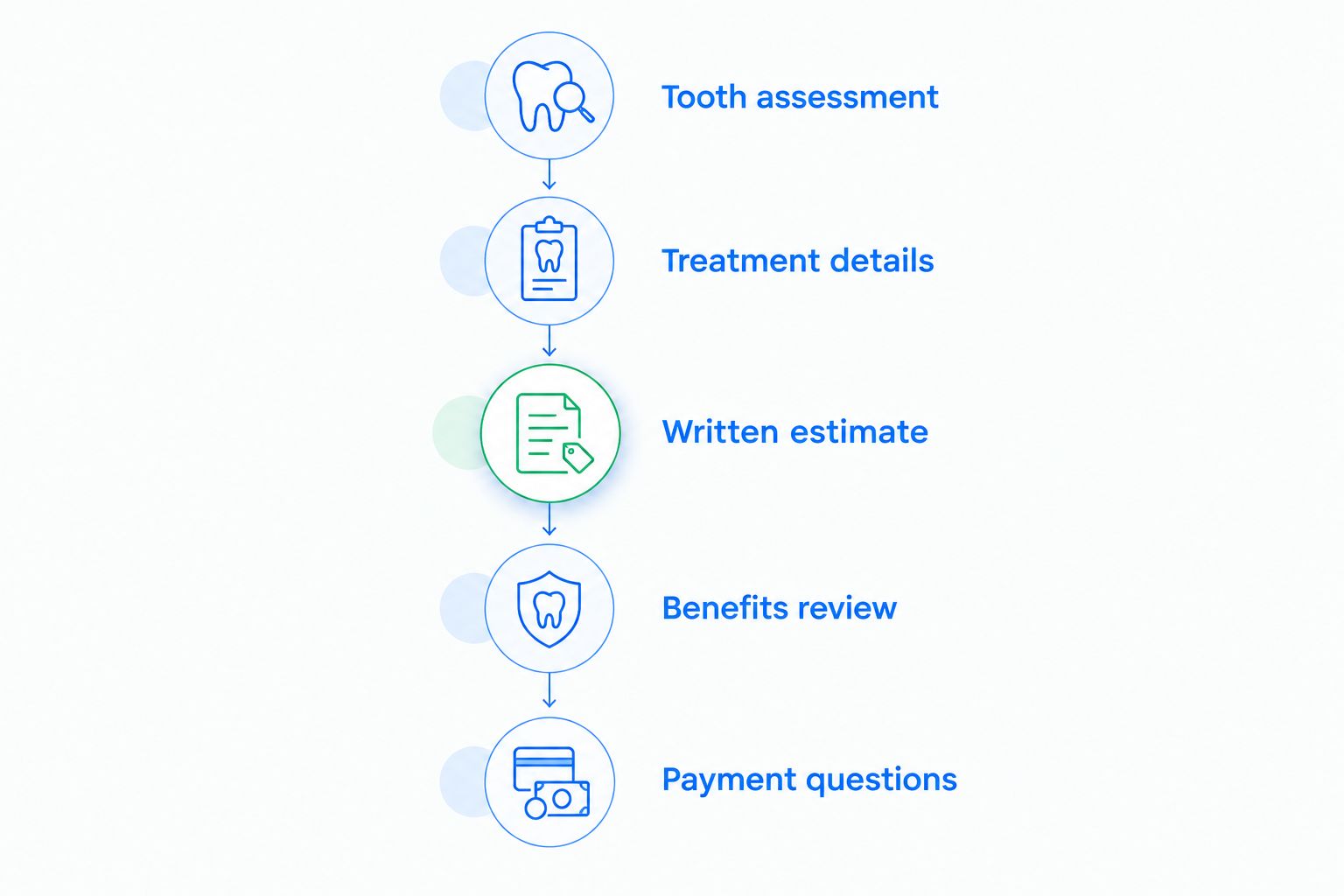
You do not need to know dental terminology to ask good questions. Start with what is happening to your tooth, then work through the treatment and payment details.
- Tooth assessment: Ask the dentist to explain why the tooth needs a crown and what the examination shows.
- Treatment details: Confirm the recommended material and whether supporting procedures are necessary.
- Written estimate: Request an itemized plan showing what is included and what is separate.
- Benefits review: Check applicable coverage, remaining benefits, and any plan restrictions.
- Payment questions: Ask when payment is due and what payment arrangements, if any, the practice offers.
Bring your insurance information and a list of questions to the appointment. If you have an older treatment estimate, bring that too so the dentist can explain whether the proposed care has changed.
If you feel nervous, say so before treatment begins. Ask how the tooth will be numbed, what sensations to expect, and how to signal that you need a pause. A clear explanation can make the appointment feel more manageable without promising that every patient’s experience will be the same.
Dentistry of Tavares is best suited to local patients seeking crowns alongside general dental care in Tavares. You can request an appointment through Dentistry of Tavares to discuss your tooth and proposed treatment. A personal examination, rather than a general online estimate, determines the appropriate plan.
Does dental insurance cover a crown in Florida?
Dental insurance can contribute toward a crown when the treatment meets your plan’s coverage requirements. The policy—not the fact that you live in Florida—determines the benefit.
For treatment in 2026, ask about your deductible, remaining annual maximum, waiting periods, and crown replacement rules if your plan includes them. Also ask whether the insurer calculates benefits using a different covered material than the one recommended.
A pretreatment estimate can help explain expected benefits, but it is not a guarantee of payment. Eligibility, remaining benefits, and the final claim affect what the insurer pays. Confirm the details with your insurer and keep the explanation with your treatment estimate.
If coverage is limited, ask the practice to explain payment expectations and any available arrangements. Do not assume a practice accepts your plan, offers financing, or participates in a particular network without confirmation.
Does every crown require a root canal?
A crown does not automatically require root canal treatment. A crown covers the outside of the tooth; root canal treatment addresses problems inside it when necessary.
Ask which finding supports each recommended procedure. If both treatments are proposed, request an estimate that shows them separately and explains how they fit together. This helps you understand the whole plan rather than treating the crown fee as the complete amount.
A tooth can need a crown because it has lost substantial structure without needing treatment inside the tooth. Your dentist assesses the remaining structure, symptoms, and examination findings before recommending care.
Is a filling an alternative to a crown?
A filling is an alternative only when the remaining tooth structure can support it. Choosing between a filling and a crown starts with the condition of the tooth, not the payment amount alone.
| Treatment | Best for discussion when | Benefit | Limitation |
|---|---|---|---|
| Filling | The damage can be repaired without covering the tooth | Preserves tooth structure that does not need preparation | Does not provide the same coverage as a crown |
| Crown | The remaining tooth needs more extensive coverage | Covers the prepared tooth | Requires preparation and an appropriate supporting tooth |
Ask the dentist to show you why the recommended option fits. You can also ask about the disadvantages of postponing treatment and whether a short-term approach is clinically appropriate. A temporary measure should not be confused with a completed restoration.
FAQ
How much does a dental crown cost in Florida without insurance?
Without insurance, your responsibility depends on the practice’s written estimate for your specific treatment. Ask for the complete plan, including any separate examination, imaging, buildup, or root canal treatment.
Does dental insurance pay for crowns in 2026?
Dental insurance pays toward crowns when your 2026 policy’s coverage requirements are met. Confirm applicable deductibles, remaining benefits, waiting periods, and replacement restrictions with your insurer.
Is a temporary crown included in the estimate?
A temporary crown is included only if the treatment estimate says it is. Ask whether the quoted treatment covers the temporary restoration, final crown placement, and associated adjustments.
Do I need a root canal before getting a crown?
You do not automatically need a root canal before getting a crown. Root canal treatment is recommended when the condition inside the tooth requires it, while a crown addresses the outside restoration.
Which crown material is best for my tooth?
The best crown material depends on the tooth’s location, your bite, appearance goals, and health history. Ask your dentist to explain the benefits and limitations of the recommended material.
Can I get a crown appointment the same day?
Same-day help is available only when the practice can accommodate it, and an assessment does not guarantee a completed crown that day. Ask what care is possible when you request the appointment.
Can Dentistry of Tavares help me understand a crown treatment plan?
Dentistry of Tavares offers crowns and general dental care for local patients. Request an appointment to discuss the tooth, the recommended treatment, and the estimate before proceeding.
One last thing
Ask what would change the estimate before asking whether it is the lowest estimate. That question helps you identify separate procedures, unresolved insurance details, and decisions that still need an examination.
Keep your written treatment plan and benefit explanation together. When you review them, you should be able to explain which tooth is being treated, why the crown is recommended, and what remains to be confirmed.
Related guides
- Crown vs. filling after a filled tooth breaks
- How root canal treatment helps save your tooth
- Using an HSA or FSA card for dental treatment payments
Have questions about your tooth or the next step? Request an appointment with Dentistry of Tavares to discuss your options and ask for a clear treatment estimate.