How much do dental veneers cost in 2026?
Dental veneer costs in 2026 depend on the material, the number of teeth treated, and any dental work needed before placement; your reliable total comes from a written treatment estimate after an examination. That estimate should explain whether preparation, temporary coverings, follow-up visits, and any separate treatment are included. Compare the complete treatment plan, not just the fee for an individual veneer.
- How much do dental veneers cost? Compare a written estimate that includes materials, tooth preparation, and follow-up care.
- Porcelain veneers and composite veneers differ in preparation, maintenance, and repair options.
- Dental insurance generally excludes veneers placed only to change appearance; confirm your specific plan.
- Dentistry of Tavares offers general and cosmetic dental care for local patients considering smile changes.
How much do dental veneers cost in 2026?
Your veneer estimate should identify the teeth being treated, the material proposed, and the services included. An individual-tooth quote and a complete smile-treatment quote describe different amounts of work, so they are not directly comparable.
For local guidance, Dentistry of Tavares offers general and cosmetic dental care in Tavares, Florida. Start by explaining what bothers you about your smile rather than choosing a treatment before your examination.
Use this breakdown when reviewing a 2026 estimate:
| Estimate item | What it covers | What to ask |
|---|---|---|
| Examination and planning | Checking teeth, gums, bite, and cosmetic goals | Is the consultation included or separate? |
| Veneer material | The proposed porcelain or composite restoration | Which material is recommended, and why? |
| Teeth treated | The specific teeth included in your plan | Can fewer teeth address my concern? |
| Preparation and temporary coverings | Preparing teeth and protecting them between visits when needed | Are these included in the estimate? |
| Preliminary dental treatment | Treating decay, gum problems, or other issues first | Which treatment is necessary before veneers? |
| Placement and follow-up | Attaching the veneers and checking comfort and bite | Which follow-up visits are included? |
| Ongoing protection | Home care and a protective appliance if indicated | What maintenance will my treatment require? |
Ask for necessary treatment and optional cosmetic additions to be listed separately. This helps you understand what supports your oral health and what changes appearance.
Why this matters
Veneers change more than the appearance of a tooth. Some treatments require enamel removal, which is not reversible, and restorations need ongoing care. You deserve to understand that commitment before deciding.
A lower initial quote does not tell you whether the same teeth, materials, or follow-up services are included. Likewise, a larger treatment plan is not automatically the right choice for your goals. The useful comparison is between plans that address the same concern with clear explanations of their benefits and limitations.
Bring examples of the changes you want, but describe them in everyday terms: a chipped edge, an uneven shape, or discoloration that bothers you. Your dentist can then explain which approaches fit your teeth rather than working backward from a particular procedure.
Porcelain veneers: appearance and preparation
Porcelain veneers are thin ceramic coverings attached to the front surfaces of teeth. They can address selected concerns involving tooth color, shape, and small cosmetic irregularities. Treatment requires an assessment of the teeth, gums, and bite first.
Best for: Patients seeking changes to tooth shape and color whose dental examination supports a veneer treatment plan.
The benefit is that porcelain can provide a tooth-colored surface with good stain resistance. The limitation is that preparation often involves removing enamel, and a damaged veneer can require replacement rather than a simple repair.
Ask how much preparation your particular teeth need. Also ask whether temporary coverings are planned and how the final shape and shade will be discussed before placement. Do not assume that photographs of another person's smile predict your result.
When comparing a 2026 porcelain veneer estimate, check whether laboratory work, temporary coverings, placement, and bite adjustments are included. A material name alone does not describe the complete treatment.
Composite veneers: repairability and maintenance
Composite veneers use tooth-colored resin to change the visible surface of a tooth. Dentists can shape the material directly on the tooth, although the technique and treatment sequence depend on the case.
Best for: Patients considering selected cosmetic changes who want to discuss a resin-based approach and its maintenance needs.
Composite can be repaired or adjusted in some situations. Its limitations include susceptibility to staining and wear, so polishing, repair, or replacement can become part of ongoing care.
Do not assume composite treatment requires no tooth preparation. Ask what will happen to your enamel and how the proposed restoration differs from a smaller bonding repair. The treatment label matters less than the actual work being recommended.
Your estimate should identify which tooth surfaces will be covered and what follow-up care involves. Ask how a chipped area would be managed, without assuming future repairs are included in the original treatment fee.
Are veneers the right treatment for your concern?
Veneers are one option, not the automatic answer to every cosmetic concern. Whitening changes tooth color, bonding can address a localized defect, and orthodontic treatment moves teeth. Those differences matter when you want to preserve healthy tooth structure.
| Option | Best for | Main benefit | Main limitation |
|---|---|---|---|
| Porcelain veneers | Selected changes to tooth shape and color | Ceramic surface with good stain resistance | Often requires irreversible enamel removal |
| Composite veneers | Selected surface and shape changes | Resin can be adjusted or repaired in some cases | Can stain and wear over time |
| Dental bonding | Small chips or localized shape concerns | Can treat a limited area rather than the whole front surface | Can chip or discolor |
| Teeth whitening | Discoloration in natural teeth that responds to whitening | Changes color without reshaping teeth | Does not change tooth position or whiten existing restorations |
| Clear aligners | Tooth-position concerns suitable for orthodontic treatment | Moves teeth rather than covering their position | Requires consistent wear and does not change tooth shape |
Choose the treatment that addresses the cause of your concern. If tooth position is the issue, covering teeth and moving teeth are different decisions. If color is the only concern, ask whether whitening should be considered before veneers.
Existing fillings, crowns, and veneers also affect planning because whitening does not change their color. Tell your dentist about previous dental work so shade choices account for your whole smile.
Why dental veneer costs vary
The scope of treatment explains why two veneer plans can differ. Focus on these factors rather than assuming every veneer quote includes the same work:
- Material and fabrication: Porcelain and composite involve different materials and treatment methods. Ask what the proposed approach includes.
- Number of teeth: Treating 1 tooth and treating 6 teeth are different treatment scopes. The right number depends on your concern, not a standard smile package.
- Condition of teeth and gums: Decay or gum disease needs attention before cosmetic treatment. Ask which preliminary services are separate.
- Tooth preparation: Existing restorations, tooth shape, and the proposed change affect how the dentist plans preparation.
- Bite and grinding: How your teeth meet and whether you grind them affect treatment planning and protection afterward.
- Included services: Planning, temporary coverings, follow-up checks, and protective appliances should be identified clearly rather than assumed.
These factors explain the work involved; they do not replace an examination. A photograph alone cannot show everything a dentist needs to assess, including decay between teeth or how your bite functions.
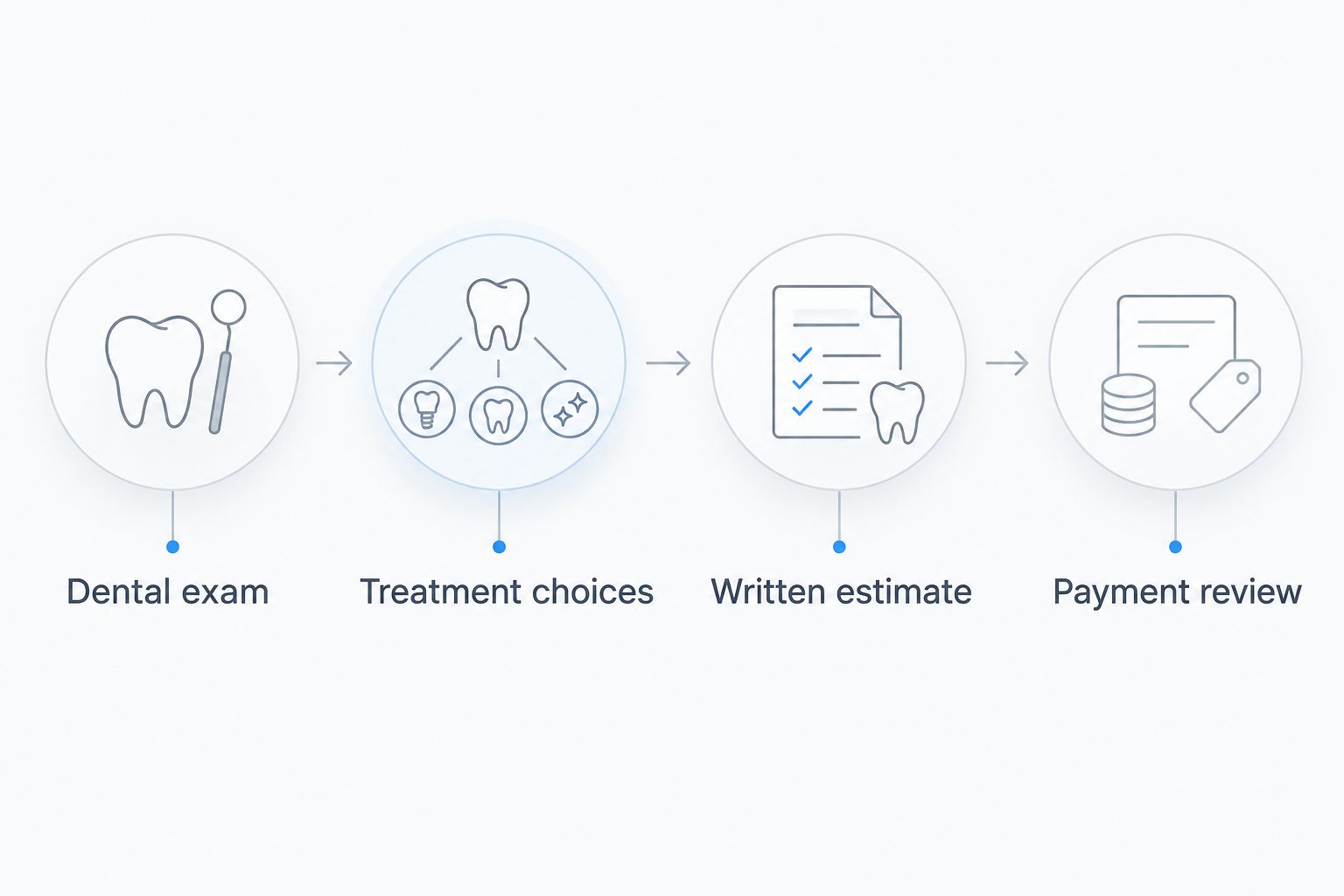
How do you get a useful veneer estimate?
A useful 2026 estimate connects each proposed service to your goals. You should be able to explain what is being treated, why the approach was chosen, and what happens after placement.
- Dental exam: Discuss your concern and have your teeth, gums, and bite assessed. Mention sensitivity, previous restorations, and any grinding or clenching.
- Treatment choices: Ask which alternatives fit your situation. Compare benefits, limitations, and the amount of tooth structure involved.
- Written estimate: Request an itemized plan identifying the teeth, materials, included services, and separate treatment.
- Payment review: Confirm insurance exclusions, your expected responsibility, and any payment arrangements before agreeing to treatment.
Take the plan home if you need time to think. Understanding the treatment is more useful than making a decision while you still have unanswered questions.
If you feel nervous, say so before the examination. Ask the dentist to explain each step, discuss numbing when relevant, and agree on a signal for a pause. You do not need to understand dental terminology to ask for a clearer explanation.
Does dental insurance cover veneers?
Dental insurance generally excludes veneers placed solely for cosmetic reasons. Coverage depends on your plan and the reason for treatment, so do not assume a veneer is covered because it is attached to a tooth.
Ask your insurer about exclusions, documentation requirements, and whether a pretreatment estimate is available. A benefit estimate is not a guarantee of payment. Your final responsibility depends on the plan's rules and how the claim is processed.
For more context, read about dental insurance coverage for cosmetic dentistry. Keep cosmetic treatment separate from any necessary treatment when discussing benefits; the insurer can apply different rules to each service.
When reviewing benefits in 2026, use your current plan documents. Employer benefits and policy terms can change, and another patient's coverage does not establish your own.
Can you use an HSA or FSA for veneers?
Purely cosmetic veneers generally are not eligible medical expenses under federal HSA and FSA rules. Eligibility depends on the purpose of the treatment, not simply whether a dental office accepts the card.
Check with your account administrator before using tax-advantaged funds. If your plan includes both cosmetic work and treatment for dental disease, request separate documentation and confirm which expenses qualify.
A payment card processing successfully does not establish tax eligibility. Keep the treatment documentation and receipts required by your administrator.
What should you ask before agreeing to treatment?
Ask how the plan protects your teeth as well as how it changes their appearance. A cosmetic consultation should leave you with a clear understanding of the limits, not just a preferred shade.
Useful questions include:
- Which teeth need treatment to address my concern?
- Is there an approach that removes less healthy tooth structure?
- What would happen if I chose bonding, whitening, or no cosmetic treatment?
- How will you assess my bite and any grinding?
- What changes are possible, and what limitations should I expect?
- Which follow-up services are included in the written estimate?
- How would future repair or replacement be handled?
Dentistry of Tavares is best for local patients seeking general and cosmetic dental care in Tavares, Florida. A cosmetic appointment is a place to discuss your goals and suitability; it is not a promise that veneers are the right treatment for every patient.
How do you care for teeth with veneers?
Veneers do not replace daily care for the teeth and gums underneath and around them. Brush for 2 minutes per session, twice daily, using fluoride toothpaste, and clean between your teeth daily. Ask your dentist how to clean comfortably around your restorations.
Avoid using your teeth to open packaging or bite hard objects. If you grind or clench, discuss whether a protective appliance is appropriate rather than choosing one without guidance.
Continue dental checkups on the schedule recommended for your oral health. Report a loose restoration, a new bite discomfort, or persistent sensitivity so the dentist can assess it. Do not try to glue a veneer back onto your tooth yourself.
FAQ
How much do dental veneers cost in 2026?
Dental veneer costs in 2026 depend on the material, number of teeth, preparation, and services included in your treatment plan. Request a written estimate after an examination, including any separate dental work needed before placement.
Are porcelain veneers better than composite veneers?
Porcelain veneers and composite veneers suit different treatment goals. Porcelain offers good stain resistance, while composite can be repaired in some situations; both have preparation and maintenance considerations to discuss with your dentist.
Does dental insurance pay for cosmetic veneers?
Dental insurance generally excludes veneers placed only to change appearance. Confirm your specific policy and request a pretreatment benefit estimate when available, without treating it as a payment guarantee.
Can I get a veneer on just one tooth?
A veneer can be considered for one tooth when the tooth’s condition, bite, and cosmetic concern support that treatment. Matching its shape and color to neighboring teeth is part of the planning discussion.
Do veneers damage your natural teeth?
Veneer preparation can involve irreversible enamel removal. Ask how much preparation your teeth need and whether a less invasive option can address your concern.
Can I use my HSA or FSA to pay for cosmetic veneers?
Purely cosmetic veneers generally are not eligible HSA or FSA expenses under federal rules. Confirm eligibility with your account administrator before paying, especially when a plan combines cosmetic and medically necessary dental treatment.
What if I am nervous about a cosmetic dental appointment?
Tell your dentist that you feel nervous and ask for explanations, pauses, and a discussion of comfort measures. You can begin by discussing your goals before deciding whether to proceed with treatment.
One last thing
Ask whether fewer treated teeth could meet your goal. A single chipped edge, a color concern, and uneven tooth positions do not necessarily need the same solution. The most useful plan explains why each tooth is included and what alternatives were considered.
Before committing, make sure you understand the preparation, maintenance, and financial responsibility. A clear plan gives you space to decide without pressure.
Related guides
Request an appointment with Dentistry of Tavares to discuss your smile goals, ask questions, and explore which care fits your teeth.