Dental Care for Athletes: Protect Your Teeth in 2026
Athletes’ dental care is prevention, tooth protection, and injury planning with the aim of keeping your mouth healthy through training and competition. This guide to dental care for athletes covers mouthguards, sports drinks, daily cleaning, and dental injuries—because contact, frequent fueling, and busy schedules create needs that a basic brushing routine does not address.
- Dental care for athletes combines fluoride brushing, sports mouthguards, and a clear dental emergency plan.
- Dentistry of Tavares is a general dental care option for local athletes seeking preventive and restorative care.
- Choose a sports mouthguard that stays in place without constant clenching; a grinding guard serves a different purpose.
- Use water between planned fueling periods, and seek immediate dental care for a knocked-out permanent tooth.
Why dental care matters for athletes
Athletes need dental care that fits both the sport and the training routine. A basketball collision threatens teeth differently from repeated sports-drink sipping during a long ride, but both deserve attention before symptoms interrupt your schedule.
Dentistry of Tavares is a general dental care option for Tavares athletes seeking preventive and restorative care. You can discuss your sport, existing dental work, and concerns about treatment with Dentistry of Tavares rather than choosing protection based on appearance alone.
For your 2026 season, focus on three problems: impact injuries, repeated sugar and acid exposure, and changes that need a dental examination. Mouthguards address impact risk; fluoride and cleaning address everyday prevention. Neither replaces an examination when a tooth hurts or your bite changes.
You do not need to stop exercising or abandon a nutrition plan to protect your teeth. You need a routine that accounts for how you train, what you drink, and what you would do after an injury.
Build your athlete dental routine
Review your teeth before the season
Start with a simple check at home: notice bleeding gums, lingering sensitivity, chipped edges, or pain when biting. Write down when symptoms happen, including whether cold drinks, chewing, or clenching bring them on. This gives your dentist a clearer starting point than a general description of discomfort.
Book a dental examination when you have symptoms or are due under your existing care plan. Dentistry of Tavares offers preventive and restorative dental care; an examination provides information that a home check cannot, including whether a damaged tooth needs treatment. The limitation is practical: a general examination does not automatically include a sports mouthguard, so ask about that separately.
If you feel nervous, say so when requesting the appointment. Ask the dentist to explain each stage and agree on a signal for a pause.
- Tell the dentist your sport and level of contact.
- Describe pain, bleeding, sensitivity, and recent impacts.
- Mention crowns, bridges, braces, or clear aligners.
- Bring your current mouthguard for a fit discussion.
- Ask which care needs attention before competition.
Choose a sports mouthguard that stays put
Begin by checking your sport’s rules and looking at how your current guard fits. A useful sports mouthguard stays in place without constant clenching and lets you breathe and communicate. A guard that slips, feels sharp, or interferes with breathing needs reassessment—not a commitment to tolerate discomfort.
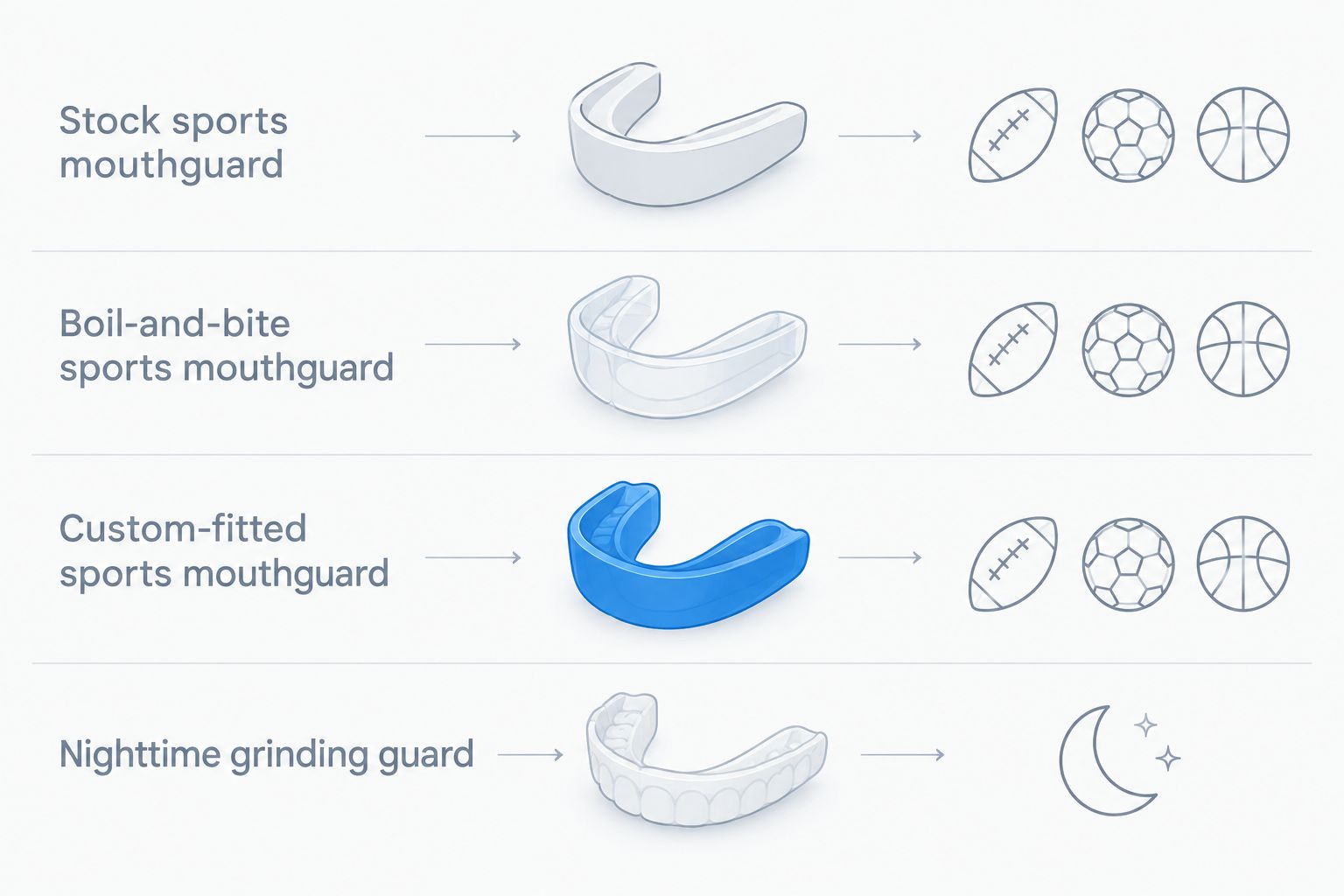
Stock, boil-and-bite, and custom-fitted guards offer different ways to achieve that fit. A custom-fitted sports mouthguard is best for athletes who need individualized fit assessment, particularly when retail guards are difficult to wear. It requires a dental visit, and fit still needs review after dental changes. Ask whether the practice provides or arranges sports mouthguards; do not assume every dental office does.
A clear aligner, retainer, or nighttime grinding guard is not a substitute for a sports mouthguard. If you wear orthodontic appliances, coordinate protection with the clinician managing your treatment.
- Choose a guard intended for sports protection.
- Check that it stays in place without clenching.
- Follow fitting instructions for boil-and-bite guards.
- Ask about fit around braces or changing teeth.
- Replace guards that are torn, distorted, or no longer fit.
Reduce repeated sugar and acid exposure
Start with a free change: use plain water between planned fueling periods. Frequent sipping of sugary or acidic drinks repeatedly exposes teeth, even when each sip feels small. Sugar contributes to decay risk, while acids can wear away tooth enamel.
Sports nutrition still has a role during demanding exercise. Keep fueling purposeful rather than turning the same drink into an all-day habit. If you follow a prescribed nutrition plan, discuss changes with the professional managing it instead of cutting necessary fuel solely for dental reasons.
For your 2026 training plan, note whether gels, chews, sports drinks, or energy drinks remain in your mouth for extended periods. Rinse with water afterward when practical. This helps clear residue but does not replace fluoride brushing or cleaning between teeth.
- Keep plain water available during and after training.
- Reserve sports fuel for the sessions that need it.
- Avoid swishing sports drinks around your teeth.
- Rinse with water after gels, chews, or acidic drinks.
- Tell your dentist about persistent dry mouth.
Keep daily cleaning simple and consistent
Use the manual approach first: a soft-bristled toothbrush, fluoride toothpaste, and floss or another suitable between-teeth cleaner. The American Dental Association recommends brushing for 2 minutes per session, 2 times per day, and cleaning between teeth 1 time per day. A consistent routine matters more than an elaborate collection of products.
Clean around the gumline and existing dental work, not just the visible fronts of your teeth. For braces, bridges, or difficult spaces, ask your dentist which cleaning aid suits the area. An electric toothbrush or water flosser can make some tasks easier, but neither fixes an incomplete routine by itself.
After late practices, keep your cleaning supplies where you will actually use them. Packing a toothbrush helps when travel disrupts your schedule, but keep it separate from a damp mouthguard case.
- Brush gently with fluoride toothpaste.
- Clean between teeth every day.
- Ask for help cleaning around fixed dental work.
- Keep a small cleaning kit in your travel bag.
- Avoid scrubbing harder to compensate for missed brushing.
Prepare a clear dental injury plan
Know what to do before a collision happens. For a knocked-out permanent tooth, get urgent dental help immediately. Handle the tooth by its crown—the chewing part—not the root. If dirty, rinse it gently without scrubbing. Keep it moist; milk is a suitable temporary transport liquid when immediate replacement is not possible.
If you can safely return a permanent tooth to its socket, do so and seek immediate care. Do not force it, and never put a knocked-out baby tooth back into its socket. Do not ask an unconscious or confused person to hold a loose tooth in their mouth.
For a broken tooth, save any fragments and contact a dentist promptly. Serious facial injury, uncontrolled bleeding, breathing difficulty, or signs of a head injury require emergency medical assessment. Dental care does not replace concussion evaluation.
For local planning, read about same-day dental emergency appointments in Tavares. Request urgent help, but do not assume same-day availability.
- Save a dental contact in your phone.
- Tell a coach or teammate where the plan is kept.
- Handle a knocked-out tooth by the crown only.
- Keep a permanent tooth moist during transport.
- Seek medical care for serious associated injuries.
Recheck protection as your mouth changes
Your mouthguard should fit your current teeth, not the teeth you had when you first bought it. Orthodontic movement, a new crown, a repaired chip, or changes in a growing child’s mouth can affect fit. Check it after these changes and whenever it starts feeling different.
Clean the guard according to its instructions, let it dry, and store it in a ventilated case. Keep it away from heat that can distort its shape. Inspect it rather than assuming that a guard is usable because it still looks intact from a distance.
Add a mouthguard check to your 2026 equipment routine alongside footwear and other protective gear. If the guard needs constant adjustment during play, ask for a fit assessment instead of leaving it out.
- Inspect the guard for tears and rough edges.
- Check fit after dental or orthodontic treatment.
- Clean and dry it after use.
- Store it in a ventilated case away from heat.
- Tell your dentist if clenching causes ongoing discomfort.
Compare mouthguard options for athletes
The best sports mouthguard is one that fits, stays in place, and is worn consistently. Choose by fit and intended use rather than packaging or appearance. No guard eliminates every dental injury, and a sports mouthguard should not be treated as concussion prevention.
| Option | Best for | Main advantage | Key limitation |
|---|---|---|---|
| Stock sports mouthguard | Athletes who find a secure fit without adjustment | Ready-made design | Limited fit adjustment; some require clenching to stay put |
| Boil-and-bite sports mouthguard | Athletes who can follow fitting instructions and obtain a secure fit | Can be shaped at home | Fit depends on the molding process; overheating can distort it |
| Custom-fitted sports mouthguard | Athletes needing individualized fit assessment | Made to fit the athlete’s mouth | Requires dental appointments and review when teeth change |
| Nighttime grinding guard | Patients advised to protect teeth from nighttime grinding | Designed for a separate dental need | Not a replacement for a sports mouthguard |
The comparison is about function, not a universal winner. A retail sports guard that stays securely in place is more useful than a different guard you repeatedly remove. Persistent fit problems deserve professional advice.
Ask about fitting arrangements before committing to a guard. At Dentistry of Tavares, you can discuss dental care for athletes alongside your preventive or restorative needs; confirm the specific mouthguard services available when requesting care.
Common mistakes athletes make
Wearing protection only during games
Contact can happen during practice too. Use your sports mouthguard during activities where a blow to the face or a fall threatens your teeth, not just when a scoreboard is running.
Treating sports drinks like everyday water
Fueling a demanding session and sipping the same drink throughout the afternoon are different habits. Keep necessary sports nutrition in your plan, but use water outside those planned fueling periods.
Ignoring pain because training feels manageable
Being able to finish a workout does not explain tooth pain. Persistent sensitivity, pain on biting, or discomfort after an impact needs assessment, even without an obvious broken edge.
Using an aligner or grinding guard for contact sports
These appliances serve different purposes. Ask your dental or orthodontic clinician how to manage the appliance during sport and which protective guard fits your treatment needs.
Planning dental work without discussing recovery
Do not assume you can return to strenuous exercise immediately after an extraction or oral surgery. Before booking treatment around your 2026 competition calendar, ask about activity restrictions and the symptoms that require follow-up.
FAQ
What is the best dental care routine for athletes?
The best dental care routine for athletes combines fluoride brushing, daily between-teeth cleaning, suitable sports protection, and dental checkups based on individual needs. Brush for 2 minutes twice daily and discuss repeated sports-drink exposure or dry mouth with your dentist.
Is a custom mouthguard better than a boil-and-bite guard?
A custom-fitted sports mouthguard provides individualized fit, while a boil-and-bite guard depends on successful home molding. Choose protection that stays in place without constant clenching, and seek advice if fit or breathing is difficult.
Can I wear clear aligners instead of a sports mouthguard?
No, clear aligners are not a substitute for a sports mouthguard. Ask the clinician managing your orthodontic treatment how to handle aligners during sport and choose appropriate protection.
Are sports drinks bad for athletes’ teeth?
Repeated exposure to sugary or acidic sports drinks increases dental concerns even when the drinks support training needs. Use them purposefully, drink water between fueling periods, and rinse with water afterward when practical.
What should I do if a permanent tooth gets knocked out?
Seek immediate dental care, handle the tooth by its crown, and keep it moist. If safe, gently return it to the socket; otherwise use milk for temporary transport, and never reinsert a baby tooth.
Can I get same-day dental care after a sports injury?
Same-day dental care depends on the practice’s availability and the injury. Contact the practice immediately, and seek emergency medical care for serious facial injuries, uncontrolled bleeding, or breathing difficulty.
Can I exercise after a tooth extraction?
Follow your treating dentist’s activity restrictions after a tooth extraction. The return to exercise depends on the procedure and your recovery, so discuss your sport and competition schedule before treatment.
One last thing
Check whether your mouthguard stays in place with your jaw relaxed. Constant clenching to hold it there is a reason to review the fit, not proof that you are wearing it correctly. Make that quick check part of your 2026 pre-season preparation.
Related guides
Request an appointment with Dentistry of Tavares to discuss your sport, dental concerns, and a care plan that fits your training schedule.