Employer dental benefits to maximized annual coverage: complete 2026 workflow
Instead of repeatedly checking your insurance balance and putting off appointments, use this workflow to confirm your benefit deadline, identify needed dental care, and schedule treatment around your plan’s rules. Here’s how to use employer dental benefits before they expire without choosing treatment just to spend an unused allowance.
- Dentistry of Tavares offers general, cosmetic, and restorative dental care for local patients.
- How to use employer dental benefits before they expire: verify deadlines, confirm coverage, then schedule clinically needed care.
- Dental insurance, HSA funds, and FSA funds follow different rules; check each separately.
- A remaining annual maximum is not cash, and a benefit estimate is not a payment guarantee.
Why this matters
Your dental plan’s annual maximum is generally the most the insurer pays for covered care during a benefit period. It is not money you own. Unused benefits generally do not carry forward unless your plan includes a rollover feature.
Dentistry of Tavares is best for local patients seeking general, cosmetic, and restorative dental care in Tavares. Your dentist identifies what needs treatment; your insurer determines how your policy applies. Keep those decisions separate.
Start with understanding your dental insurance if terms such as deductible, annual maximum, and coinsurance feel unfamiliar. For your 2026 planning, the goal is appropriate care with fewer billing surprises—not using every remaining benefit dollar.
Before you start
Gather these materials before requesting appointments or moving treatment dates:
- Plan access: Your insurance card, member account access, and current benefit booklet. Obtain the insurer’s member-services contact information and ask HR which document governs your employer’s dental coverage.
- Three documents: Keep your benefit summary, recent explanation of benefits, and dental treatment plan together. If you have no treatment plan, arrange an examination before deciding which procedures to schedule.
- The deadline gotcha: Confirm what determines the benefit period for each procedure. Multi-visit treatment can have a different billing milestone than the first appointment; a booking date alone does not establish coverage.
Do not assume December 31, 2026 is your deadline. Some plans use a different benefit year, and employment changes can end coverage before the annual reset. Record the actual date stated by your plan.
If you feel nervous about dental visits, mention that when requesting an appointment. Ask for explanations before treatment and discuss what would help you feel comfortable. Your benefit deadline should not prevent you from asking questions.
Benefit record
Create a simple note or spreadsheet. The bold labels below are fields for your own record, not insurer website buttons; member portals use different wording.
- Record your dates. Add Benefit period, Coverage end date, and Employment changes. Confirm the current plan’s start and end dates, then check whether a job change or dependent-status change affects eligibility.
- Confirm remaining benefits. Add Annual maximum remaining and Deductible remaining. Ask whether the displayed amounts include recently processed claims and whether any submitted claims remain pending.
- Record treatment restrictions. Add Frequency limits, Waiting periods, and Excluded services. Ask specifically about the procedures your dentist recommends, rather than whether the plan broadly covers dental work.
- Verify the network. Check your exact plan and the treating dentist. A carrier name alone does not confirm participation in every network offered by that insurer.
- Save the confirmation. Add Verified on, Source, and Reference number. Keep written responses and call-reference details with your records.
Expected result: You have a dated benefit record showing eligibility, the benefit deadline, remaining allowances, and restrictions relevant to your care.
For a 2026 benefit check, use the current plan document rather than an older enrollment summary. Benefits and network arrangements can change at renewal.
Ask the insurer to distinguish remaining benefits from estimated payment. A large remaining maximum does not mean a procedure is covered, and it does not eliminate your deductible or share of covered treatment.
Treatment priorities
Use the dental examination to decide what needs attention before using insurance information to choose dates. Insurance categories are payment rules, not clinical priorities.
- Describe your concerns. Tell the dental team about pain, sensitivity, bleeding gums, a broken tooth, or difficulty chewing. Include recent changes, even if you originally planned only a cleaning.
- Request a written plan. Ask for the recommended procedures, treatment sequence, and billing codes. Confirm which care addresses an active problem and which care is elective.
- Discuss timing. Ask what needs prompt attention, what can safely wait, and whether treatment requires several visits. Do not delay necessary care solely to reach a new benefit period.
- Check procedure-specific coverage. Give the insurer the proposed codes and treating-provider information. Ask about frequency limits, replacement rules, prior authorization, and any requirement for supporting records.
- Separate elective goals. If you want whitening, aligners, or another cosmetic change, ask whether the specific service has a covered benefit. Do not assume general dental coverage includes cosmetic treatment.
Expected result: You have a clinically ordered treatment plan and a list of coverage questions tied to actual procedures—not a general promise that dental work is covered.
An examination and a cleaning are not always the same treatment need. Your dentist can explain whether you need routine preventive care or treatment for a diagnosed gum condition. Confirm coverage for the recommended service rather than substituting a different service to fit insurance expectations.
Coverage and scheduling
Once the treatment plan is clear, match the appointments to verified benefits. Ask questions before committing to a schedule that depends on insurance payment.
- Request a benefit estimate. Ask whether a pretreatment estimate or predetermination is appropriate. Confirm whether the insurer requires prior authorization; these processes are not interchangeable.
- Review your responsibility. Ask how deductibles, coinsurance, exclusions, and network status affect your expected share. An estimate can change if eligibility or remaining benefits change before treatment.
- Check treatment milestones. For a crown, bridge, or other multi-visit procedure, ask the office and insurer which event determines the claim’s service date. Then check whether that event fits within your coverage period.
- Schedule the clinical sequence. Arrange visits in the order your dentist recommends. Allow for required laboratory work, healing, and follow-up without assuming every procedure can be completed at the first visit.
- Recheck before treatment. Confirm eligibility and pending claims if time has passed since verification. Update the plan if another family member’s treatment or another claim affects the relevant benefit balance.
Expected result: Your schedule follows the treatment plan, and you understand the coverage assumptions behind each appointment.
For a plan ending December 31, 2026, an appointment scheduled before that date does not automatically establish that every related procedure uses that benefit period. Obtain the procedure-specific rule before relying on the deadline.
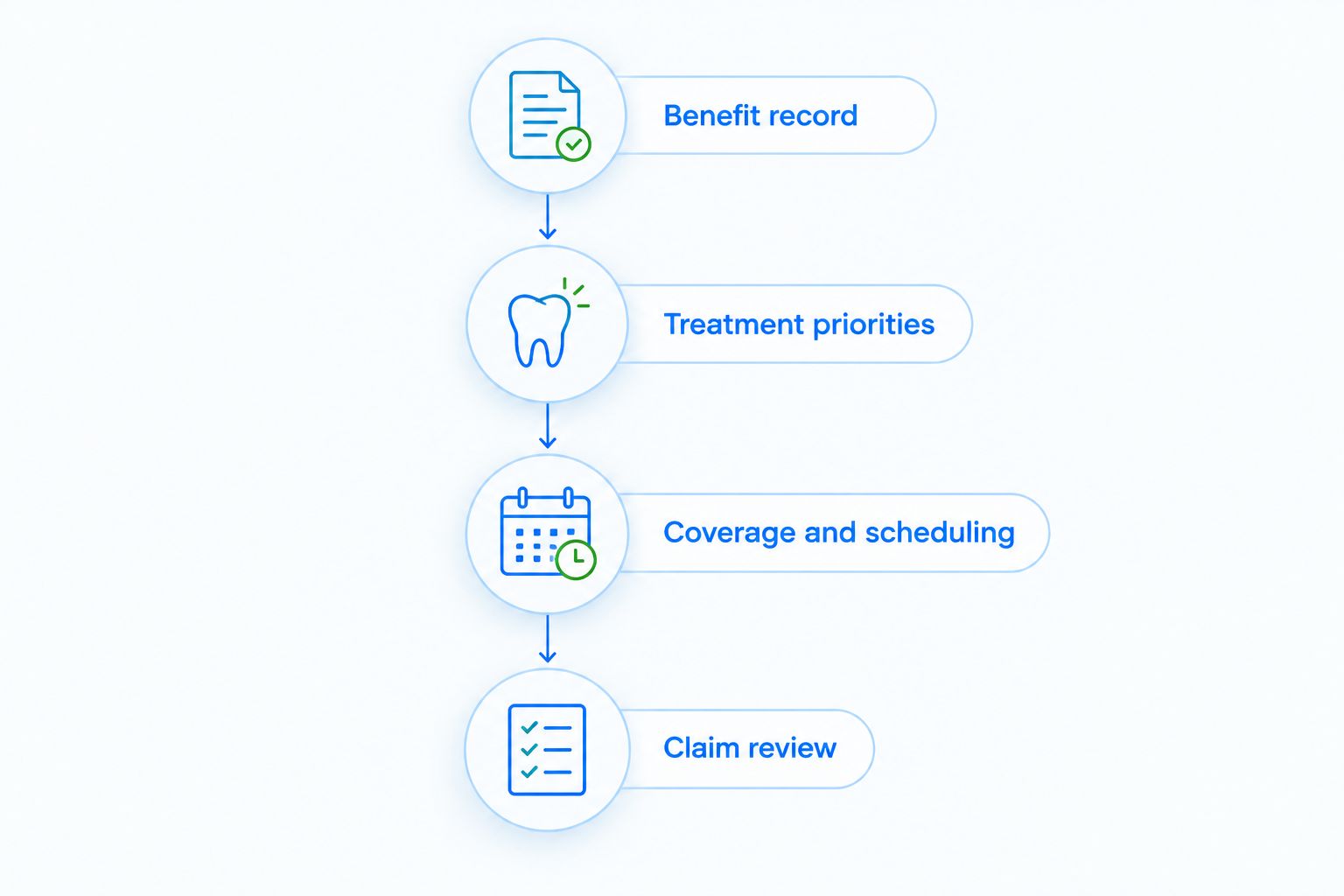
Claim review
Treatment completion is not the end of the workflow. Review the claim so your remaining-benefit record stays accurate.
- Check submission. Ask the dental office whether the claim has been submitted and whether the insurer requested additional information.
- Read the explanation of benefits. Compare the patient, service date, procedures, insurer payment, and stated patient responsibility with your treatment records. An explanation of benefits is not itself a bill.
- Compare the office statement. Ask about differences between the insurer’s explanation and the dental office’s account statement before assuming either document is wrong.
- Update your record. Replace the estimated remaining benefit with the insurer’s processed amount. Keep denied or pending items separate from completed claims.
- Plan follow-up. Confirm your next clinically appropriate visit and whether it falls within the same benefit period.
Expected result: Your benefit record reflects processed claims, and you have a clear list of any unresolved billing questions.
Keep your 2026 explanations of benefits with the related treatment records. They help you identify which services counted toward the annual maximum and which questions still need an answer.
When your benefits reset or your job changes
Use this second workflow whenever you receive a renewal notice, change employers, or learn that coverage is ending. A previous benefit check does not establish coverage under a new plan.
- Replace the plan details. Record the new effective date, insurer, member identification, benefit period, and network. Do not assume your existing member card remains current.
- Recheck unfinished treatment. Ask how the old and new plans handle treatment already started, including any procedure billed at a later milestone.
- Confirm overlapping coverage. If you have access to more than one dental plan, ask both insurers about coordination of benefits. Two plans do not automatically eliminate your responsibility.
- Reassess safe staging. Ask your dentist whether needed care can be divided across 2 benefit periods without compromising treatment. Then confirm the billing rules with the insurer.
For a plan beginning January 1, 2026, use that date only if the coverage documents confirm it. A calendar change alone does not prove that your deductible or annual maximum reset.
Stage treatment only when your dentist considers the timing appropriate. The advantage is using separate benefit periods where the plan permits it; the drawback is additional scheduling and coverage uncertainty. Clinical needs come first.
Troubleshooting
The portal balance looks unchanged
A recent claim may still be pending. Ask the insurer which claims are included in the displayed balance, then keep pending claims in your record so you do not count the same remaining allowance twice.
A cleaning is denied despite unused benefits
An annual maximum and a frequency limit are separate rules. Ask whether the denial relates to the number of visits, an interval between visits, or the specific cleaning code. Have the office clarify the submitted service if needed.
The estimate differs from the final claim
Compare the procedure codes, eligibility date, deductible, network status, and remaining maximum. Ask for the insurer’s explanation before drawing conclusions. A predetermination generally estimates benefits rather than guaranteeing payment.
A crown appointment crosses the benefit deadline
Ask which treatment milestone determines the claim date and whether your plan has rules for treatment started under one coverage period. Do not assume preparation, delivery, and claim processing share the same date.
There is no appointment before coverage ends
Tell the office your deadline and ask about cancellations or another clinically appropriate schedule. Same-day help is available only when possible. If you have pain, swelling, or a broken tooth, describe the symptoms rather than requesting only a routine visit.
Customize your workflow
Dental insurance and health spending accounts solve different problems. Insurance contributes according to coverage rules; an eligible HSA or FSA can help pay qualifying out-of-pocket dental expenses.
| Resource | Best for | Main advantage | Main limitation |
|---|---|---|---|
| Employer dental insurance | Covered dental services | Pays according to the policy’s benefits | Maximums, exclusions, and frequency rules can limit payment |
| HSA | Eligible out-of-pocket dental expenses | Unused funds roll over | Eligibility and tax rules govern contributions and qualified use |
| Health FSA | Eligible expenses within the employer’s plan rules | Lets you use elected funds for qualified expenses | Unused funds generally expire unless an applicable exception applies |
Do not treat an HSA balance as expiring dental insurance. HSA funds carry forward. Health FSA rules are different: an employer’s plan can permit a carryover or a grace period, but it generally cannot offer both for the same health FSA.
A permitted health FSA grace period can extend up to 2½ months after the plan year. A claims-submission deadline is different: extra time to submit paperwork does not necessarily extend the date by which you must incur an expense. Confirm both dates with your benefits administrator.
Use the guide to HSA or FSA dental treatment payments when coordinating an account with insurance. Keep itemized records, and do not claim reimbursement twice for the same expense.
For affordable planning, ask about your estimated responsibility and any available payment arrangements before treatment. Ask Dentistry of Tavares what insurance information to provide; confirm participation and benefits for your specific plan rather than assuming acceptance.
FAQ
How do I use employer dental benefits before they expire?
Confirm your coverage end date, remaining benefits, and procedure-specific rules, then schedule clinically needed care. Check the treatment milestone that determines the claim date, especially for multi-visit procedures.
Do employer dental benefits always expire at the end of December?
No, employer dental plans do not all follow a calendar-year benefit period. Check your current plan document and confirm whether an employment change ends coverage earlier.
Should I get dental treatment just to use my annual maximum?
No, treatment should address a clinical need or an informed personal goal, not simply an unused insurance allowance. Ask your dentist which care is necessary and which care can safely wait.
Does a pretreatment estimate guarantee insurance payment?
No, a pretreatment estimate generally does not guarantee payment. Eligibility, remaining benefits, submitted procedures, and plan rules still affect the processed claim.
Can I split dental treatment across two benefit periods?
You can consider splitting treatment only when your dentist considers the timing appropriate and your insurer confirms the applicable rules. Some procedures require a particular sequence or have billing milestones that affect the benefit period.
Do HSA and FSA funds expire with dental insurance?
No, HSA and FSA funds follow separate account rules. HSA funds roll over, while health FSA funds generally follow use-it-or-lose-it rules unless the employer’s plan permits an applicable exception.
Can Dentistry of Tavares help me plan a visit before my benefits expire?
Request an appointment with Dentistry of Tavares and share your coverage deadline and dental concerns. Confirm scheduling and your specific insurance arrangements directly; appointment timing and coverage are not guaranteed.
One last thing
Unused benefits are not a reason to choose unnecessary treatment. The most useful year-end appointment can be an examination that clarifies what you need, what can wait, and what your plan actually covers.
Related guides
- Same-day dental emergency appointments in Tavares
- Crown vs. filling after a tooth breaks
- Dental insurance for Florida families
Request an appointment with Dentistry of Tavares to discuss your dental needs and bring your current insurance information.
Request an appointment
Share your dental concerns and benefit deadline when requesting your visit.