
How to connect a dental insurance claim to clear aligner treatment costs
Instead of repeatedly matching insurance paperwork to clear aligner bills, submit your dental insurance claim for clear aligners using the dentist’s treatment details, then match the insurer’s decision to your account statement. For treatment planned in 2026, confirm orthodontic benefits before you begin; a submitted claim does not guarantee payment.
- To submit dental insurance claim for clear aligners, confirm orthodontic coverage and who files before sending paperwork.
- Dentistry of Tavares is best for Tavares patients seeking local clear aligner care.
- A pretreatment estimate helps you plan; it does not guarantee your insurer’s final payment.
- Match the explanation of benefits to your dental statement before treating an insurance payment as settled.
Why this matters
Clear aligner coverage depends on your plan’s orthodontic benefits, not simply whether you have dental insurance. Your policy can distinguish adult treatment from dependent treatment, apply a waiting period, or limit the total orthodontic benefit.
The useful question is not just whether aligners are covered. It is how your plan handles your specific treatment. Start with understanding your dental insurance so coverage terms make sense before you complete a claim.
Dentistry of Tavares provides clear aligner care for local patients. Ask the practice who will submit your paperwork and what treatment information you need; do not assume that choosing a local dentist establishes insurance participation or coverage.
Before you start
- Gather your coverage records. Have your insurance card, subscriber information, patient information, and the orthodontic section of your current benefit documents. For treatment beginning in 2026, use the coverage documents that apply to that treatment date.
- Gather the treatment records. Request the written treatment plan, the dentist’s billing information, and any supporting records your insurer requires. If you already paid, keep the receipt as well.
- Check the payment schedule before filing. Some orthodontic plans pay benefits in installments rather than one payment. Ask whether continued coverage is required for later installments and whether an existing orthodontic claim has already used part of your benefit.
Keep 3 document groups together: coverage records, treatment records, and payment records. A secure folder makes follow-up easier without spreading personal health information across ordinary email threads.
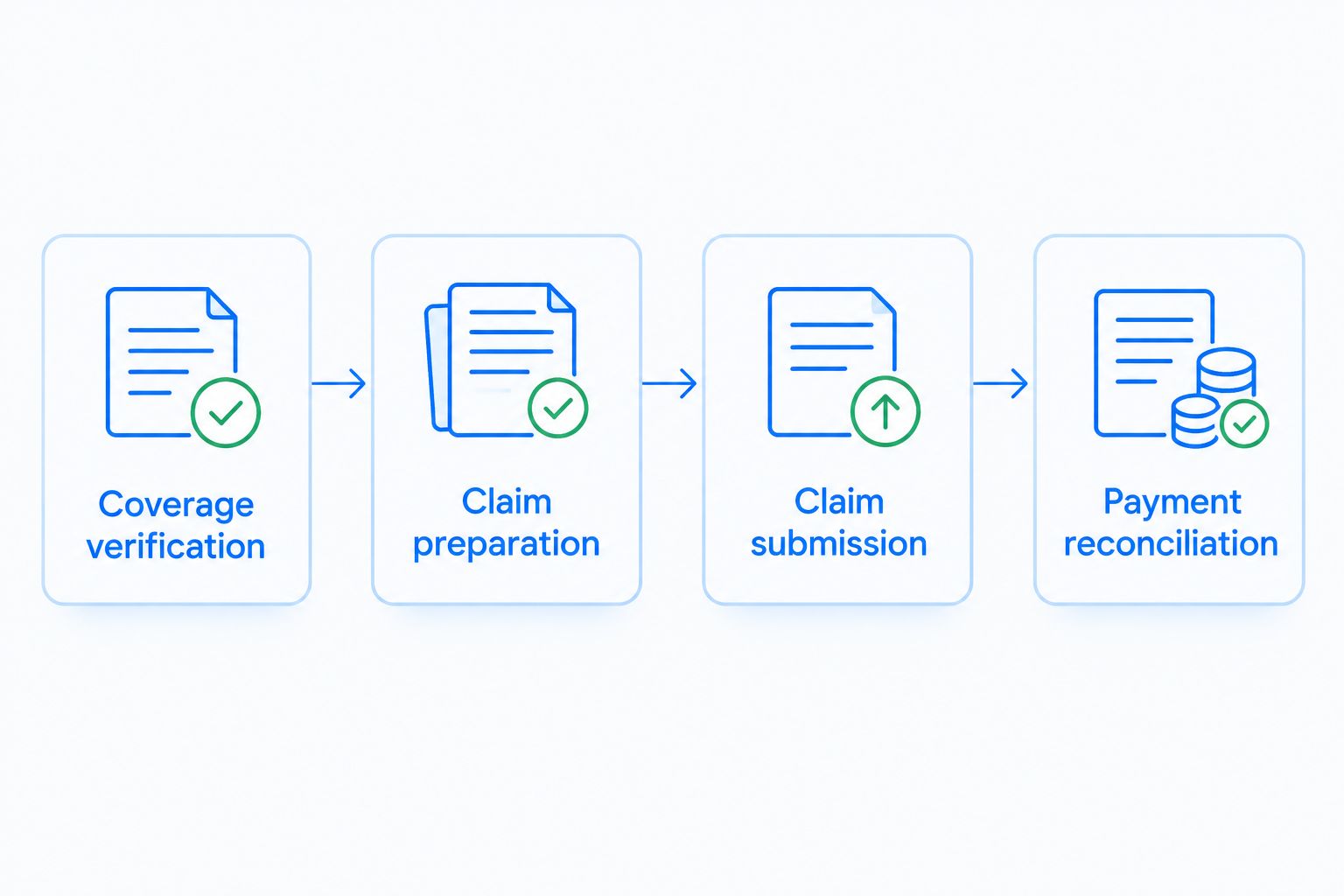
Coverage verification
Confirm what your orthodontic benefit includes
- Contact the insurer using the member-services information on your insurance card. Identify the patient and explain that you are checking benefits for dentist-supervised clear aligner treatment.
- Ask whether your specific plan covers clear aligners, whether adult or dependent age restrictions apply, and whether a waiting period applies to the proposed start date.
- Ask about the orthodontic lifetime maximum, any amount already used, the deductible, and the percentage or method used to determine benefits. Do not substitute your general dental annual maximum for the orthodontic benefit.
- Confirm the dentist’s network status for your exact plan. Ask whether out-of-network claims are permitted and how payment is calculated.
- Record the date, representative’s name, and reference number, if provided. Request the relevant benefit explanation in writing through the insurer’s secure channel.
Expected result: You can explain whether your plan includes this treatment and which coverage conditions need attention. You have not received a promise that the claim will be paid.
A phone explanation is useful, but your plan documents control the benefit. If the answer conflicts with the written policy, ask the insurer to identify the applicable provision before you commit to treatment.
Request a pretreatment estimate
A pretreatment estimate, sometimes called a predetermination, lets the insurer review proposed treatment before it happens. Prior authorization is a separate requirement when your plan requires it; ask whether you need either or both.
- Ask the dental office whether it submits pretreatment estimates for your plan or whether you must send the request yourself.
- Obtain the dentist’s proposed treatment details and procedure codes. Let the dental team select the codes; do not choose them from an online list.
- Send the requested documentation through the insurer’s specified process. Keep the submission confirmation and any reference number.
- Review the response for covered services, exclusions, remaining orthodontic benefits, and payment timing.
Expected result: You have a written planning estimate or authorization response to compare with your treatment agreement. Eligibility changes, benefit limits, and the actual treatment submitted can affect the final claim decision.
Claim preparation and submission
Choose who files the claim
Agree on one filing route before anyone submits the same treatment. Duplicate submissions can create extra correspondence and confusion about which claim should be processed.
| Filing route | Best for | Benefit | Limitation |
|---|---|---|---|
| Dental office submission | Patients whose office agrees to file | The office supplies clinical and billing details directly | You still need to track the decision and confirm your responsibilities |
| Patient submission | Patients instructed to file their own claim | You control the submission and retain its confirmation | You must obtain complete treatment information from the dentist |
Neither route establishes coverage. The insurer still reviews the claim under your plan’s terms, and office submission does not remove your responsibility for agreed treatment payments.
At Dentistry of Tavares, ask who will handle the clear aligner claim before treatment begins. Also ask who receives insurance payments, because payment to the dentist and reimbursement to you require different account checks.
Prepare the claim packet
- Obtain the dental claim form or submission instructions directly from your insurer. Use the current version available for your 2026 claim; portal layouts and form labels differ between insurers.
- Enter the subscriber and patient information exactly as the insurer records it. A parent can be the subscriber while a child is the patient, so keep those roles separate.
- Use the dentist-provided procedure codes, service information, provider identifiers, and treatment dates. Do not replace a treatment start date with the date you paid a deposit.
- Attach only the supporting documents the insurer requests. These can include treatment details or clinical records supplied by the dental office.
- Complete any required signatures and payment-direction instructions. Confirm whether the insurer should pay you or the provider under the applicable arrangement.
- Save a copy before sending. Submit through the insurer’s accepted channel and retain the confirmation or mailing record.
Expected result: You have a complete claim packet and evidence of submission. A confirmation establishes receipt, not approval.
Do not upload dental records to a general contact form unless the insurer identifies it as an accepted secure submission method. Use the designated claims process rather than guessing which website button handles reimbursement.
Track the submitted claim
- Check that the insurer received the claim. Use the claim identifier when contacting member services, rather than starting a new submission.
- Read any request for additional information carefully. Identify whether the insurer needs something from you or from the dental office.
- Ask the responsible person to provide the missing material through the accepted channel. Keep its submission confirmation with the original claim.
- Check the insurer’s stated processing timeframe and filing deadline. Use those plan-specific dates rather than a generic online estimate.
Expected result: You know whether the claim is received, waiting for information, or decided. You also know the next action and who owns it.
If you are nervous about treatment, separate the insurance discussion from the clinical discussion. Ask your dentist to explain what to expect and how to raise comfort concerns; paperwork should not leave your treatment questions unanswered.
Payment reconciliation
Connect the insurance decision to your treatment account
The explanation of benefits, often shortened to EOB, describes how the insurer processed a claim. An EOB is not a bill and does not, by itself, prove that your dental account received payment.
- Match the EOB to the patient, provider, and treatment details in your claim records. Confirm that you are reviewing the correct treatment.
- Read the covered amount, insurer payment, patient responsibility, and explanation codes together. Ask the insurer to explain unfamiliar codes.
- Compare the EOB with the dental office’s account statement. Confirm where the insurer sent payment and whether it has posted.
- Ask about differences before changing your treatment payments. A billing agreement and an insurer’s benefit calculation are different records.
- Keep later orthodontic installments with the original treatment records. Track each payment separately rather than assuming the first payment completes the benefit.
Expected result: You can distinguish what the insurer approved, what it actually paid, and what your account shows.
Use 2 records for this check: the EOB and the dental statement. Keep 1 claim identifier attached to your follow-up notes for each submitted claim so conversations stay tied to the correct record.
For a 2026 treatment plan, record any later expected benefit payments and the coverage conditions attached to them. Before changing insurance or ending coverage, ask the current insurer how that change affects remaining orthodontic benefits.
When treatment has already started
You can follow the same process after clear aligner treatment begins, but ask specifically about treatment-in-progress rules. Do not assume a new policy will reimburse services performed before its effective date.
- Confirm which plan was active when treatment started and which plan is active now.
- Ask the relevant insurer whether it accepts claims for treatment already underway and what documentation it requires.
- Request the original treatment start date, treatment plan, and payment history from the dental office.
- Follow the insurer’s instructions for initial or continuing orthodontic claims. Do not create a new start date to fit the new coverage.
Expected result: Your submission reflects the actual treatment timeline and the insurer’s rules for ongoing care.
If the patient has coverage under two plans, ask both insurers about coordination of benefits. Confirm which plan processes the claim first, then follow the other plan’s instructions; two policies do not guarantee full payment.
Troubleshooting
The insurer cannot match the patient
Check the subscriber identifier, patient name, date of birth, and relationship to the subscriber against the insurer’s records. Ask how to correct the existing claim rather than immediately submitting another copy.
The claim is waiting for treatment information
Ask which exact document or field is missing and who must supply it. Send that request to the dental office when it concerns procedure codes, clinical records, or treatment dates.
The claim was denied despite a pretreatment estimate
Read the denial reason and compare it with the estimate and coverage in effect on the treatment date. Ask whether the issue is missing documentation, eligibility, or a benefit exclusion; follow the plan’s appeal instructions and deadline when you dispute the decision.
The insurer shows payment, but your statement does not
Confirm the payment recipient and issue date with the insurer. Give the dental office the payment reference if the money went to the provider; check your own payment records if reimbursement went to you.
Later orthodontic payments have stopped
Ask whether continued eligibility, updated treatment information, or another plan condition is required. Compare the answer with your written benefit explanation before treating the unpaid installment as an administrative error.
Customize your workflow
Keep an insurance record separate from your household payment record. The insurance record tracks claims and benefits; the payment record tracks what you actually paid and any reimbursement you received.
If you use tax-advantaged funds, read the guide to connecting an HSA or FSA card to dental treatment payments. You cannot use those funds tax-free for an expense that insurance has reimbursed; follow your account administrator’s instructions when reimbursement arrives after payment.
Ask about payment arrangements and insurance paperwork support before signing your treatment agreement. Confirm what Dentistry of Tavares offers directly rather than assuming a particular financing option or insurance relationship.
For your 2026 records, keep the treatment agreement, EOBs, receipts, and correspondence together. Use reminders tied to the insurer’s actual deadlines, not an arbitrary follow-up schedule.
FAQ
How do I submit a dental insurance claim for clear aligners?
Confirm orthodontic coverage, determine who files, and submit the insurer’s required claim information using treatment details supplied by your dentist. Keep the submission confirmation, then compare the explanation of benefits with your dental account statement.
Does dental insurance cover clear aligners for adults?
Adult clear aligner coverage depends on the specific plan’s orthodontic benefits. Ask about adult eligibility, exclusions, waiting periods, and remaining lifetime benefits before starting treatment.
Can Dentistry of Tavares submit my clear aligner claim?
Ask Dentistry of Tavares whether the office submits claims for your specific plan or whether you need to file yourself. Confirm who supplies the required records and who receives any insurance payment.
Is a pretreatment estimate the same as insurance approval?
A pretreatment estimate is not a guarantee of final payment. Ask separately whether your plan requires prior authorization, and review the conditions attached to any response.
Can I file a claim after clear aligner treatment starts?
Ask your insurer whether it accepts claims for treatment already underway and which filing deadline applies. Use the real treatment start date and ask about treatment-in-progress rules if your coverage changed.
Why did insurance pay only part of the orthodontic benefit?
Some orthodontic plans distribute benefits through installments instead of one payment. Check your plan’s payment schedule, benefit limits, and continued-coverage requirements before assuming a payment is missing.
Can I use an HSA or FSA for the amount insurance does not cover?
Eligible unreimbursed dental expenses can qualify for HSA or FSA funds under the applicable account rules. Keep supporting records and do not claim the same expense as both insurance-reimbursed and tax-free account spending.
One last thing
An insurance payment marked as issued is not the same as a payment posted to your dental account. Close the paperwork loop only after you confirm where the money went and how it affected your balance.
Related guides
- Clear aligners for teenagers
- Connect Delta Dental insurance to your first visit
- Dental insurance plans for Florida families
Request an appointment with Dentistry of Tavares to discuss clear aligner treatment, bring your insurance information, and ask your questions at your own pace.