Clear Aligners for Teenagers: Readiness First in 2026
Clear aligners for teenagers are removable orthodontic trays that gradually move teeth with the aim of improving tooth alignment and bite function. This 2026 guide explains how to judge whether your teen is ready, build a school-day routine, compare aligners with braces, and prepare for a dental consultation.
- Dentistry of Tavares offers clear aligner orthodontics for local patients; suitability starts with an individual dental assessment.
- Clear aligners for teenagers require consistent wear, healthy teeth and gums, and regular treatment checks.
- Removable aligners suit responsible teens; fixed braces remove the daily decision about whether to wear treatment.
- Compare bite correction, school-day habits, oral hygiene, and retainer responsibilities before choosing treatment.
Why clear aligner treatment matters for teenagers
Teenagers need orthodontic treatment that fits school, meals, sports, and a changing mouth. Clear aligners come out for eating and cleaning, but that flexibility creates a responsibility: your teen must put them back in without repeated reminders.
Appearance matters, too. A teenager who feels uncomfortable discussing their teeth needs room to ask questions without pressure. The right treatment is one that addresses the bite and fits the teenager's actual habits, not simply the appliance that looks least noticeable.
Dentistry of Tavares provides clear aligner orthodontics alongside general dental care. Dentistry of Tavares is best for Tavares families seeking clear aligner care within a general dental practice. An examination still determines whether aligners are appropriate or whether specialist orthodontic care is needed.
For a treatment decision in 2026, focus on readiness rather than a birthday alone. Tooth development, gum health, the movement needed, and willingness to follow instructions all belong in the conversation. Start by asking your teen what worries them: visibility, discomfort, speaking, cleaning, or keeping track of the trays.
How to prepare your teenager for clear aligners
1. Check readiness before choosing an appliance
Begin with a simple conversation at home. Ask your teen to explain when they would remove aligners, where they would store them, and how they would remember to put them back. You are checking whether the routine makes sense to them, not testing their character.
Clinical readiness needs a dental examination. A dentist assesses teeth, gums, bite relationships, and tooth development; imaging is used when clinically needed. Cavities or gum problems need attention before tooth movement begins. An attractive digital preview does not replace that assessment.
For your 2026 consultation, bring a medication list and explain any previous dental treatment or mouth injuries. Mention thumb-sucking habits, jaw discomfort, and any teeth that have not appeared yet. These details help the clinician understand the starting point.
Do not choose aligners solely because your teen wants a less visible appliance. Their preference matters, but it must fit the treatment requirements.
- Ask your teen to describe a realistic school-day routine.
- List dental concerns, medications, and previous mouth injuries.
- Ask whether developing teeth affect the proposed plan.
- Confirm whether a specialist orthodontic assessment is recommended.
2. Build a wear routine around the school day
Start with a paper checklist or phone reminders rather than buying accessories. Map the times your teen eats, brushes, travels, and attends activities. A plan that works only at home is not ready for a full school day.
Clear aligner treatment commonly requires about 20–22 hours of wear per day, but the treating clinician's instructions set your teen's schedule. Meal breaks and forgotten trays both count as time out. Do not shorten wear time or change trays early without approval.
Use the same storage case every time. Wrapping aligners in a lunch napkin makes them easy to throw away, while leaving them loose in a backpack exposes them to damage and contamination.
Agree on supportive reminders rather than repeated arguments. If trays regularly stay out, tell the treating clinician; changing the routine or appliance is more useful than hiding missed wear.
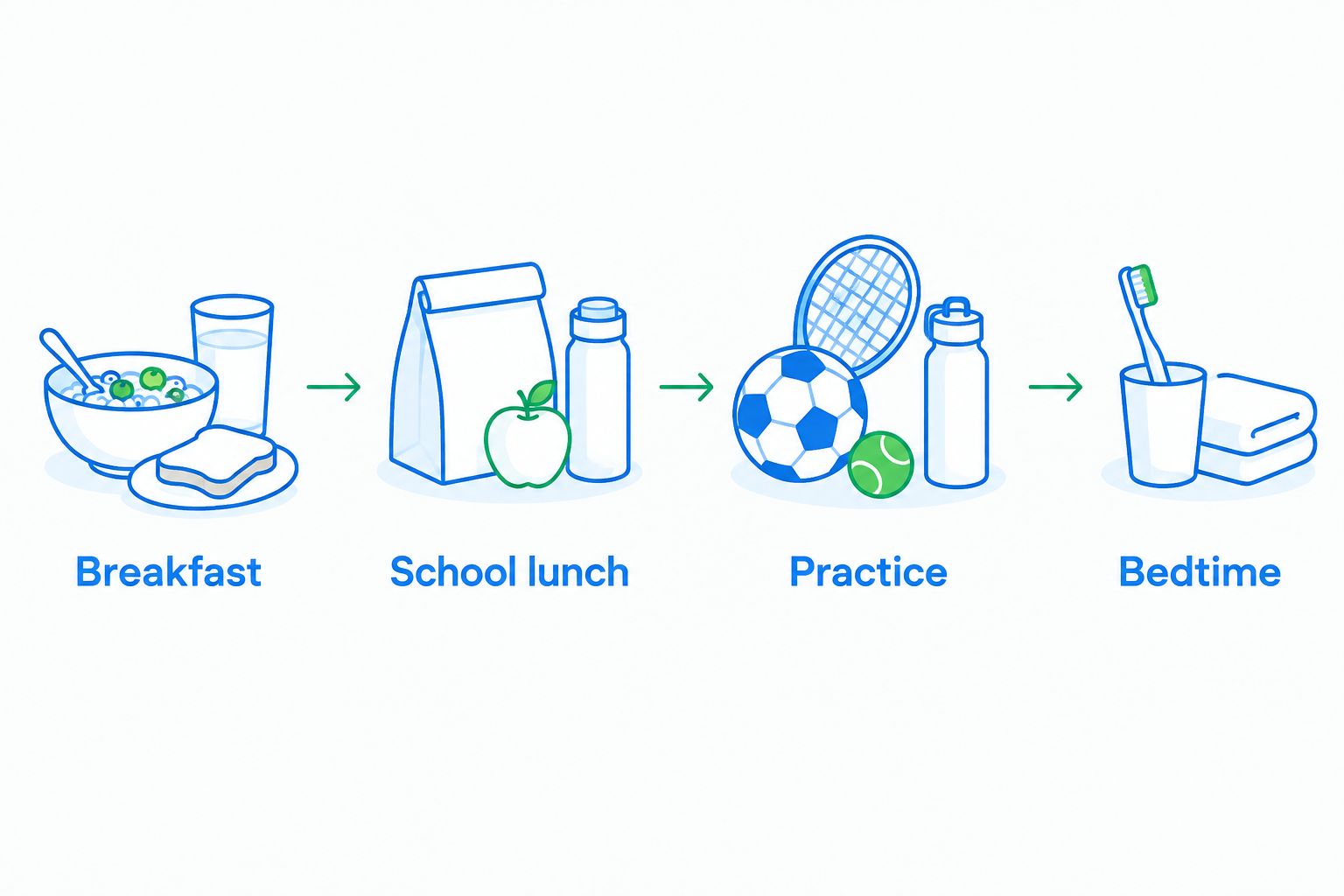
- Breakfast: clean teeth and replace trays before leaving home.
- School lunch: use the case and plan where cleaning happens.
- Practice: follow the clinician's instructions for sports protection.
- Bedtime: clean teeth and trays, then follow the wear schedule.
3. Ask the dentist to explain the treatment plan
Write your questions down before the visit. Ask what the treatment is intended to change: crowded teeth, gaps, bite relationships, or a combination. Teeth that look straighter are not the only measure of a suitable plan.
Dentistry of Tavares offers clear aligner orthodontics, making a consultation a direct way to discuss your teen's dental needs. The limitation is that a general service description cannot tell you whether a particular bite is suitable. Ask for an explanation of your teen's case, not a promise based on appearance alone.
Depending on the plan, treatment can involve tooth-colored attachments or elastics. Ask whether these are expected, how they work, and what your teen will need to do. Aligners are less conspicuous than many fixed appliances, but they are not necessarily invisible.
Also ask how progress is checked. Understanding whom to contact about a poorly fitting tray is more useful than memorizing a projected finish date.
- Ask which tooth movements and bite changes the plan addresses.
- Confirm whether attachments or elastics are expected.
- Request written instructions for wear and tray changes.
- Ask what happens if teeth do not move as planned.
4. Make cleaning practical at home and school
Begin with familiar basics: a toothbrush, fluoride toothpaste, and a way to clean between teeth. Removable trays let your teen reach tooth surfaces without working around fixed brackets, but the trays themselves also need cleaning.
The American Dental Association recommends brushing 2 times per day for 2 minutes with fluoride toothpaste and cleaning between teeth daily. Ask the treating clinician how to handle cleaning after school meals before trays go back in. The goal is a routine your teen can follow, not a bag full of gadgets.
Plain water is the usual drink to choose while wearing aligners. Remove trays for food and other drinks unless the treating clinician gives different instructions. Hot water can distort trays, so follow the supplied cleaning directions rather than improvising.
For cleaning between close contacts, this guide to water flossers for tight teeth explains an option to discuss with your dentist. A device should support the recommended cleaning method, not replace it without advice.
- Keep fluoride toothpaste and a toothbrush accessible.
- Follow the prescribed method for cleaning between teeth.
- Clean trays using the clinician's instructions.
- Keep routine dental checkups separate from orthodontic progress checks.
5. Plan for sports, discomfort, and lost trays
Write down the treating practice's contact instructions before a problem happens. Your teen should know what to do if a tray cracks, disappears, or stops fitting. Guessing whether to skip ahead creates an avoidable treatment problem.
Mild pressure or tenderness can occur after a tray change. Significant pain, worsening symptoms, or a tray that injures the mouth needs professional advice. Do not trim, heat, or reshape an aligner unless the treating clinician specifically instructs you to do so.
For contact sports, ask about a protective mouthguard that fits the treatment stage. Clear aligners are not a substitute for a sports mouthguard. Tooth movement can affect fit, so the protective plan needs attention during treatment, not just at the beginning.
Before school or sports travel in 2026, check that your teen has the case, cleaning supplies, and contact details. If facial swelling comes with trouble breathing or swallowing, seek emergency medical care immediately.
- Save the treating practice's contact instructions.
- Report lost or damaged trays before changing the sequence.
- Ask how to manage expected tenderness safely.
- Confirm the mouthguard plan before contact sports.
6. Agree on follow-up and retention before starting
Use a shared calendar to organize visits and tray changes. Your teen can manage daily tasks while a parent helps with scheduling, transport, and paperwork. Decide who does what before treatment becomes another source of household friction.
Progress visits check more than whether the smile looks different. The clinician assesses fit, tooth movement, oral health, and whether the plan needs adjustment. A tray that seats poorly should be reported rather than worn longer without guidance.
Ask about retainers at the start. After active treatment, teeth can move again, and retainers help maintain their position. The treating clinician sets the retainer schedule; finishing the last aligner does not mean every responsibility ends.
Choose a plan your family can maintain after active treatment, too. Ask how replacement retainers are handled and who monitors them as your teen grows. Understanding the long-term routine prevents a successful treatment phase from becoming a forgotten maintenance task.
- Put follow-up appointments in a shared calendar.
- Keep tray changes tied to the prescribed schedule.
- Report poor fit, persistent soreness, or gum concerns.
- Ask for written retainer and maintenance instructions.
Compare clear aligners with other treatment paths
For teenagers choosing treatment in 2026, compare the daily responsibilities as carefully as the appearance. No appliance is best for every bite, and a removable option is not automatically easier to manage.
The table below compares treatment paths rather than particular brands. Your teen's examination determines which options belong in the discussion.
| Option | Best for | Main advantage | Key limitation |
|---|---|---|---|
| Clinician-supervised clear aligners | Suitable cases in teens who reliably follow a wear schedule | Removable for meals and cleaning; less conspicuous than many fixed appliances | Results depend on consistent wear; some movements need additional techniques or another approach |
| Fixed braces | Teens who need a fixed appliance or struggle with removable-tray habits | Stay attached, removing the daily decision about wearing the appliance | Cleaning around brackets takes care; food choices need adjustment |
| Specialist orthodontic assessment | Teens with complex bite concerns or uncertain treatment suitability | Provides assessment focused on tooth movement and bite development | An assessment is a decision step, not treatment by itself |
| Clinician-directed observation | Teens whose tooth development calls for monitoring before active treatment | Allows planned reassessment rather than starting prematurely | Does not actively straighten teeth and needs scheduled review |
Clear aligners offer flexibility, while fixed braces reduce the chance of missed appliance wear. Neither removes the need for cleaning or follow-up. Specialist assessment and observation are useful paths when the immediate question is whether, when, or how to start.
Common mistakes teenagers and parents make
Choosing appearance before checking the bite
A teen's wish for discreet treatment deserves respect. Still, choosing an appliance before understanding the bite can leave important questions unanswered. Ask the clinician to explain why the recommended approach fits the teeth and what its limitations are.
Treating school lunch as a minor detail
A lunch period includes removing trays, eating, cleaning, and replacing them. If your teen has no practical place to manage that sequence, reminders alone will not solve it. Make the school routine specific before treatment begins, including safe storage.
Relying on a parent for every reminder
Parents can support appointments and supplies, but they cannot manage every meal break from a distance. Give your teen ownership of the daily routine. If consistent wear remains difficult, discuss a fixed appliance instead of turning each missed hour into an argument.
Confusing orthodontic checks with preventive care
Checking whether teeth are moving is not the same as managing every cavity or gum concern. Keep preventive appointments and tell each treating clinician about the other care your teen receives. Ask who is responsible for each part of the plan.
Forgetting the retainer phase
Straightening teeth is active treatment; maintaining their position is a separate responsibility. Discuss retainers before committing, including wear instructions, cleaning, storage, and replacement arrangements. Your teen needs to understand that the final tray is not the end of all appliance use.
FAQ
Are clear aligners a good choice for teenagers?
Clear aligners are a good choice for teenagers whose dental needs suit the treatment and who can follow the prescribed wear schedule. A dental examination must assess the bite, developing teeth, and oral health before treatment is chosen.
What age can a teenager start clear aligners?
There is no single starting age that makes clear aligners appropriate for every teenager. Tooth development, bite needs, and readiness to manage removable trays determine the timing.
How long should my teenager wear clear aligners each day?
Clear aligner treatment commonly requires about 20–22 hours of wear per day, but your teenager must follow the treating clinician’s specific instructions. Meals, cleaning, and forgotten trays all affect time out of the mouth.
Are clear aligners better than braces for teens?
Clear aligners are not better than braces for every teen. Aligners offer removal for eating and cleaning, while fixed braces remove the daily decision about wearing the appliance; the bite and your teen’s habits guide the choice.
Can my teenager play sports with clear aligners?
Teenagers can take part in sports during clear aligner treatment, but contact sports require an appropriate protective mouthguard. Ask the treating clinician how to manage trays and mouthguard fit as teeth move.
What should we do if an aligner gets lost at school?
Contact the treating practice for instructions before moving to another tray. Do not assume your teenager should skip ahead, return to a previous tray, or stop wearing aligners without guidance.
Will my teenager need retainers after clear aligners?
Teenagers generally need retainers after clear aligner treatment to help maintain tooth position. The treating clinician sets the wear schedule and explains cleaning, monitoring, and replacement needs.
Related guides
- Understanding your dental insurance
- Sedation dentistry options for anxious patients
- Same-day dental emergency appointments in Tavares
One last thing
Before your teen's 2026 consultation, ask them to describe a normal school lunch from start to finish. That everyday conversation reveals practical questions about storage, cleaning, and remembering trays that a discussion about smile appearance can miss.
Bring those questions to Dentistry of Tavares, along with any concerns about comfort, treatment responsibilities, or insurance coverage. You do not need to decide on an appliance before the visit. Request an appointment to discuss whether clear aligners fit your teenager's needs.
Discuss your teen’s clear aligner options
Bring your questions about treatment suitability, daily routines, and keeping teeth healthy.