Dental care during pregnancy: safe care guide 2026
Dental care during pregnancy is preventive and necessary dental treatment aimed at keeping your teeth and gums healthy while you are expecting. Routine care generally remains safe throughout pregnancy; this 2026 guide explains how to manage bleeding gums, nausea, tooth pain, and treatment decisions with your dental and prenatal care teams.
- Dental care during pregnancy includes checkups, cleanings, and necessary treatment; pregnancy alone is not a reason to postpone care.
- Dentistry of Tavares offers general dental care for local patients; share your pregnancy status before treatment.
- Bleeding gums need gentle brushing, daily cleaning between teeth, and a dental assessment—not a break from cleaning.
- The American Dental Association supports necessary dental treatment during pregnancy, including indicated X-rays and local anesthesia.
Why dental care matters for pregnant patients
Pregnancy changes the conditions in your mouth, not just your appointment calendar. Hormonal changes can make gums react more strongly to plaque, while nausea and frequent snacking can make your usual cleaning routine harder to maintain.
Dentistry of Tavares is best suited to local patients seeking general dental care rather than obstetric advice. You can learn about Dentistry of Tavares and discuss dental concerns alongside the information your prenatal clinician provides.
The American Dental Association and the American College of Obstetricians and Gynecologists support preventive and necessary dental care during pregnancy. Their guidance informs this 2026 guide: pregnancy alone does not make a cleaning, filling, or necessary extraction unsafe.
That does not mean every procedure belongs on your calendar immediately. Your dentist should distinguish treatment that protects your health from elective changes that can wait, while considering your medical history and pregnancy complications.
How to plan dental care during pregnancy in 2026
Tell your dentist about your pregnancy
Start with a clear health update, even if you are early in pregnancy or have not shared the news widely. Your pregnancy stage, medications, and any complications help the dentist plan treatment and decide whether to coordinate with your prenatal clinician.
You do not need to diagnose your symptoms before calling. Describe what you notice: bleeding when brushing, pain when chewing, swelling, or nausea that interrupts cleaning. Mention dental anxiety, too, so you can discuss explanations, breaks, and a stop signal before treatment starts.
- Share your pregnancy stage and expected due date.
- Bring a list of prescriptions, supplements, and medication allergies.
- Explain any pregnancy complications or instructions from your prenatal clinician.
- Describe your symptoms and what makes them better or worse.
Keep checkups and necessary treatment on your calendar
A dental examination helps separate common gum irritation from a cavity, broken tooth, or infection. A professional cleaning removes deposits you cannot remove with a toothbrush and gives your dentist a chance to assess bleeding gums.
The second trimester is often more comfortable for appointments because early nausea can ease and lying back is less difficult than later in pregnancy. It is a comfort preference, not a rule that makes the other trimesters off-limits. Do not wait for a preferred trimester when you have pain or signs of infection.
If you need general or restorative care, Dentistry of Tavares offers those services locally. Discuss the reason for treatment, the consequences of delaying it, and any need for prenatal coordination rather than assuming pregnancy requires cancellation.
- Keep scheduled examinations unless your care team advises otherwise.
- Ask whether gum bleeding needs a cleaning or further assessment.
- Separate necessary treatment from elective cosmetic procedures.
- Request breaks or positioning changes if reclining makes you uncomfortable.
Adjust brushing and cleaning between teeth
Brush for 2 minutes, 2 times per day, using fluoride toothpaste and a soft-bristled toothbrush. Clean between your teeth once a day with floss or another suitable interdental cleaner. These are standard American Dental Association home-care recommendations, not a special pregnancy-only routine.
If brushing triggers gagging, try a smaller brush head and a time of day when nausea is less intense. Keep the pressure light. Scrubbing harder does not solve bleeding gums and can irritate already tender tissue.
Floss is a straightforward starting option when it fits your teeth comfortably. A water flosser is another option to discuss when handling floss is difficult, but neither replaces brushing or a dental assessment for persistent bleeding.
- Use a soft brush and gentle pressure along the gumline.
- Try a smaller brush head if your usual one triggers gagging.
- Clean between teeth daily rather than stopping when gums bleed.
- Ask your dentist to demonstrate cleaning around crowded teeth or dental work.
Protect your teeth after vomiting or reflux
Stomach acid can temporarily soften the surface of tooth enamel. After vomiting, rinse your mouth with water rather than brushing immediately. Public dental guidance commonly recommends waiting about 1 hour before brushing after acid exposure.
Use that pause to settle your stomach and rinse away the acidic taste. When you brush later, use fluoride toothpaste and gentle pressure. Frequent vomiting or reflux deserves attention from your prenatal clinician as well as your dentist; dental home care does not treat the underlying cause.
For your 2026 care plan, record whether nausea prevents brushing, changes what you eat, or repeatedly exposes your teeth to acid. That gives both care teams something specific to address.
- Rinse with plain water after vomiting.
- Wait about 1 hour before brushing after acid exposure.
- Tell your dentist about new sensitivity or frequent reflux.
- Contact your prenatal clinician if vomiting prevents you from keeping fluids down.
Make food and drink habits easier on your teeth
Pregnancy nausea can make small, frequent meals more manageable. You do not need to abandon advice from your prenatal clinician to follow a dental routine. Instead, pay attention to what repeatedly bathes your teeth between meals.
Frequent sugary snacks and sipping sweetened drinks expose teeth to repeated cavity-producing conditions. Water between meals is a simple alternative. Choose foods you tolerate and ask your care team for nutrition advice when nausea or a medical condition restricts your choices.
Pregnancy does not cause a baby to take calcium directly from your teeth. Changes in diet, cleaning habits, gum inflammation, and acid exposure are more useful issues to address than that common myth.
- Choose water between meals when you can tolerate it.
- Avoid stretching a sweetened drink across the entire day.
- Include tooth-friendly foods within your prenatal nutrition plan.
- Tell your dentist if nausea has sharply changed your usual diet.
Ask clear questions about X-rays, numbing, and medicines
Necessary dental X-rays and local anesthesia are generally considered safe during pregnancy under ADA and ACOG guidance. Your dentist should take an X-ray when it helps diagnose or plan treatment, not simply because pregnancy requires one. Tell the team you are pregnant before imaging or medication decisions.
Local anesthesia numbs the treatment area; it is not the same as sedation. Lidocaine with or without epinephrine is among the local anesthetics addressed in obstetric guidance. Sedation requires a separate discussion about the method, your health, and coordination with your prenatal clinician.
Do not choose a pain reliever or antibiotic on your own. The FDA advises avoiding NSAIDs, such as ibuprofen, from 20 weeks of pregnancy onward unless a clinician specifically directs their use. Medication choices require your pregnancy stage and medical history.
- Ask what an X-ray will clarify and whether it is needed now.
- Ask which local anesthetic the dentist plans to use.
- Discuss sedation separately from a routine numbing injection.
- Check prescription and nonprescription medicines with your treating clinician.
Act promptly on pain, swelling, or a broken tooth
A cavity or infected tooth does not become safer to leave untreated because you are pregnant. Fillings, root canal treatment, and extractions can be necessary during pregnancy. Your dentist should explain the diagnosis and the treatment that addresses it.
If treatment to save a tooth is recommended, this guide to how a root canal helps save your tooth explains the general purpose. Your own examination determines whether that approach fits your situation.
Facial swelling, fever with dental symptoms, or worsening pain needs prompt assessment. Trouble breathing or swallowing is an emergency: seek emergency medical care rather than waiting for a dental appointment.
- Call promptly for tooth pain, swelling, or a broken tooth.
- Tell the office you are pregnant when describing the problem.
- Ask whether an urgent appointment is possible without assuming same-day availability.
- Seek emergency medical care for breathing or swallowing difficulty.
Compare your dental care options
For pregnant patients in 2026, the right option depends on the problem, not a blanket rule about trimester. Home care supports prevention; professional treatment addresses findings that a toothbrush cannot diagnose or repair.
| Option | Best for | Main benefit | Key limitation |
|---|---|---|---|
| Home brushing and interdental cleaning | Daily prevention between visits | Removes plaque and supports gum health | Cannot repair cavities or diagnose infection |
| Examination and professional cleaning | Checking symptoms and managing plaque deposits | Identifies concerns and removes hardened deposits | Does not replace daily home care |
| Necessary restorative treatment | Cavities, damaged teeth, or infection | Treats the identified dental problem | Requires an individual diagnosis and treatment plan |
| Elective cosmetic treatment after pregnancy | Appearance changes without a current health need | Allows discussion when pregnancy-specific concerns no longer apply | Does not address urgent pain or infection |
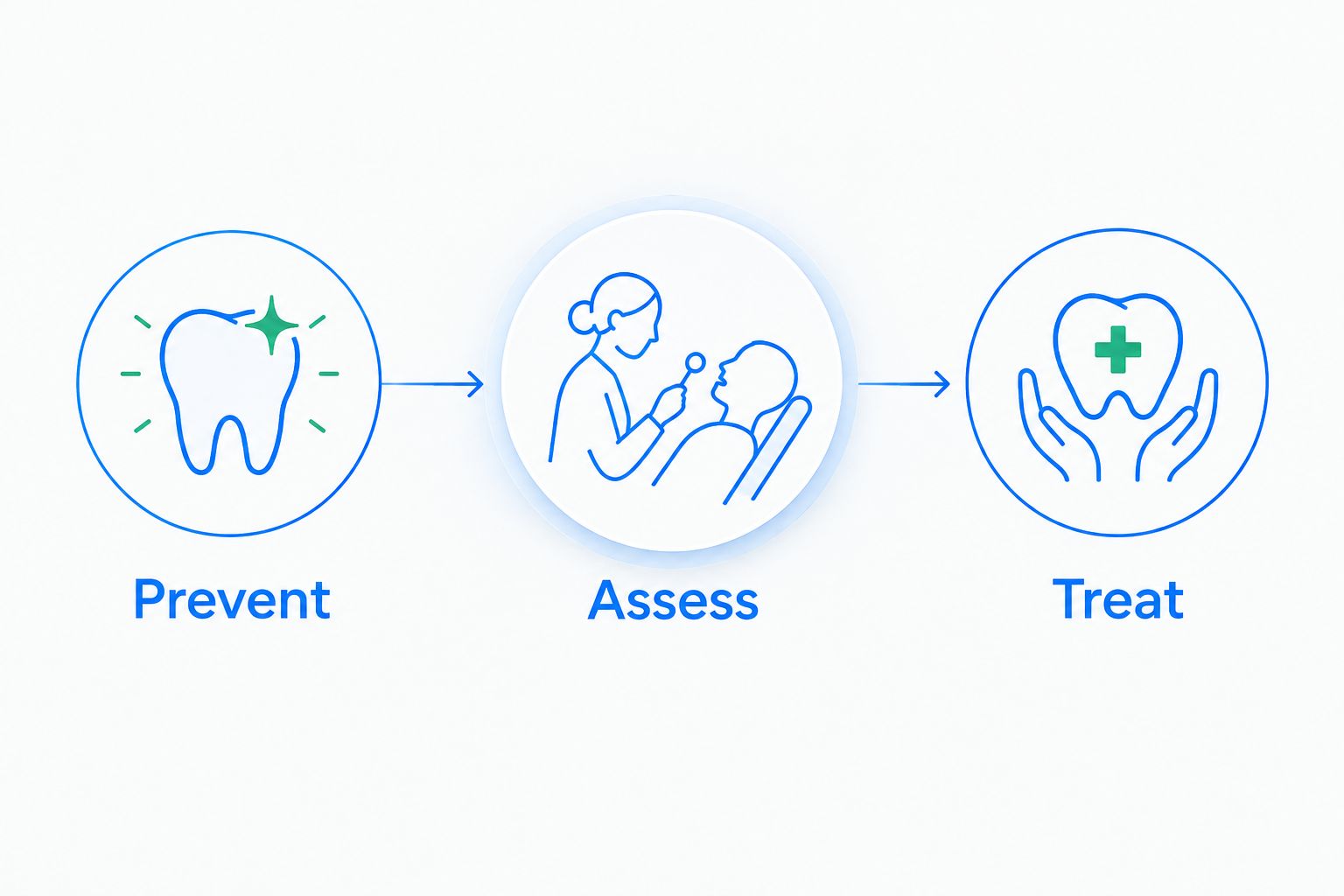
The useful sequence is prevent, assess, then treat what the examination finds. Waiting is appropriate for some elective decisions, but not a substitute for assessing symptoms.
Ask about expected out-of-pocket costs and insurance benefits before agreeing to nonurgent treatment. Coverage, payment arrangements, and any need for authorization depend on your plan and the practice; do not assume pregnancy automatically changes dental benefits.
Common mistakes pregnant patients make
Canceling all dental visits until after delivery
Pregnancy alone is not a reason to postpone routine or necessary care. Tell the dentist you are pregnant and ask how to adapt the visit. Delaying an assessment leaves you without a diagnosis when symptoms need attention.
Brushing immediately after vomiting
Your instinct might be to remove the taste quickly, but brushing immediately after acid exposure can be hard on softened enamel. Rinse first, wait, and then brush gently with fluoride toothpaste.
Stopping flossing because gums bleed
Bleeding is a reason to improve gentle cleaning and arrange an assessment, not abandon cleaning between teeth. Persistent bleeding, tenderness, or swelling needs professional advice rather than an increasingly aggressive home routine.
Treating tooth pain with leftover medicine
An old prescription or familiar pain reliever is not automatically appropriate during pregnancy. Medication also does not repair the underlying dental problem. Contact your dentist and check medication choices with your prenatal clinician.
Assuming a numbing injection means sedation
Local anesthesia and sedation serve different purposes and require different discussions. Ask the dentist to name the proposed method and explain what you will feel. Clear expectations are especially helpful when you are nervous about treatment.
FAQ
Is dental care during pregnancy safe?
Routine and necessary dental care is generally safe during pregnancy. The American Dental Association and the American College of Obstetricians and Gynecologists support preventive care and treatment when needed; tell your dentist about your pregnancy and any complications.
What is the best trimester for a dental appointment?
The second trimester is often the most comfortable, but necessary dental care can take place throughout pregnancy. Do not delay assessment of pain, swelling, or infection to wait for a particular trimester.
Can I have a dental X-ray while pregnant?
Yes, a necessary dental X-ray is generally considered safe during pregnancy under ADA and ACOG guidance. Tell your dentist you are pregnant and ask how the image will help diagnose or plan your care.
Can I have a filling or root canal while pregnant?
Yes, necessary fillings and root canal treatment can be performed during pregnancy. Your dentist should explain the diagnosis, treatment choices, and any need to coordinate with your prenatal clinician.
Why do my gums bleed more during pregnancy?
Pregnancy-related hormonal changes can increase your gums’ response to plaque and cause inflammation. Continue gentle brushing and daily cleaning between teeth, and arrange a dental assessment if bleeding persists.
What should I do after morning sickness?
Rinse your mouth with water after vomiting and wait about 1 hour before brushing. Tell your dentist about frequent acid exposure and contact your prenatal clinician if vomiting prevents you from keeping fluids down.
Can Dentistry of Tavares help with tooth pain during pregnancy?
Dentistry of Tavares offers general and restorative dental care for local patients. Explain that you are pregnant when requesting an appointment so the team can assess your symptoms and discuss appropriate next steps; urgent appointment availability must be confirmed.
One last thing
A dental visit does not commit you to treatment. It gives you a diagnosis and a chance to ask questions before deciding. For your 2026 appointments, bring your medication list and write down what worries you most—pain, numbing, nausea, or the baby's safety—so the conversation starts with your needs.
Related guides
- Understanding your dental insurance
- Water flossers for tight teeth
- Epinephrine in dental numbing shots
Request an appointment with Dentistry of Tavares to discuss your pregnancy, your comfort, and the dental care you need.