Can you eat normally while wearing clear aligners?
Yes, you can eat your usual foods during clear aligner treatment, but remove your aligners before eating; do not chew food while wearing them. In 2026, the everyday routine is to take the trays out for meals and drinks other than plain water, clean your teeth and trays as instructed, and put the aligners back in without exceeding your prescribed time out.
- Can you eat normally while wearing clear aligners? Eat normally with the trays removed, not while wearing them.
- Plain water is the simplest drink with aligners in; remove trays for coffee, juice, and other drinks.
- Clear aligner treatment requires planned meals, regular cleaning, and your dentist’s prescribed daily wear time.
- Dentistry of Tavares offers clear aligner orthodontics for local patients considering a straighter smile.
Can you eat normally while wearing clear aligners?
You can usually keep eating the foods you enjoy during treatment. The distinction is between eating during clear aligner treatment and eating with clear aligners in your mouth. The first is generally fine; the second is not the standard instruction.
Removable trays give you flexibility at meals, but that flexibility comes with responsibility. Food can damage or stain the trays, and putting them over unclean teeth holds food residue close to tooth surfaces.
| Food or drink | What to do | Benefit | Limitation | Best for |
|---|---|---|---|---|
| Plain water | Keep trays in unless your dentist directs otherwise | Hydration without interrupting wear | Avoid hot water that can affect the plastic | Drinking between meals |
| Meals and snacks | Remove trays before eating | Lets you chew without trays covering your teeth | Requires cleaning and tracking time out | Your usual eating routine |
| Coffee or tea | Remove trays before drinking | Keeps heat and staining drinks away from trays | Long sipping sessions interrupt wear | A planned drink break |
| Juice, soda, or sweetened drinks | Remove trays before drinking | Prevents the drink from sitting inside the trays | Sugar and acidity still affect teeth | An occasional drink with a meal |
For local help choosing a treatment routine, Dentistry of Tavares offers clear aligner orthodontics alongside general and cosmetic dental care. Bring your questions about meals, drinks, and work schedules to your appointment.
Why this matters
The main adjustment is not giving up every favorite food. It is fitting meals and cleaning into the hours when your aligners can be out.
Many clear aligner plans call for 20–22 hours of wear per day, but your own dentist’s instructions take priority. Removing trays for repeated snacks, long coffee breaks, and extended dinners adds up, even when each break feels short.
For your 2026 routine, treat eating and tray care as one connected task. Remove, eat, clean, and replace. That approach protects both your daily wear schedule and the teeth underneath the trays.
How do you eat a meal with clear aligners?
A repeatable routine makes clear aligners easier to manage at home, school, work, or a restaurant. You do not need an elaborate setup; you need a safe place for the trays and a practical way to clean up afterward.
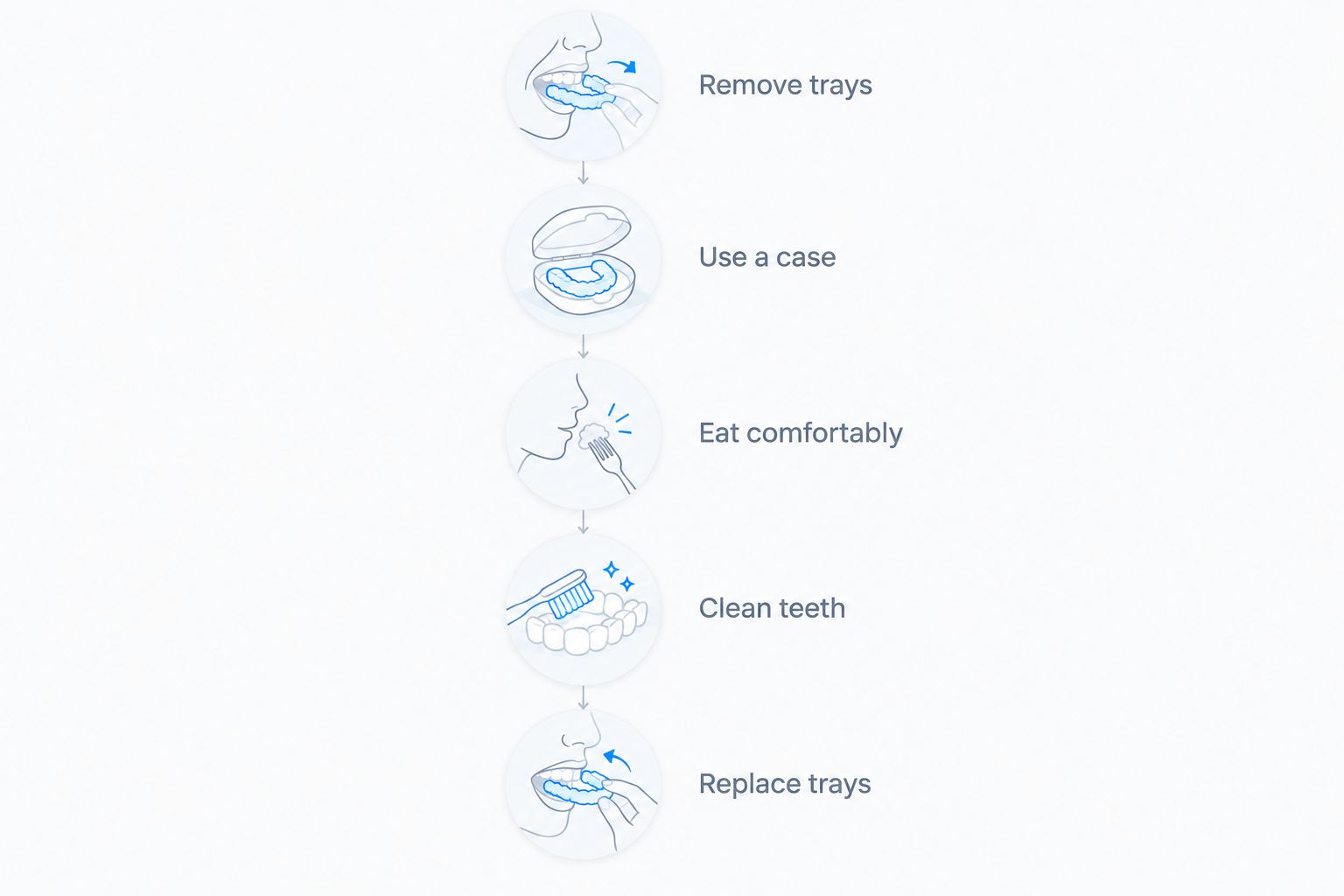
- Remove trays. Wash your hands and take the aligners out using the removal method your dentist demonstrated. Avoid pulling forcefully from one spot, especially if you have tooth-colored attachments.
- Use a case. Put both trays in their protective case before eating. A napkin is easy to throw away accidentally, and a pocket leaves trays exposed to bending and dirt.
- Eat comfortably. Choose food you can chew without discomfort. If your teeth feel tender after a tray change, softer textures can make the meal easier.
- Clean teeth. Remove food debris and follow your dentist’s brushing and flossing instructions. Clean the trays using the method recommended for your aligner system.
- Replace trays. Put the aligners back in and check that they seat as instructed. If a tray does not fit properly, do not force it into place.
Before leaving home, check that your case and cleaning supplies are in your bag. Keeping them together removes the temptation to leave trays on the table or skip cleaning because you are away from your bathroom.
Which foods can you eat after removing clear aligners?
Most everyday foods remain part of your diet when the trays are out. Clear aligners do not make your teeth immune to cavities or protect existing crowns, fillings, or other dental work from damage.
Familiar meals: keep them, adjust the texture when needed
You can generally eat familiar meals without redesigning your entire diet. If chewing feels uncomfortable, choose softer versions of foods you already like rather than pushing through a painful meal.
Eggs, yogurt, oatmeal, soft cooked vegetables, and tender foods are practical choices during temporary tenderness. Their advantage is comfort; their limitation is that they do not replace a varied, balanced diet over the full course of treatment.
Crunchy foods: judge comfort and protect dental work
Crunchy foods are not automatically off-limits once aligners are removed. Cut firm foods into manageable pieces if biting into them feels uncomfortable, and follow any restrictions your dentist gives for attachments or existing restorations.
Do not chew ice or use your teeth to open packaging. Those habits can damage teeth whether or not you are having orthodontic treatment.
Sticky foods: leave time for cleanup
Sticky foods can leave residue between teeth and around attachments. Taking your aligners out prevents food from sticking directly to the trays, but you still need to clean your teeth before putting them back.
If a food is difficult to clear from your teeth, save it for a meal when you have access to your usual cleaning supplies. Convenience matters, especially when you are eating away from home.
Can you drink coffee, tea, or soda with aligners in?
Remove clear aligners before drinking anything other than plain water, unless your treating dentist gives different instructions. Coffee, tea, soda, juice, sports drinks, and flavored drinks introduce concerns that plain water does not.
Hot drinks can affect the plastic. Colored drinks can stain it. Sugary or acidic drinks can remain against your teeth inside the trays, so drinking through a straw does not replace removing your aligners.
The practical challenge is often sipping, not the drink itself. A coffee that lasts through a meeting keeps the trays out longer than a drink finished with breakfast. For your 2026 schedule, plan a drink break you can finish, clean up after, and end by replacing the trays.
Water between meals is the simplest option. Never use hot water to rinse or soak your aligners unless the manufacturer’s instructions specifically direct it.
Why your eating routine varies during clear aligner treatment
The rule about removing trays stays consistent, but the easiest meal routine depends on your daily life and treatment instructions. These factors explain why another person’s schedule is not necessarily the right schedule for you:
- Prescribed wear time: Your dentist’s daily target determines how much time you have for meals, drinks, and cleaning.
- Tenderness after tray changes: Temporary soreness can make softer foods more comfortable, even with the aligners removed.
- Attachments and dental work: Tooth-colored attachments, crowns, bridges, and other restorations can affect removal technique and chewing advice.
- Meal and snack habits: Frequent grazing means repeated removal, cleaning, and replacement instead of a few planned breaks.
- Access to cleaning supplies: Eating at work, school, or while traveling requires more preparation than eating at home.
- Other treatment instructions: Recent dental procedures or a separate tooth problem can require food restrictions unrelated to the aligners.
Use your own treatment instructions as the deciding rule. A routine that works for someone else is not a reason to change your prescribed wear time or ignore advice about a particular tooth.
How much time can you leave clear aligners out for meals?
20–22 hours of wear per day is a common clear aligner instruction, not a substitute for your individual prescription. The time without trays must cover eating, drinks other than water, and the cleaning that follows.
A useful way to plan is to look at your whole day rather than each meal separately. Breakfast, lunch, dinner, a snack, and a lingering drink all contribute to total time out. Cleaning belongs in that total too.
For a workable 2026 routine, put the case somewhere visible while you eat and replace the trays promptly after cleanup. If your schedule regularly conflicts with prescribed wear, tell your dentist rather than changing the treatment schedule yourself.
Do not skip meals or restrict needed nutrition to meet a wear target. Discuss your routine with your treating dentist so you can balance eating, oral care, and treatment instructions safely.
Should you brush after every meal before replacing aligners?
Brush for 2 minutes, twice a day as part of standard oral hygiene, and follow your dentist’s additional instructions for cleaning after meals during aligner treatment. Fluoride toothpaste and daily cleaning between teeth remain important while you wear trays.
Food should not be left sitting beneath the aligners. Clean your teeth and trays as directed before reinserting them, paying attention to debris around attachments and between teeth.
If you have just had something acidic, ask your dentist about the timing of brushing; brushing immediately after an acidic drink is not always the right approach. Rinsing with water helps clear your mouth, but it does not replace your regular brushing and between-teeth cleaning.
When you cannot brush immediately, rinse your mouth and the trays, then follow the temporary plan your dentist has recommended. Do not turn that backup approach into your everyday routine.
What if eating or removing the trays hurts?
Mild tenderness can happen when teeth are adjusting to a new tray. Softer foods and careful removal can make those periods more comfortable, but sharp pain, worsening pain, or a tray cutting into your gums deserves a call to your dentist.
Do not reshape a tray with heat, trim it yourself, or switch trays ahead of schedule to solve discomfort. Those changes can interfere with fit and treatment instructions.
If you are nervous about removal, ask your dental team to watch you do it and explain the technique again. A clear demonstration is more useful than struggling with the trays at every meal.
A lost, cracked, or poorly fitting tray also needs advice from your treating dentist. Keep the tray if you still have it, explain what happened, and ask what to wear until the problem is addressed.
Is eating with clear aligners manageable at work or school?
Clear aligner treatment is manageable when your meal routine matches the places where you spend your day. The benefit is being able to remove the trays; the trade-off is needing to store, clean, and replace them consistently.
Keep a small kit with your case, toothbrush, fluoride toothpaste, and your usual between-teeth cleaning supplies. Before a restaurant meal or a school lunch, identify where you can wash your hands and clean up afterward.
If you are planning treatment in 2026, discuss real habits rather than an ideal schedule. Tell your dentist about frequent snacks, long shifts, sports drinks, or meals on the road so the instructions make sense in your daily life.
Dentistry of Tavares is a clear aligner option for local patients who want dental care in Tavares. Ask whether treatment fits your dental needs and routine; being able to remove the trays does not mean every bite or schedule is suitable for every patient.
FAQ
Can you eat normally while wearing clear aligners in 2026?
You can eat your usual foods during clear aligner treatment, but remove the trays before eating. Clean your teeth and trays as instructed before putting them back in.
Can I have a small snack without taking my aligners out?
No, remove your aligners before a snack, just as you would before a meal. Even a small amount of food can leave residue inside the trays or damage them while you chew.
Can I drink plain water with clear aligners in?
Yes, plain water is generally suitable while wearing clear aligners. Avoid hot water, and follow any different instructions from your treating dentist.
How many hours should I wear clear aligners each day?
20–22 hours per day is a common wear instruction, but your dentist’s prescription takes priority. Meals, drinks other than water, and cleaning all count toward time out.
Can I chew gum while wearing clear aligners?
No, remove clear aligners before chewing gum because gum can stick to the trays. Include that break in your total time out and clean your mouth before replacing them.
What should I eat if my teeth feel sore after changing trays?
Soft foods such as eggs, yogurt, oatmeal, and soft cooked vegetables are practical choices when chewing feels tender. Contact your dentist if pain is sharp, worsening, or makes eating difficult.
Should I ask Dentistry of Tavares about aligners if I snack often?
Yes, discuss frequent snacking with Dentistry of Tavares when asking about clear aligner treatment. Your meal habits and cleaning routine help determine whether you can follow the prescribed wear schedule.
One last thing
Your protective case is a small part of treatment with a big practical purpose: it keeps removable trays from becoming disposable restaurant napkins. Put the trays in the case before the first bite, not after you have started eating.
Start with one dependable meal routine and repeat it. If removal, cleaning, or wear time feels difficult, request an appointment to talk through your questions.
Related guides
- Clear aligners for teenagers
- How long does it take to see results from clear aligners?
- Can clear aligners fix an overbite?
- Connecting dental insurance claims to clear aligner treatment costs
Have questions about eating comfortably during treatment? Request an appointment with Dentistry of Tavares to discuss clear aligners and your daily routine.